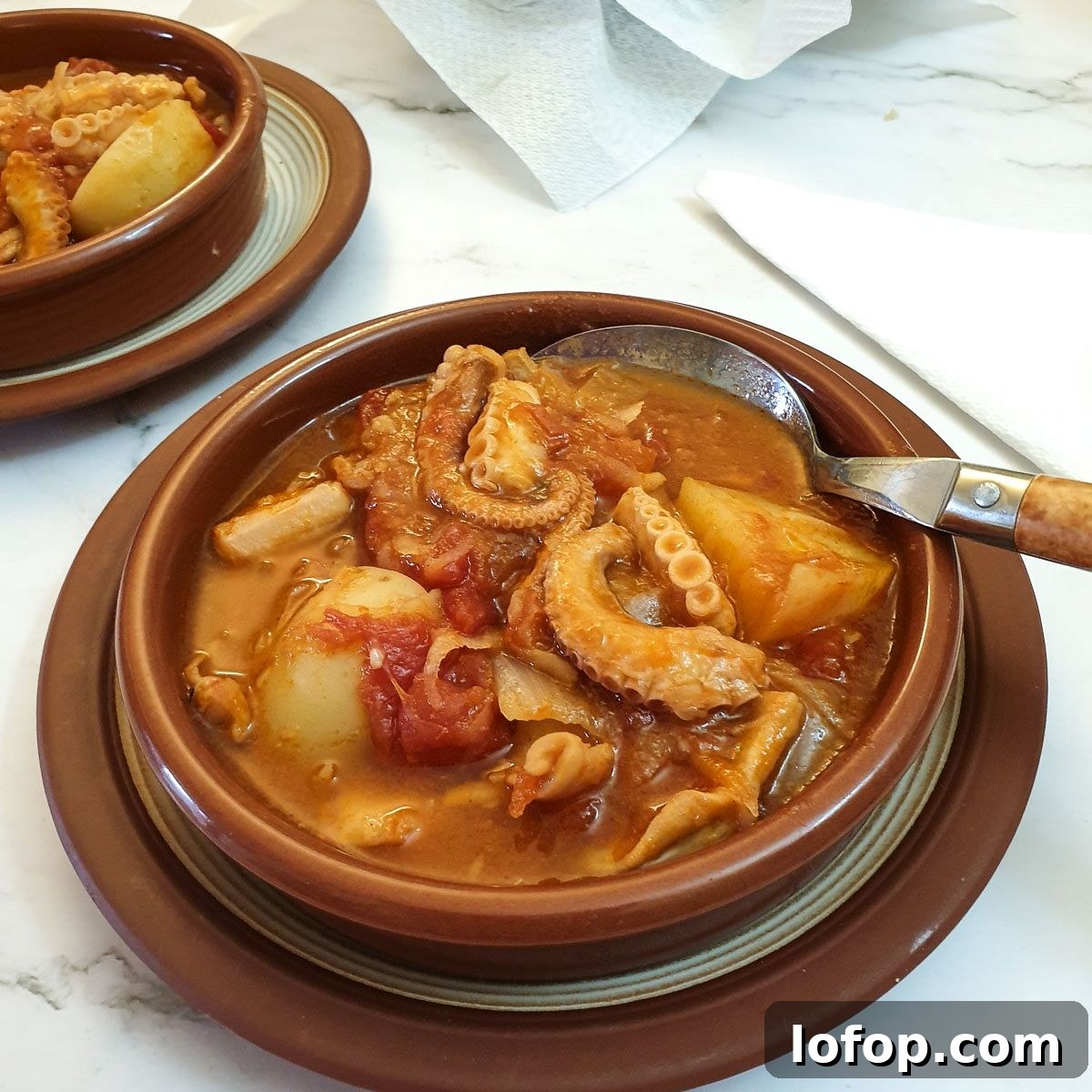
Octopus stew – Spanish-style, scented with garlic, smoked paprika and white wine, makes a delightful tapas dish. Serve with plenty of crusty bread to soak up the rich, savoury broth.
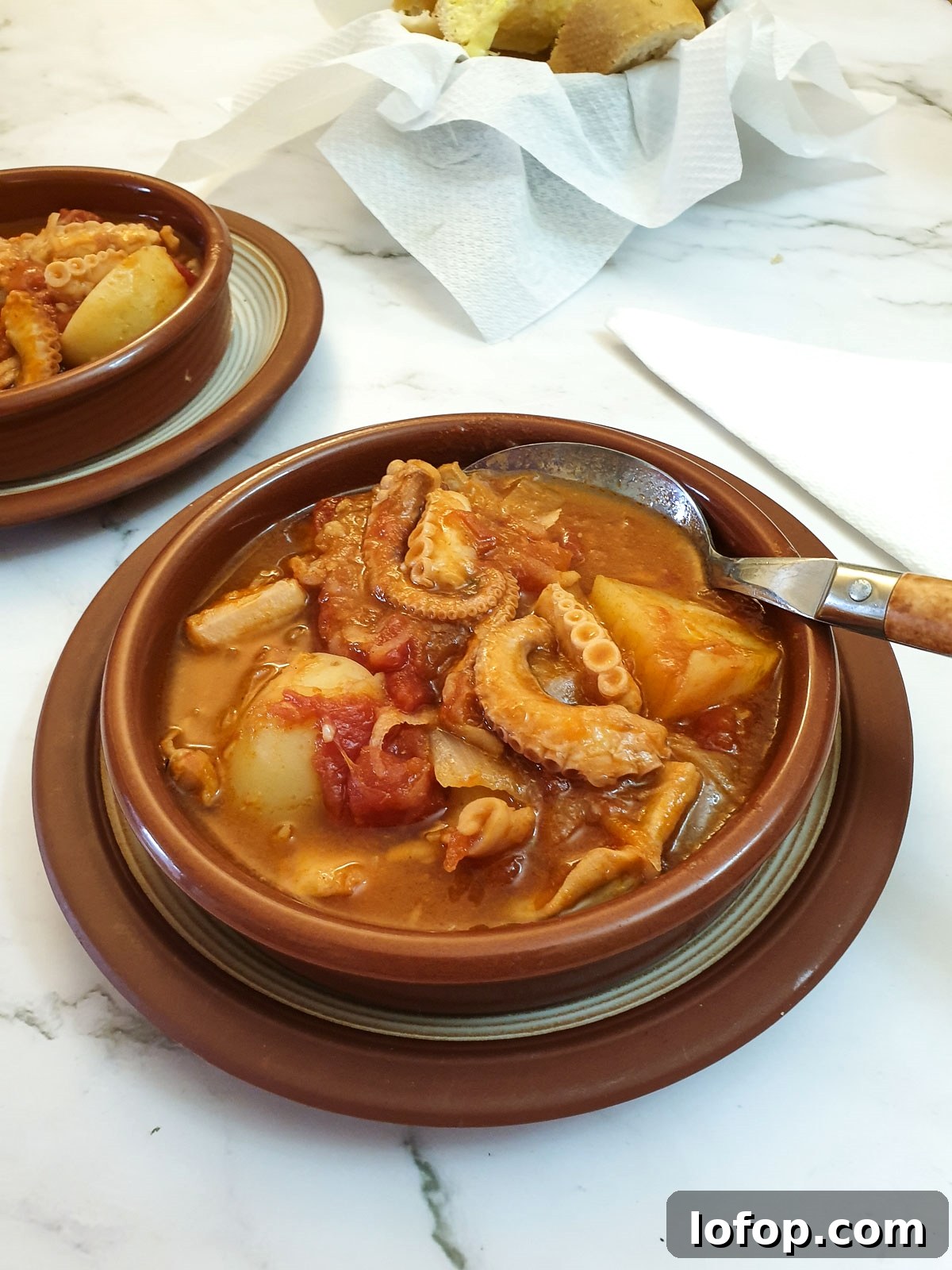
Octopus stew – Spanish style
I first tasted this octopus stew on holiday in Spain. Having never tried octopus before, I was hesitant, but one spoonful convinced me it was something special.
Tender pieces of octopus swim in a tomato-based broth scented with garlic and smoked paprika, joined by perfectly cooked waxy potatoes and sweet onion petals.
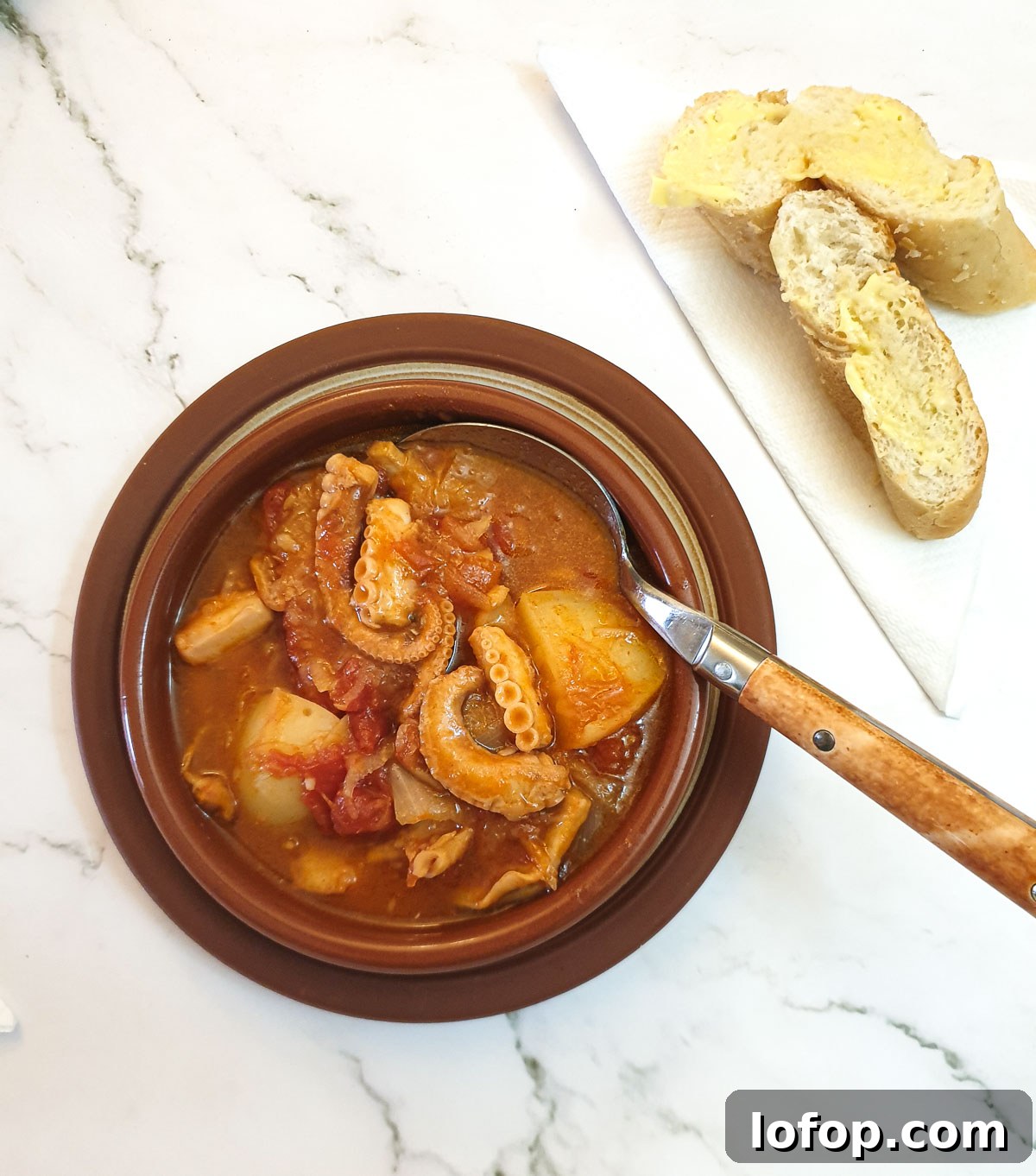
It came as part of a tapas spread and was served with fresh crusty bread to mop up the delicious sauce.
My partner barely had a taste — I finished the whole bowl myself, though I did share one spoonful.
My method and tips
Back home I tried to recreate it. Early attempts taught me a few lessons: octopus becomes rubbery if undercooked, and potatoes will fall apart if overcooked in the oven. The pressure cooker produced the best texture — tender octopus and firm potatoes — but the sauce was a little thin.
The simple trick that fixed the sauce was grating one potato and adding the grated potato to the stew. The released starch thickens the broth naturally without extra thickeners.
If you have a pressure cooker, this is my preferred method. If not, the recipe includes clear instructions for stovetop or oven preparation so you can still get excellent results.
What you will need
Equipment
A pressure cooker (electric or stovetop) gives the quickest, most consistent results. If you don’t have one, a large saucepan for the stove or an ovenproof casserole dish will work.
Also useful: a box grater for one potato, a sharp knife and a chopping board.
Ingredients
This recipe serves 4–6 as part of a tapas selection or as a starter.
See the recipe card below for exact ingredient amounts and the full method.
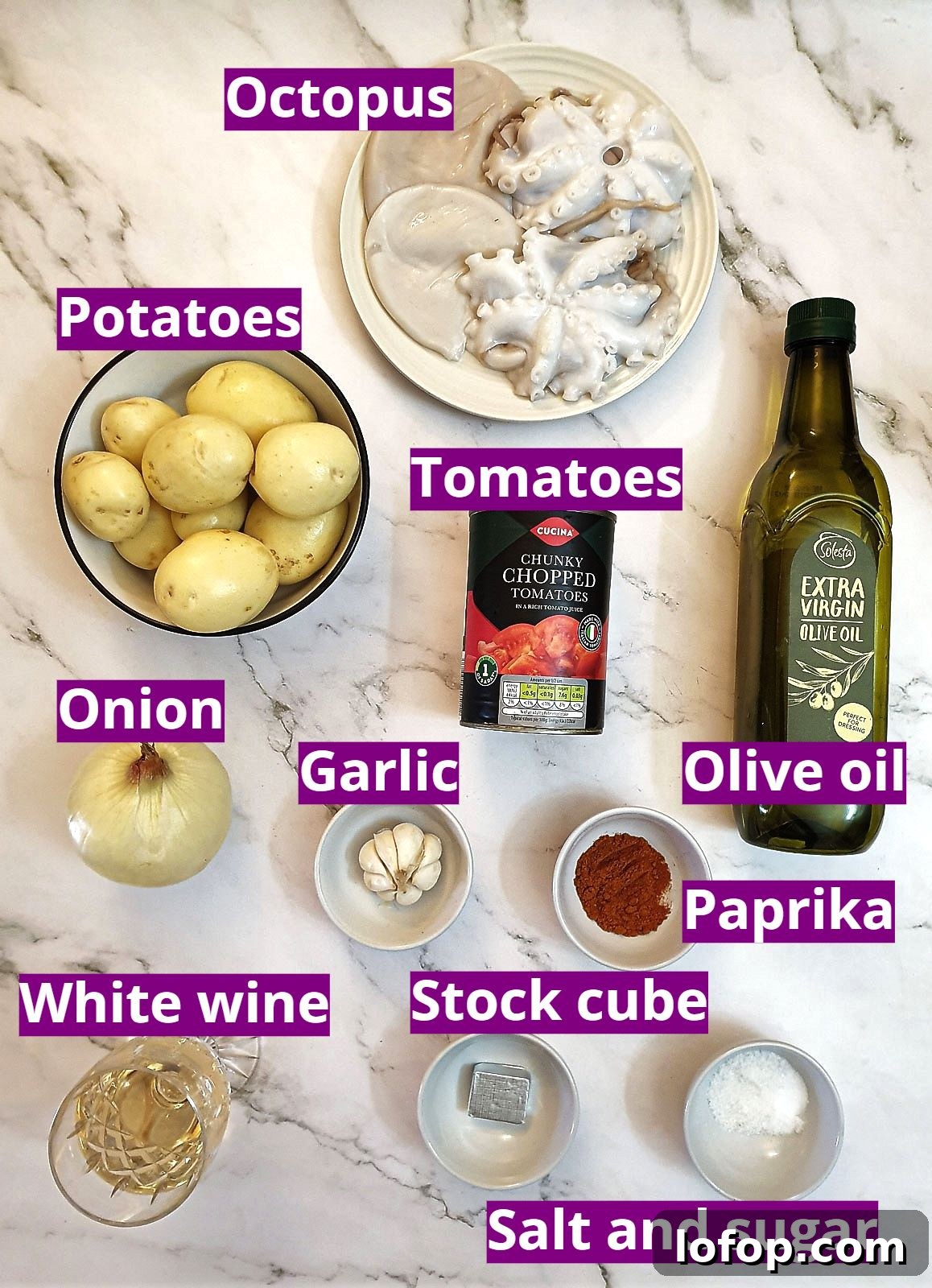
Octopus – fresh, cleaned and cut is ideal; frozen is fine if fresh isn’t available. Expect cooked octopus to shrink substantially.
Potatoes – choose waxy varieties that hold their shape. The traditional method is to partially cut and break them to release starch, but grating one potato works well to thicken the sauce.
Canned tomatoes – use a good-quality tin for depth of flavour.
Olive oil – extra virgin is recommended.
Onion – cut into large pieces and separated into petals.
Garlic – use as much as you like; ready-crushed is fine in a pinch.
Paprika – smoked paprika adds a characteristic flavour.
White wine – use a drinkable wine; substitute extra stock if you prefer no alcohol.
Stock cube – vegetable stock keeps the dish free of meat flavours; use ready stock if preferred.
Salt and sugar – season to taste; a teaspoon of sugar balances the tomatoes.
Optional: sliced red peppers (capsicum) make a tasty addition.
What to do
If your octopus is already prepared, skip the cleaning steps. Otherwise rinse under cold water, paying attention to the tentacles.
Cut the octopus
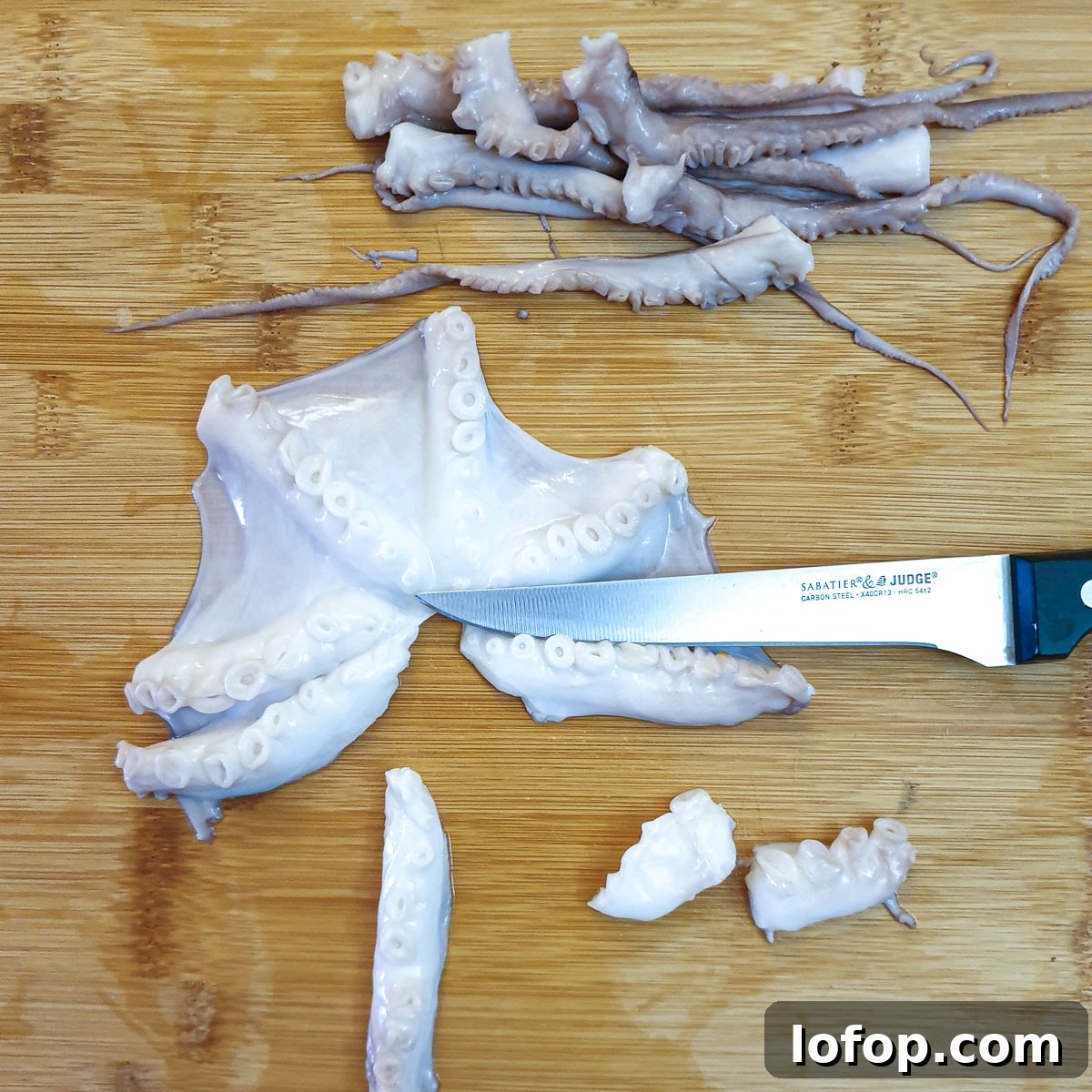
Remove the tentacles from the body and separate the membrane at their base.
Cut large tentacles in half if needed; leave smaller ones whole.
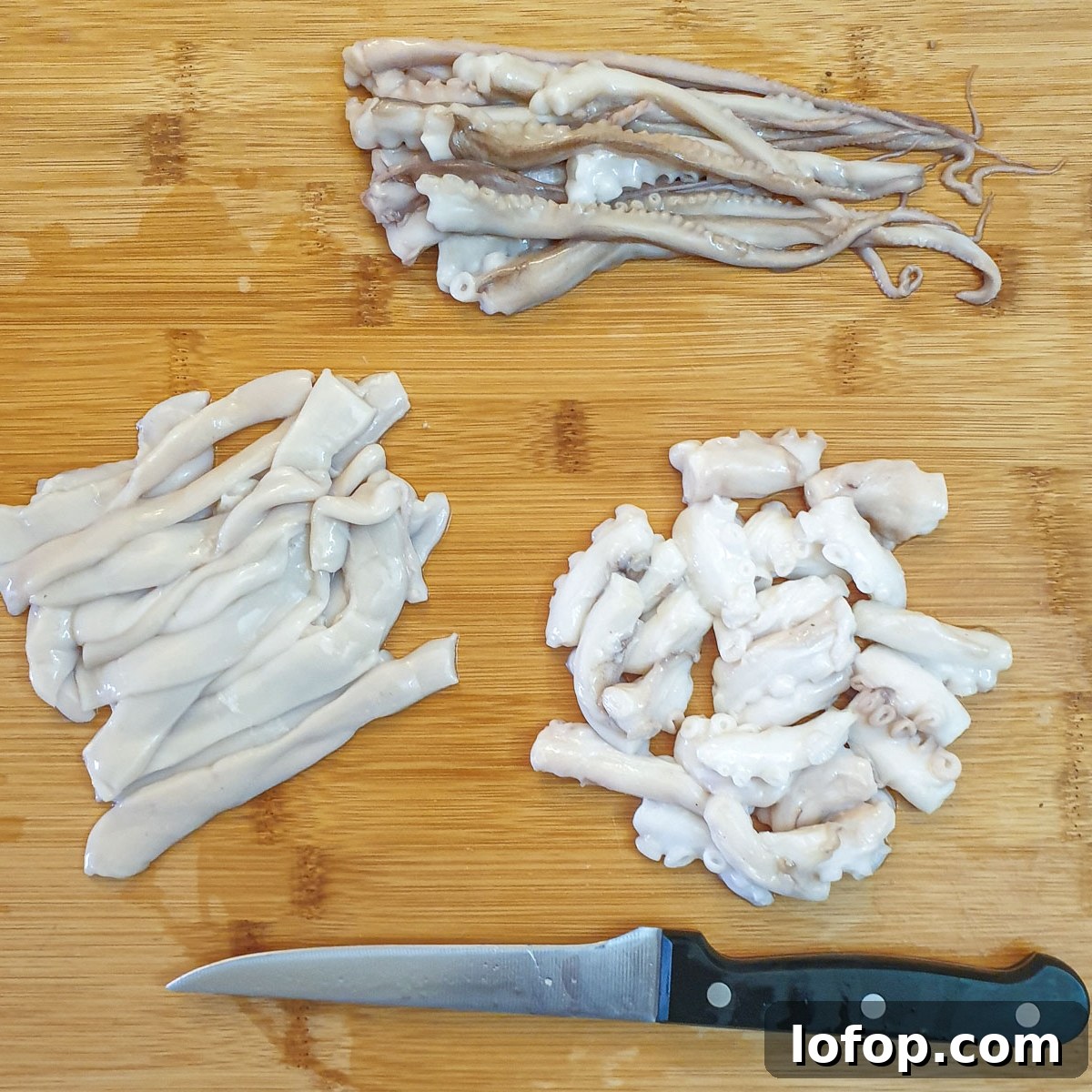
Slice the body into rings about 1 inch (2.5 cm) wide; halve large rings if desired.
Make the octopus stew
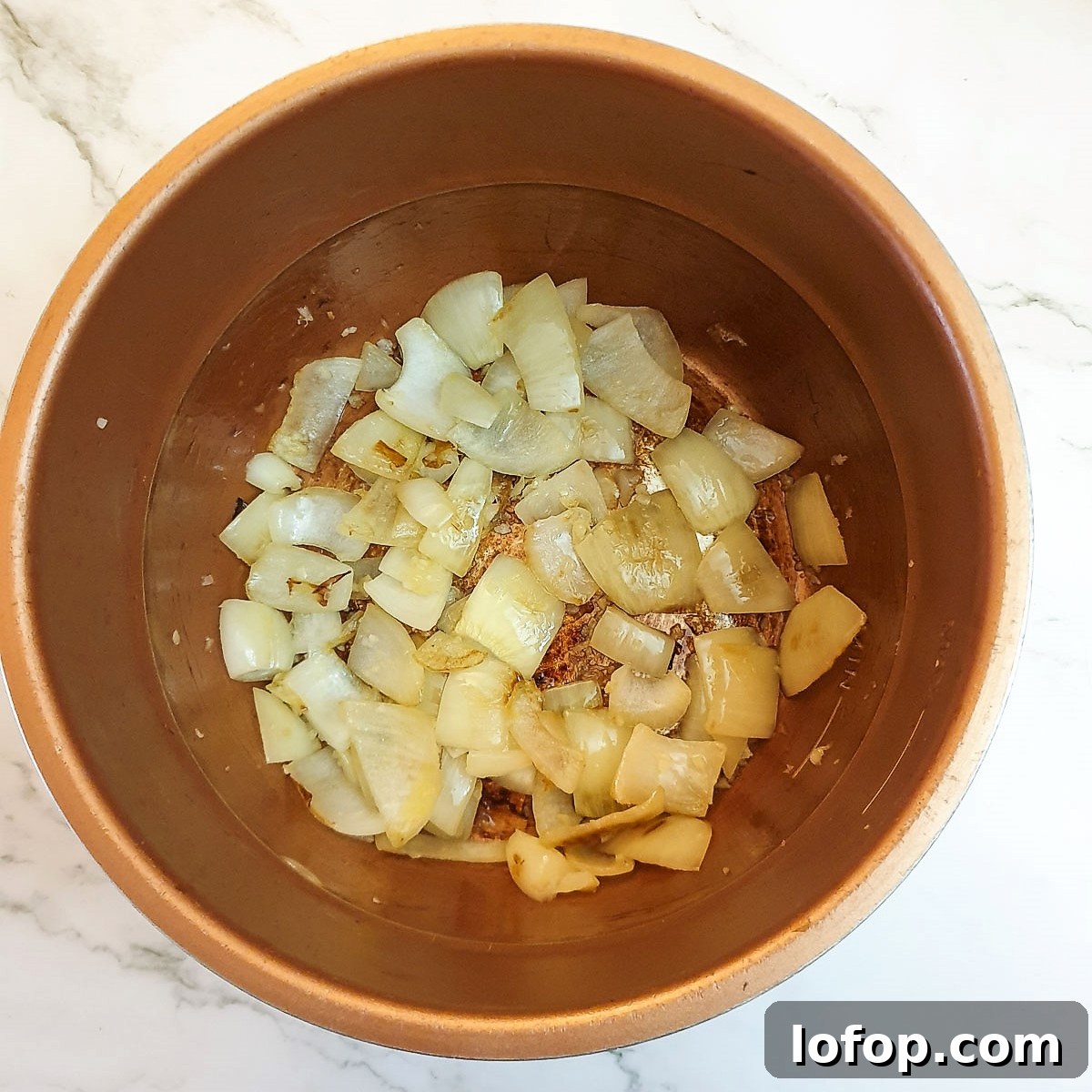
Cut the onion into large pieces and separate into petals. Peel and mince the garlic.
Use the sauté or browning function on the pressure cooker to soften the onions and garlic in 2 tablespoons of olive oil until translucent, stirring frequently.
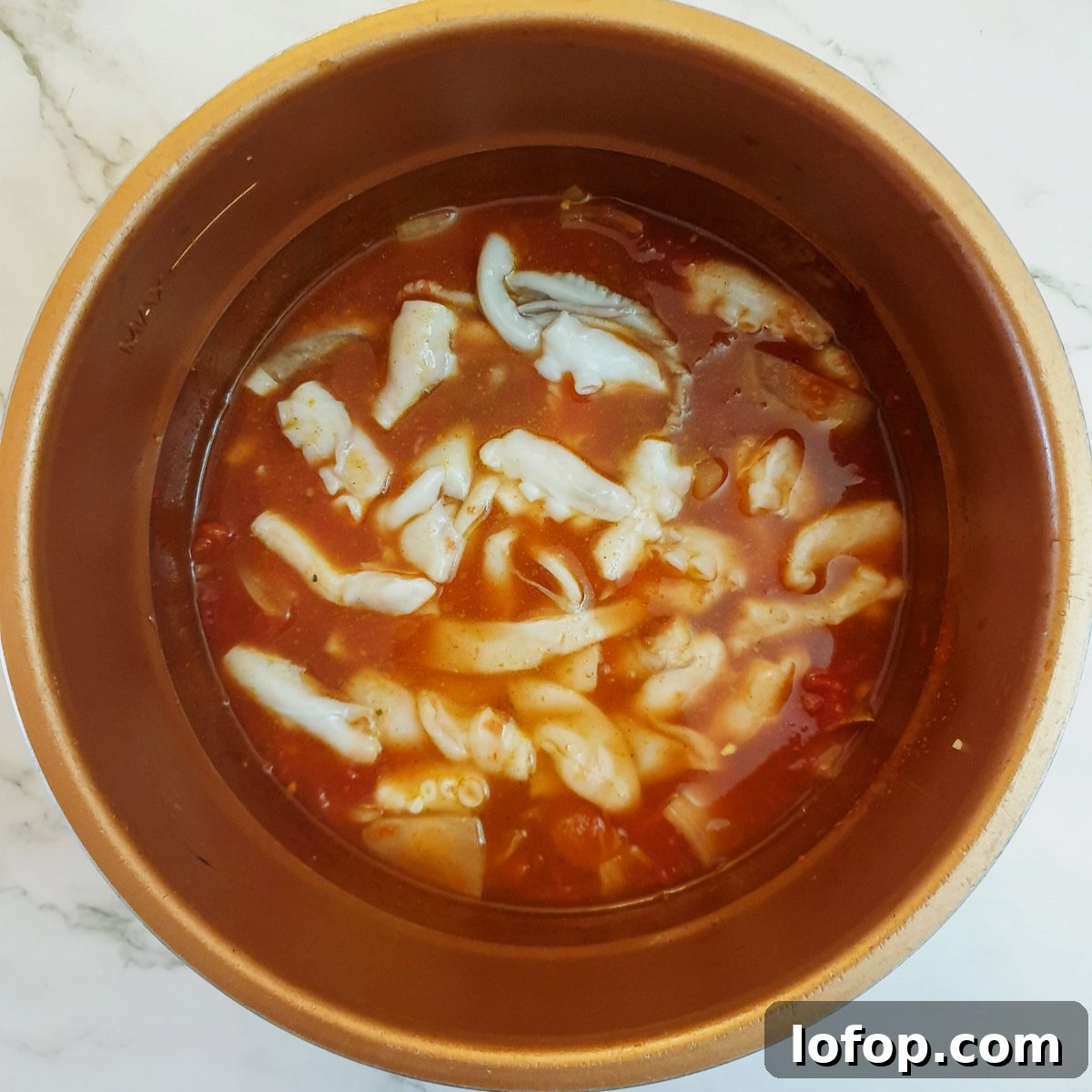
Stir in the stock, white wine, canned tomatoes, paprika, salt, sugar and the octopus pieces.
Set the pressure cooker to “Stew” and cook for 15 minutes, then allow the pressure to release naturally.
The octopus should be fork-tender. If pieces are large, add a few extra minutes, keeping in mind they will cook again with the potatoes.
Peel and chop the potatoes into chunks, reserving one medium potato.
Grate the reserved potato on the largest holes of a box grater (about ½ cup grated).
Add the grated potato and the chopped potatoes to the cooker.
Cook on “Stew” for a further 5 minutes, then release the pressure and check the sauce.
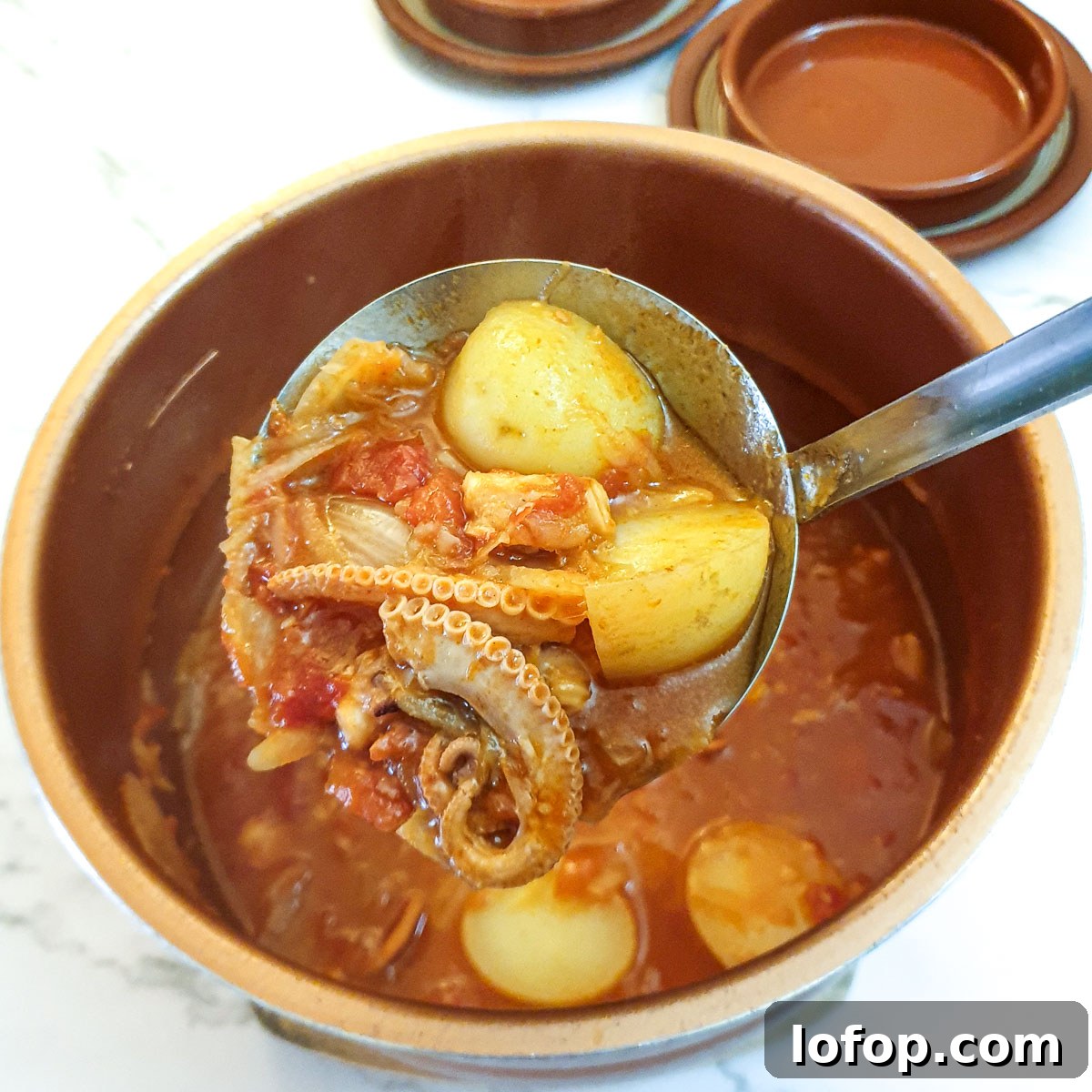
The sauce should be naturally thickened by the potato starch. If it seems thin, use the sauté function and simmer uncovered a few minutes to reduce the liquid.
The finished sauce should still be saucy enough to soak into crusty bread.
Serve with thick slices of crusty bread as part of a tapas meal.
Cook on the stove
To make this in a saucepan:
- Lightly brown the onions in olive oil in a large saucepan.
- Add the other ingredients except the potatoes and simmer, covered, for about 60 minutes until the octopus is tender.
- Add the grated and chopped potatoes and cook another 15–20 minutes until the potatoes are done and the gravy has thickened.
- Leave the lid off for the last 5 minutes if you need to reduce the sauce; add extra stock if required.
Cook in the oven
To make this in an oven casserole:
- Brown the onions in olive oil on the stove, then transfer to an ovenproof dish.
- Add the remaining ingredients (except the potatoes), cover and bake at 200°C / 400°F for 90 minutes.
- Add the grated and chopped potatoes, return to the oven and cook another 40 minutes until the potatoes are tender. Remove the lid for the final 10 minutes if the sauce needs reducing.
- Top up with stock if it looks like drying out while baking.
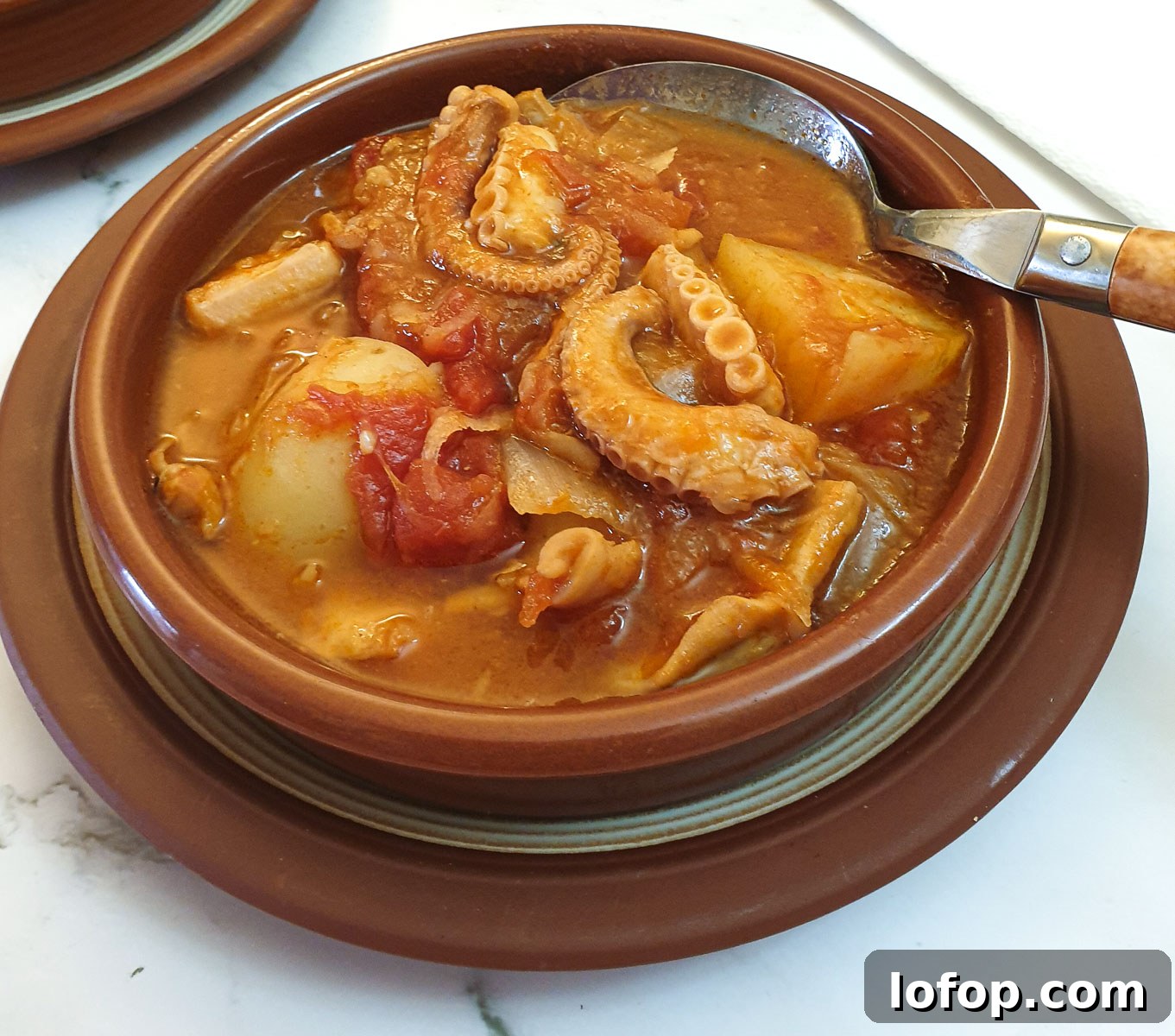
How to serve octopus stew
I prefer this served tapas-style alongside other small plates so everyone can share. It also works beautifully as a starter.
To make it a main course, add extra vegetables with the potatoes — sliced red peppers or shredded cabbage work well — and serve with bread and a fresh green salad.
More tapas recipes
Pair this stew with other tapas dishes such as croquettes, Spanish tortilla or blistered padrón peppers for a full spread.
Can I freeze octopus stew?
Yes — cool leftovers, place in a suitable freezer container and freeze for up to two months.
Defrost overnight in the fridge, reheat gently in a saucepan until piping hot and serve immediately. Do not refreeze.
Save for later
If you want to keep the recipe for later, save or pin it in your usual way so you can return to it when planning a tapas night.
Related recipes
If you enjoy seafood dishes, try stuffed mussels, mussels with pasta, Spanish paella or creamy mussel pasta for more inspiration.
📋The recipe
Octopus stew – Spanish style
Equipment
- Pressure Cooker
- Box grater
- Sharp Knife
- Chopping Board
Ingredients
- 1 lb / 450 g prepared fresh octopus
- 1 large onion, coarsely chopped into petals
- 1 lb / 450 g waxy potatoes
- 14 oz / 400 g canned tomatoes
- 4 cloves garlic, finely minced
- 1½ tsp smoked paprika
- ½ cup / 120 ml white wine
- 1 vegetable stock cube dissolved in 1 cup boiling water
- 2 tbsp olive oil
- ½ tsp salt (optional)
- 1 tsp sugar (optional)
Instructions
Preparation
- Lay the octopus on a chopping board, remove the tentacles and separate the membrane. Slice the body into rings about 1 inch wide; halve large rings if necessary.
- Cut the onion into large pieces and separate into petals. Peel and mince the garlic.
Stew
- Sauté the onions and garlic in 2 tbsp olive oil until translucent.
- Add the dissolved stock, white wine, canned tomatoes, paprika, salt, sugar and octopus. Cook on the pressure cooker “Stew” setting for 15 minutes and allow pressure to release.
- Peel and chop the potatoes, reserving one medium potato. Grate the reserved potato and add the grated potato plus the chopped potatoes to the cooker. Cook on “Stew” for a further 5 minutes.
- Release pressure and check the sauce. If it seems thin, use sauté and simmer uncovered a few minutes to reduce liquid. Serve with crusty bread.
Notes
Stovetop method: Simmer for about 60 minutes with the octopus (covered) before adding potatoes; then cook 15–20 minutes more.
Oven method: Bake covered at 200°C / 400°F for 90 minutes, add potatoes and bake a further 40 minutes, removing the lid for the last 10 minutes if needed.
Freezing: Freeze cooled leftovers up to 2 months. Defrost in the fridge and reheat until piping hot. Do not refreeze.
Nutrition: Calculated per serving assuming this is served as a tapas portion for four; use as a guide only.