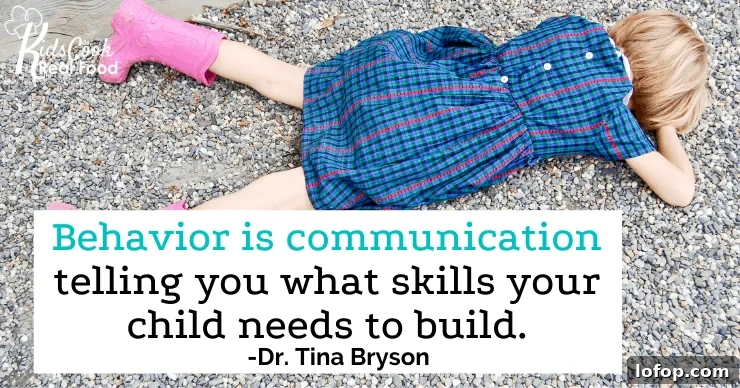
Meltdowns start in the brain!
Often a child’s brain detects a mismatch between what’s demanded of them and what they can handle. They may be flooded with emotion and unable to access logical thinking, or they may feel unsafe or threatened. Any of these states — and others — can be the root cause of a meltdown.
Whether it’s a toddler’s tantrum, a teenager’s brooding shutdown, or an overwhelmed parent’s explode, understanding the brain helps us calm meltdowns and teach effectively. After all, “teach” is the root of “discipline,” not punishment.
Connect to Calm Tantrums
Connection is the gateway to helping family members learn to manage strong emotions. Dr. Tina Payne Bryson offers practical, brain-based strategies to identify why meltdowns happen and how to respond in ways that calm and build skills.
There is always a reason for a meltdown, and learning to find that root cause is the first step. In this discussion you’ll get a concise, science-informed primer on parenting and the brain, including:
- The different parts of the brain — left/right and upstairs/downstairs — and why integrating those parts is essential for healthy behavior and development.
- A fresh way to think about the goal of parenting that focuses on growth rather than control.
- Why telling a child in the midst of a meltdown to “make a good choice now” is unrealistic when their higher brain functions are offline.
- One reason teens may not share feelings with parents — and how that dynamic can affect relationships at any age.
- Hope and encouragement for parents: you don’t need to be perfect, but you can be intentional and consistent.
- The fastest, simplest steps to help a child reconnect their brain so a meltdown can calm and even become a learning moment.
- Why we don’t always have to fix everything for our kids — sometimes presence and empathy are enough.
- How the phrase “I’m right here with you” can be powerful in parenting without being permissive.
- Strategies for balancing firm boundaries with big emotions so children feel safe while learning limits.
- Practical tips to improve dinnertime dynamics and encourage healthier eating habits over time.
Even if you can’t take notes, try a few of these strategies with your family — practice creates progress.
Tina’s books are accessible and practical; many listeners find them helpful as follow-up reading. They include short summary sheets that make the ideas easy to remember and apply.
Find all episodes of the Healthy Parenting Handbook on your preferred podcast platform.





Don’t forget to leave a review on Apple Podcasts if you enjoyed the episode.
Can’t see the video? Watch “Calm Tantrums with 3 Steps” on YouTube.
No time for the full video? Below are key notes and time stamps aligned to the video to help you find the most useful segments quickly.
Strategies to Calm Tantrums With Dr. Tina Bryson
- 0:20 — Introduction: connecting with kids and discovering root causes of meltdowns.
- 1:34 — Dr. Tina Bryson: psychotherapist, clinic director, author, and mother of three.
- 3:11 — Family life is joyful and challenging; mismatches in behavior expectations happen on both sides.
No matter what life throws at kids, resilience matters.
A brief downloadable guide offers practical steps to support brain health and resilience in young people.
Brain-Based Parenting
- 3:29 — Overview of the whole-brain-child approach and how relationships shape development.
- 6:11 — Dr. Bryson’s study of brain science changed how she views children’s behavior and parenting roles.
The relational experiences we give our children are the key to who they turn out to be. – Dr. Tina Bryson
- 8:41 — Each tantrum or behavior challenge is an opportunity to strengthen connection and relationship.
- 9:26 — Think of parenting over a week, not a single day. Small missteps matter less in the context of an overall caring relationship.
- 10:52 — Dr. Bryson’s books explain concepts simply so parents and kids can use them.
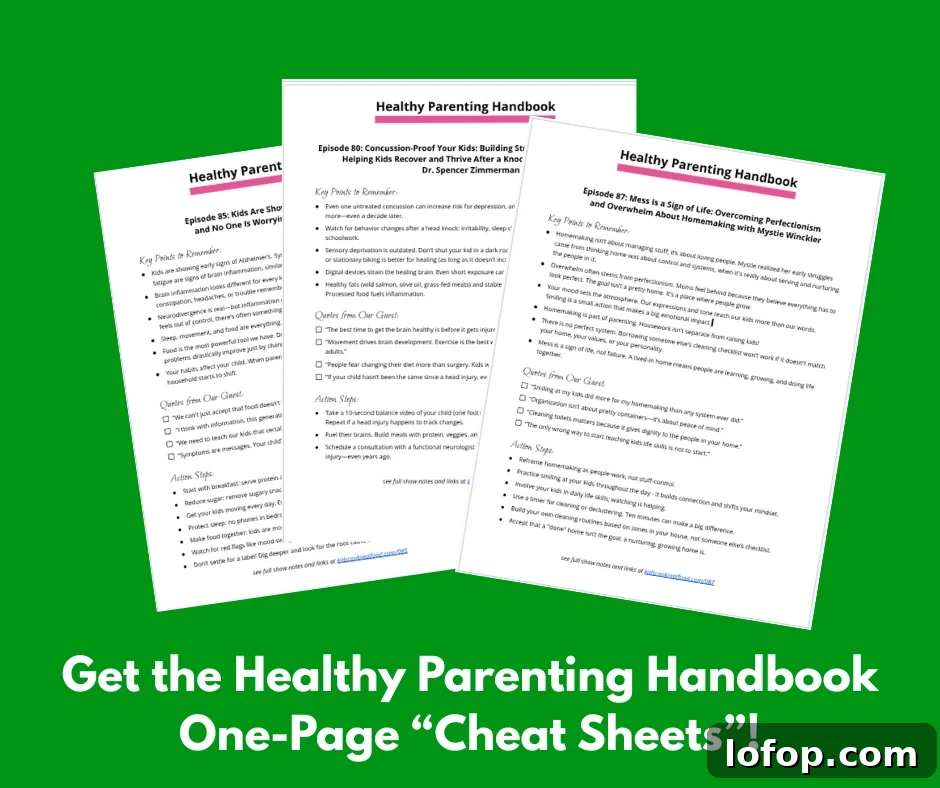
Turn expert advice into a handbook you can actually use.
Brain Development 101
- 11:42 — Left brain/right brain integration explained.
- 12:05 — Left hemisphere processes details, cause-and-effect, and language-based reasoning.
- 13:52 — The right hemisphere processes emotion and nonverbal cues; both sides are needed for healthy response.
- 15:14 — When hemispheres aren’t integrated, people can be disconnected from emotion or overwhelmed by it; integration supports regulation.
What Causes Tantrums?
- 16:15 — Ages 3–5 are peak tantrum years because children feel intense emotions without fully developed reasoning.
- 16:55 — Without understanding cause and effect or having language for feelings, events can feel chaotic and frightening to young children.
- 17:13 — The upstairs (higher) brain takes much longer to mature than the downstairs (primitive) brain; the upstairs isn’t fully developed until the mid-20s.
- 19:13 — When emotions surge, higher brain functions shut down and instruction at that moment is ineffective.
- 20:07 — In stress responses, the prefrontal cortex is compromised and the child can feel overwhelmed and confused.
- 20:43 — Emotional pain activates brain areas similar to physical pain. Emotional hurt deserves a compassionate response, not blame.
Brain Integration To Calm Tantrums
- 21:36 — The first step in integration is connection. This applies to toddlers, teens, and adults: when emotions flood the right brain, a left-brain logical response often backfires.

- 23:39 — How to connect and redirect to calm a tantrum: practical steps to engage the child’s right brain first using tone, presence, and nonverbal cues.
Connection is the quickest way to get the brain back into integration. – Dr. Tina Bryson
- 24:46 — Connect right brain to right brain: use gentle touch, calm tone, and slowed speech. Dr. Bryson offers differentiated phrases for toddlers and teens.
- 27:34 — A case study illustrates how identifying root causes can transform ongoing tantrums.
- 28:09 — If environmental demands exceed a child’s capacity, reactive behaviors will appear; chronic mismatch leads to persistent issues.
Calm Tantrums with Connection
- 28:57 — Respond with curiosity to ongoing behavior problems: ask what’s behind the gap between demand and capacity. Consider trauma, medical issues, or learning differences.
- 29:55 — The intervention is straightforward: reduce demands and increase capacity.
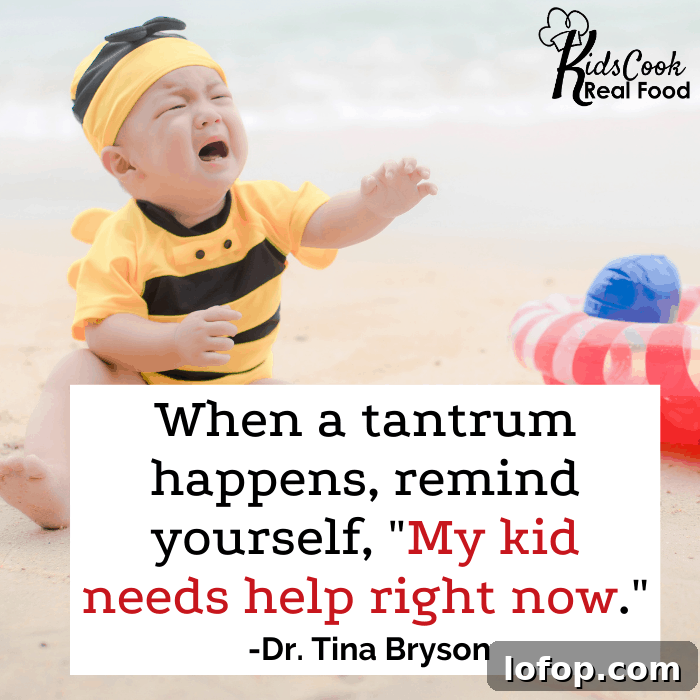
- 30:40 — Tantrums can become contagious. Pause to regulate yourself before responding. Be the calm in the storm so your child can learn to regulate.
- 32:18 — Facial expression, tone, and posture can either soothe or escalate a child’s threat response.
- 32:50 — Dr. Bryson shares a simple strategy and two key phrases to use during a tantrum to help parents stay calm and supportive.
- 34:02 — You don’t need to “fix” a tantrum. Your calm, empathetic presence is often the most helpful response.
Threat-based parenting builds no skills for the next time. – Dr. Tina Bryson
Practical Examples of How to Calm a Tantrum
- 35:55 — Example: handling bedtime resistance with calm presence, limits, and empathy.
- 37:05 — Another example shows internal visualization strategies for parents and how to hold boundaries while staying emotionally present.
- 39:47 — Discipline teaches self-discipline. When a child is dysregulated, connect first; teach later when they are calm and receptive.
- 40:54 — If a child refuses comfort, make support available rather than forcing it; with teens, offer alternative forms of connection.

Calm Tantrums Through Your Body
- 42:04 — Children respond differently to strong emotions: some fight, some withdraw, some become aggressive, others cry. Match your response to the child’s style.
- 43:19 — Use the body to calm the nervous system: breathing, posture, and movement can change emotion quickly.
If you want to feel relaxed, put your body in a relaxed state. – Dr. Tina Bryson
- 46:21 — Yelling and crying release nervous tension; laughing and movement can provide similar relief in safer ways.
- 47:29 — Practical, brain-based steps can make mealtimes more positive and help children become better eaters over time.
We are meaning-makers for our children. Making dinnertime positive is the first step to help our kids be healthy eaters. – Dr. Tina Bryson
More Resources for Calming Tantrums in Your Family
- Dr. Tina Bryson’s books include The Whole-Brain Child, No-Drama Discipline, Bottom Line for Baby, The Power of Showing Up, and The Way of Play.
- Further reads and resources explore brain function, sensory processing, stress mastery, and practical parenting strategies.

Dr. Tina Bryson is a psychotherapist and founder of clinical and play-therapy centers. She is the author and co-author of several books that make neuroscience accessible to parents and educators.
Her work focuses on attachment science, childrearing theory, and interpersonal neurobiology, and she emphasizes the importance of relationships in shaping how children grow and regulate emotion.