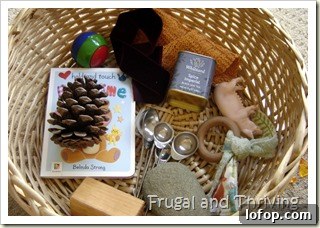
Open-ended materials encourage children to play creatively and in depth. Neuroscience shows that when children play this way, connections and pathways in the brain are activated and strengthened.
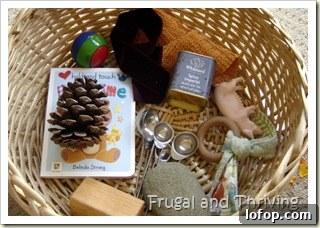 The best toys are simple objects that invite exploration, discovery, imagination and, above all, play.
As parents, we want to give our children the best start from birth, and toys often feel like a big part of that. Yet expensive, noisy, and overly engineered gadgets are not necessary and can even undermine a child’s natural curiosity, attention span and love of play.
Three parenting and educational approaches—RIE, Montessori and Waldorf—share a common message about babies and play: keep it simple and focus on meaningful experiences instead of accumulating stuff. Below are practical ideas drawn from these philosophies that are easy to implement and kind to your budget.
RIE Inspired Baby Play Ideas
RIE (Resources for Infant Educators) emphasizes respect for infants and supports independent play and development from birth. One central RIE idea for frugal parents is to resist buying things that interfere with natural movement or development.
RIE discourages the use of devices that restrain or position babies—such as bouncers, Bumbos, stationary walkers and similar contraptions—because they can limit movement and delay motor exploration. Practical realities sometimes call for exceptions, but the general guidance is to give babies space and time to move freely.
In the earliest weeks, babies don’t need toys. The everyday world provides endless stimulation: the sound of a caregiver’s voice, changing facial expressions, the movement of leaves against the sky, shifting light and shadow, the hum of traffic, birdsong, siblings laughing, or simply the texture of the floor beneath them.
Young infants can be overwhelmed by flashing lights and constant electronic stimulation, especially when they cannot move away from it. Instead, let a baby’s first “toy” be their hands, and then introduce simple, open-ended objects that invite curiosity: kitchen utensils, cloths, balls, containers, push toys and safe household items. These are inexpensive and rich with opportunity for exploration.
Montessori Inspired Baby Play
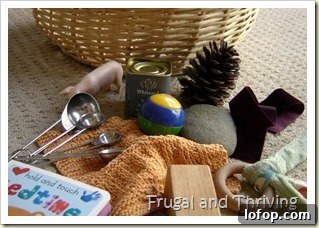
Montessori offers a simple, frugal idea: the sensory or treasure basket. Fill a shallow basket or box with safe everyday objects from around the home and let the baby explore at their own pace. These baskets encourage focused attention and independent discovery without costing anything extra.
Choose items carefully for safety and supervision, aiming for variety in texture, weight, shape and sound. Kitchen spoons, wooden lids, fabric scraps, measuring cups and small rattles (age-appropriate and safe) work well. Treasure baskets often hold a baby’s interest for long stretches and can grant caregivers a quiet moment while the child explores.
Waldorf Inspired Baby Play
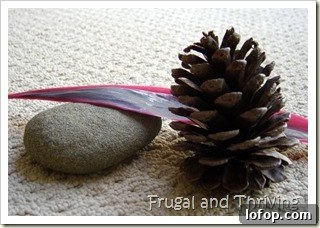
Waldorf education places a strong emphasis on nature and natural materials. Time outdoors is calming and restorative for children and adults alike. Even a short walk in a yard or courtyard can soothe a fussy baby.
Nature provides many of the best toys at no cost: leaves, rocks, sticks, shells, seedpods and flowers offer diverse textures, shapes and weights that plastic cannot mimic. Supervised play with natural items stimulates sensory exploration and imaginative play, and older children can use these materials for open-ended creativity.
It’s common to find that a simple natural object becomes a child’s favorite—whether for its texture, weight or the sensory feedback it provides. Letting babies handle and investigate natural materials supports learning through direct experience.
“Entertaining kinds of toys (such as mobiles or battery-operated toys) cause a passive child to watch an active toy. This trains the child to expect to be amused and entertained.”
You don’t need to spend a lot to support learning and development. Your home and yard are full of safe, interesting objects that invite discovery: things to shake, bang, mouth, drop, empty, fill, turn, scrunch, tear, throw and transform into imaginative play. Choosing simple, open-ended materials and time outdoors will nurture curiosity, concentration and creative play without the clutter and expense of modern gadgetry.