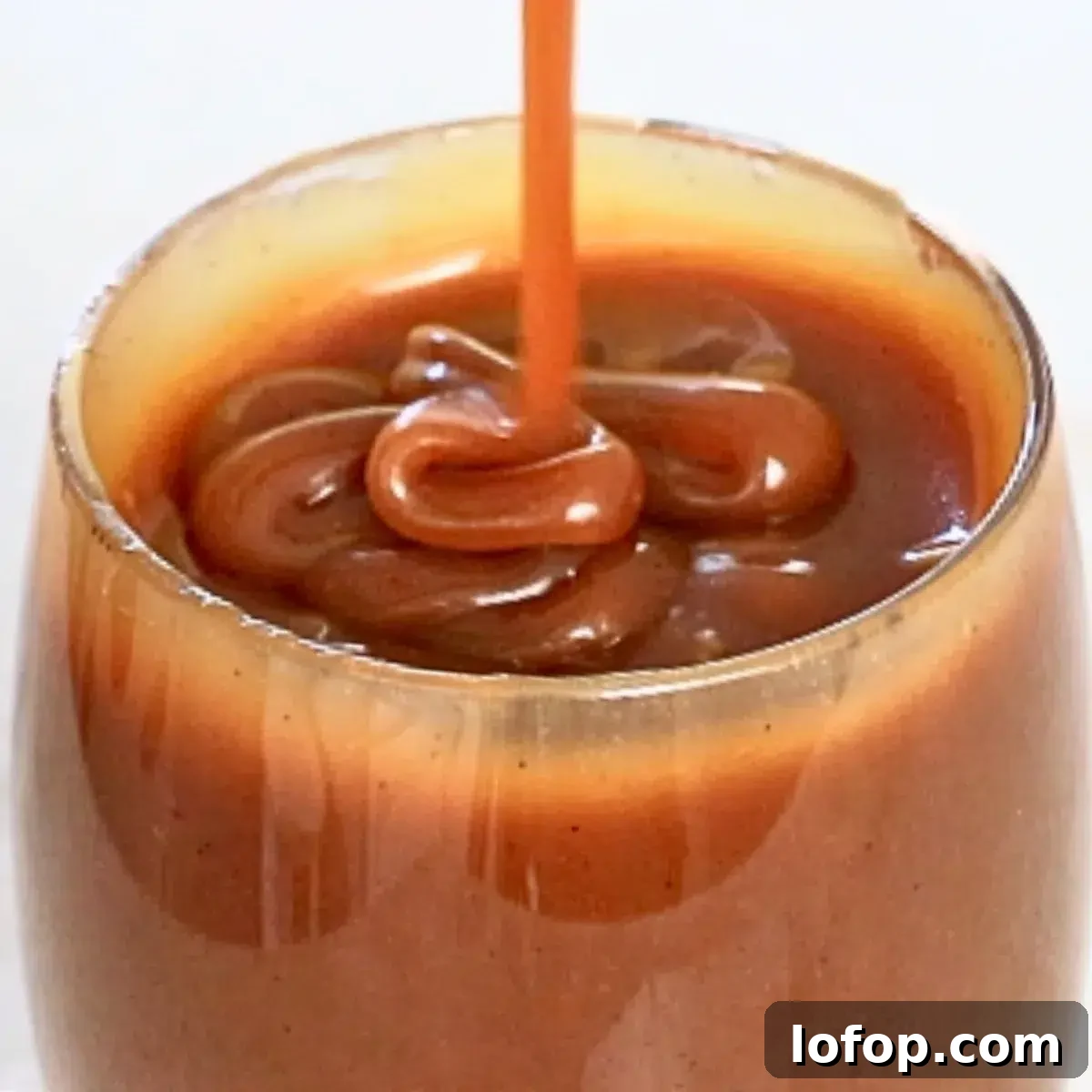
Welcome to a complete guide for making the perfect caramel sauce. This post explains two reliable techniques—the dry method and the wet method—so you can compare them and choose the one that works best in your kitchen.
2 Ways Of Making Caramel Sauce
Many recipes call for either the dry or the wet caramel method, and each has its advantages. The dry method starts by heating only sugar, while the wet method begins by dissolving sugar in water. Both lead to delicious caramel sauce—this guide walks through both step by step so you can see the differences and decide which you prefer.
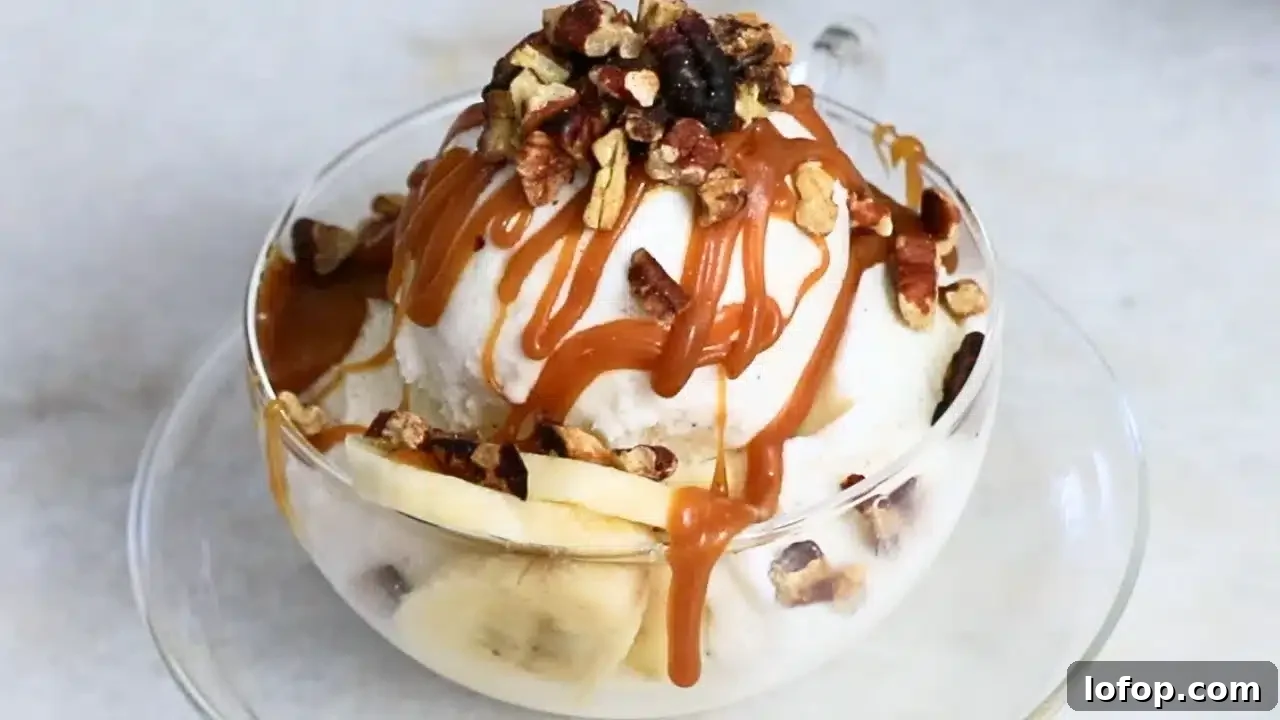
Method 1. Dry caramel (The dry method)
Dry caramel is made by heating only granulated sugar until it melts and browns. No water is added at the start.
Method 2. Wet caramel (The wet method)
Wet caramel begins by dissolving sugar in water and heating the syrup until it caramelizes. After that, the steps are essentially the same as with the dry method.
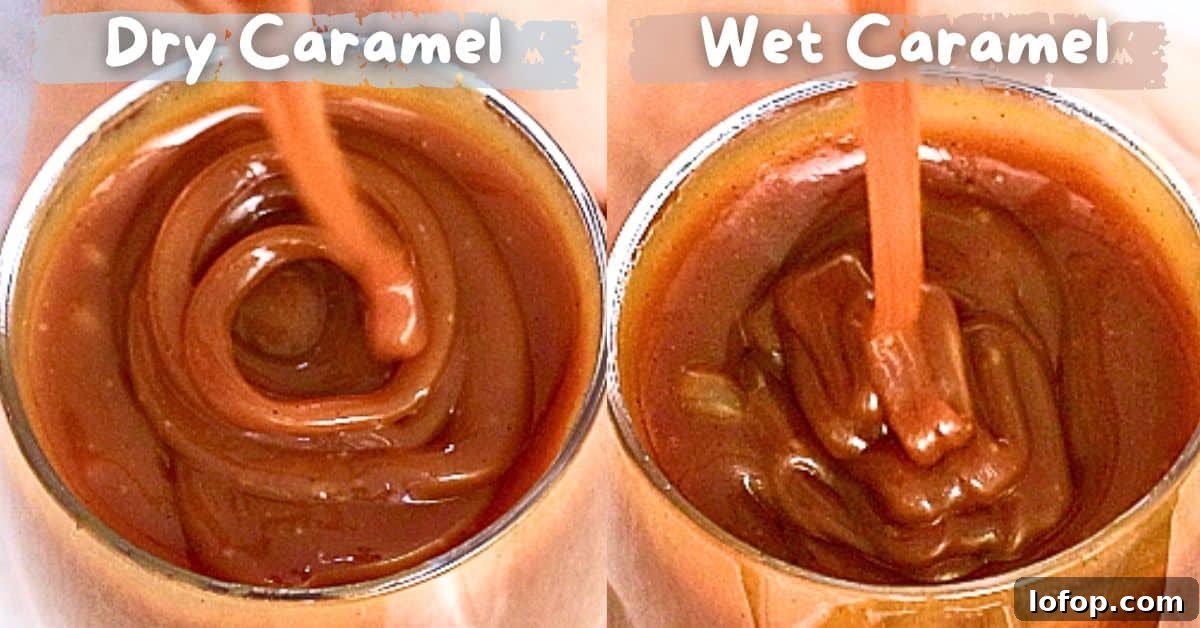
Which method is better? The answer depends on what you want: ease of control, texture, or speed. Both methods produce excellent caramel sauce; they just behave a little differently during cooking. This tutorial covers ingredients, tools, tips, and step-by-step instructions so you can confidently prepare either version.
Let’s get started.💪🏻
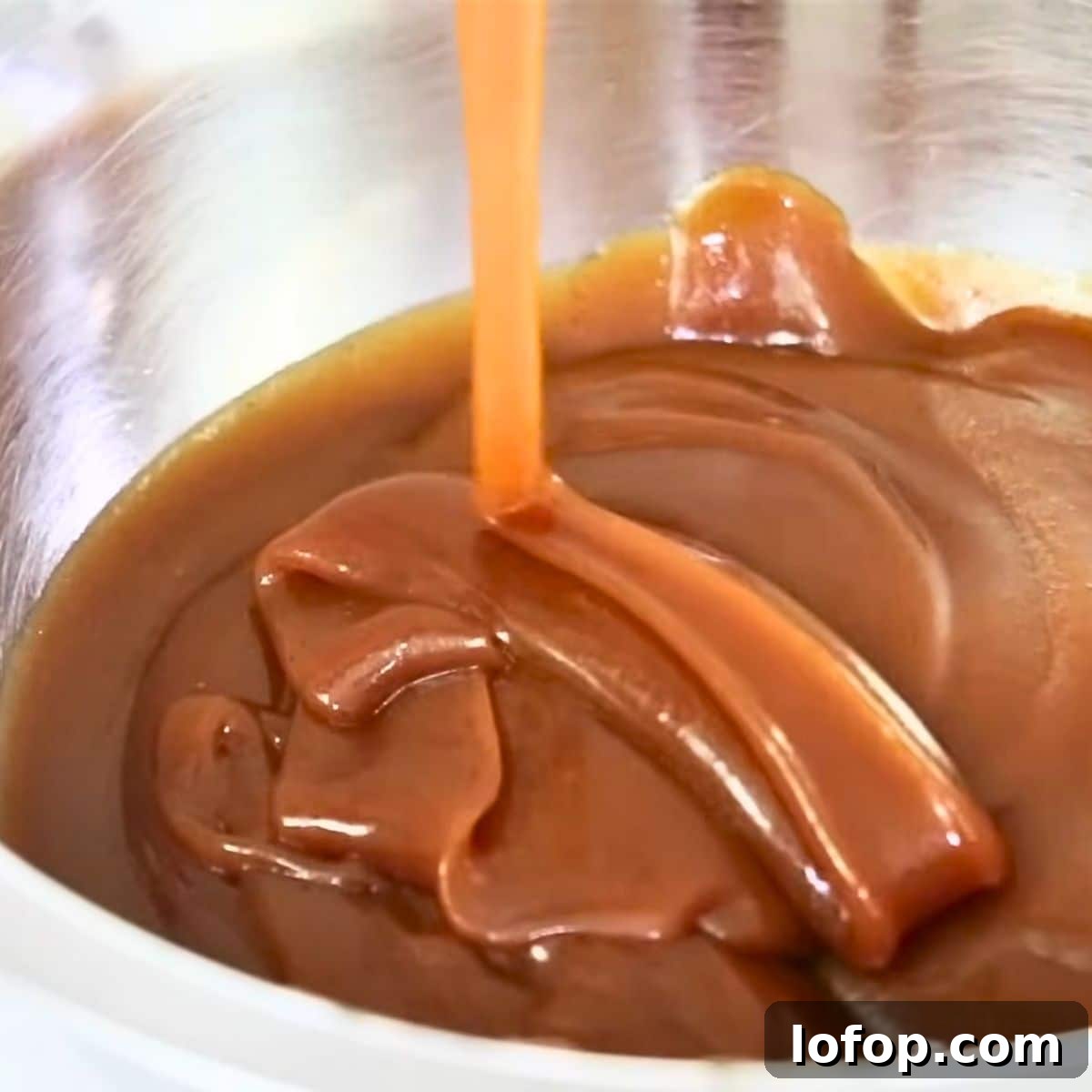
VIDEO: Watch How To Make the Caramel Sauce!
Follow the step-by-step video to see both methods in action and learn the small but important details that affect the final result.
Tips For Caramel Sauce Ingredients
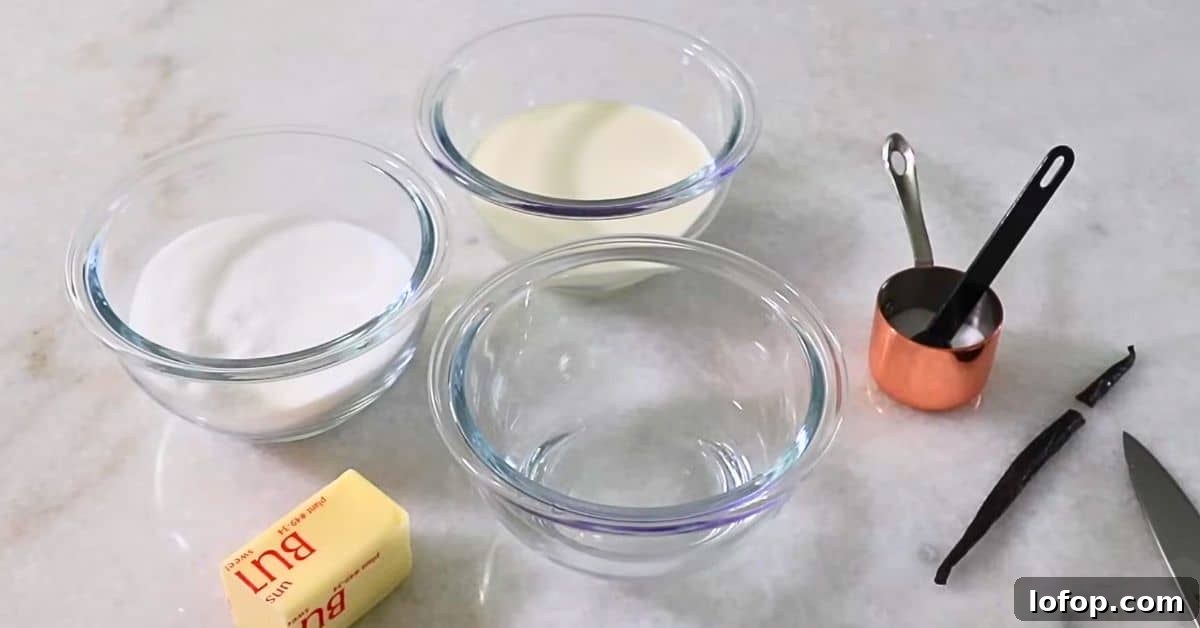
- Granulated sugar: Use white granulated or caster sugar for a clean caramel flavor. Brown sugar is not ideal because it burns more easily and alters the flavor.
- Water: Required only for the wet method.
- Heavy cream (hot): Use heavy cream or heavy whipping cream and heat it before adding to the caramel to avoid seizing and to keep the texture silky.
- Vanilla beans or extract: Vanilla enhances the sauce—use scraped vanilla beans for the richest aroma, or vanilla extract as a convenient alternative.
- Salt: A pinch of salt balances the sweetness—table salt, kosher, or sea salt all work.
- Unsalted butter: Optional. Butter adds shine and richness and slightly changes the final consistency.
Dry caramel basics: sugar + heavy cream.
Wet caramel basics: sugar + water + heavy cream.
Both versions: finish with vanilla and salt; add butter if you want a richer, glossier sauce.
Can I use milk instead of heavy cream?
Milk can be used, but it produces a thinner, less rich sauce. Heavy cream gives the best silky texture and full flavor, so it’s recommended if you want classic caramel sauce consistency.
The Tools You’ll Need
- Medium saucepan: Stainless steel is preferred so you can judge color accurately—avoid colored nonstick surfaces.
- Pastry brush: Useful for wet caramel to rinse down sugar crystals on the pan sides.
- Heat-resistant spatula or wooden spoon
- Knife for splitting vanilla pods
- Sieve for straining the finished sauce
- Airtight container for storage
Preparation For Both Methods
- Start with a clean, dry saucepan—any impurity or residue can affect caramelization.
- Scrape vanilla seeds into the cream and warm the cream ahead of time.
- Cut butter into small pieces if using.
- Heat the heavy cream until hot but not boiling—hot cream reduces violent bubbling when added to the caramel.
Begin with the dry method to learn how sugar behaves when heated alone.
The Dry Caramel Method
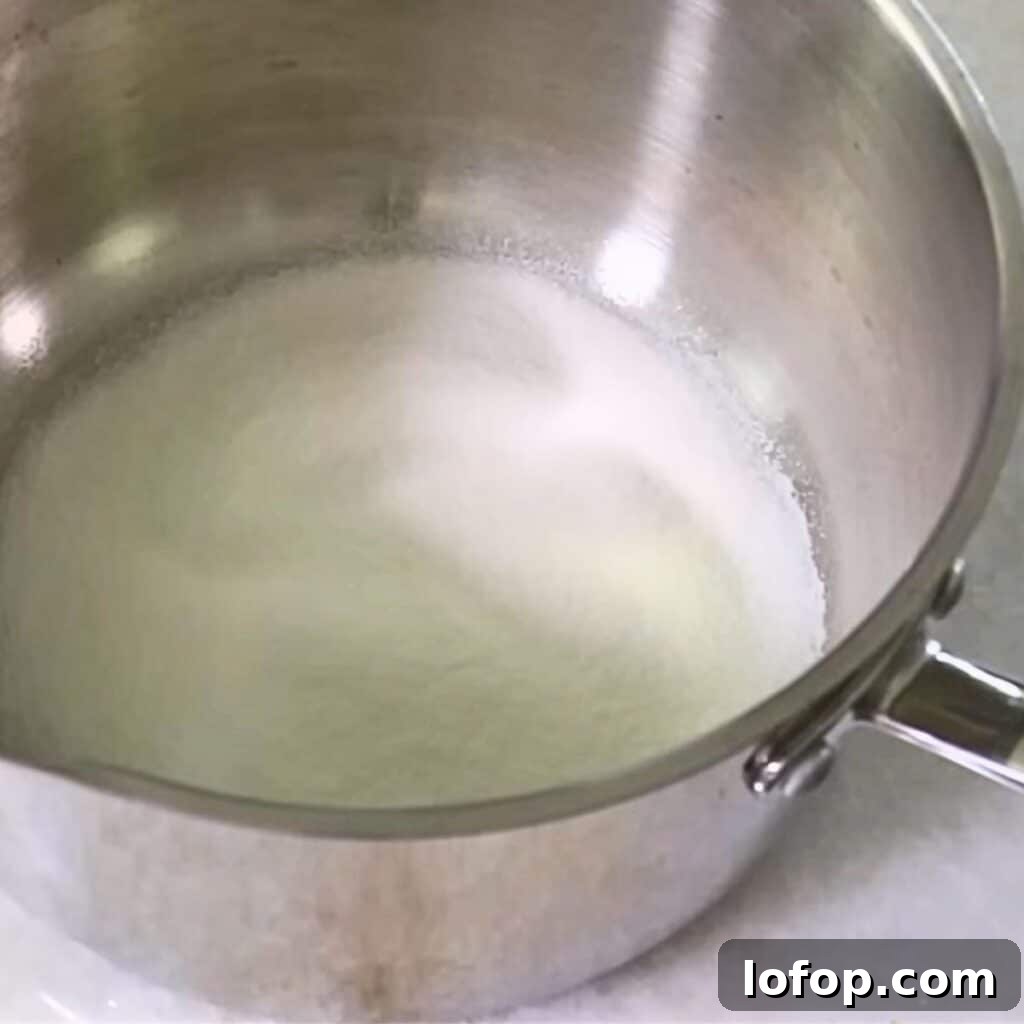
Step 1: Heat sugar in a saucepan.
Add granulated sugar to a medium saucepan and heat over medium. Leave the sugar undisturbed until it begins to melt at the edges.
Quick tip: do not stir immediately—let the sugar melt first. Stirring too early can encourage sticky clumps on utensils and the pan sides.
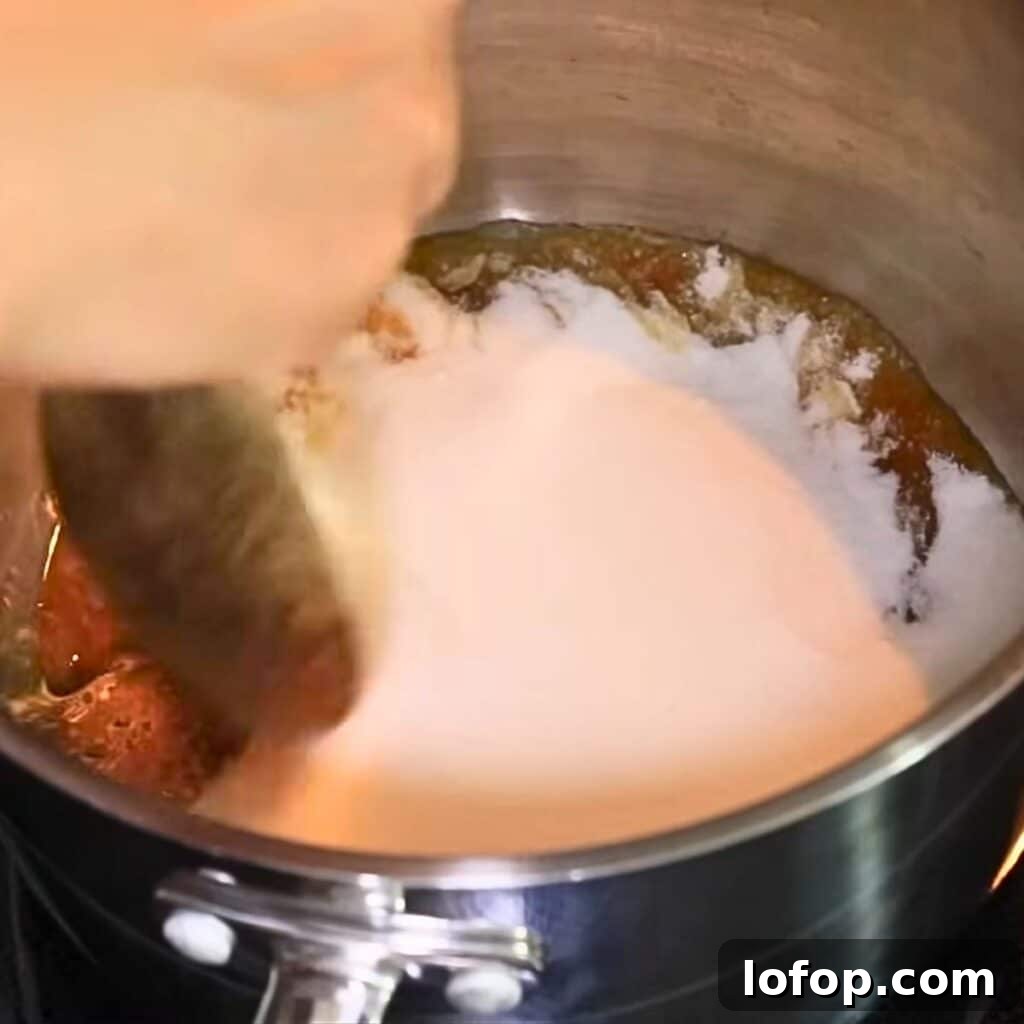
Step 2: Caramelize the sugar.
When the sugar begins to melt around the edges, gently gather the melted portions toward the center with a spatula so the unmelted sugar dissolves slowly. Reduce heat as soon as caramelization begins and remove from heat when the sugar turns a golden amber color.
Tip: lower the heat once caramelization starts. Sugar can go from perfect amber to burnt very quickly if left too hot.
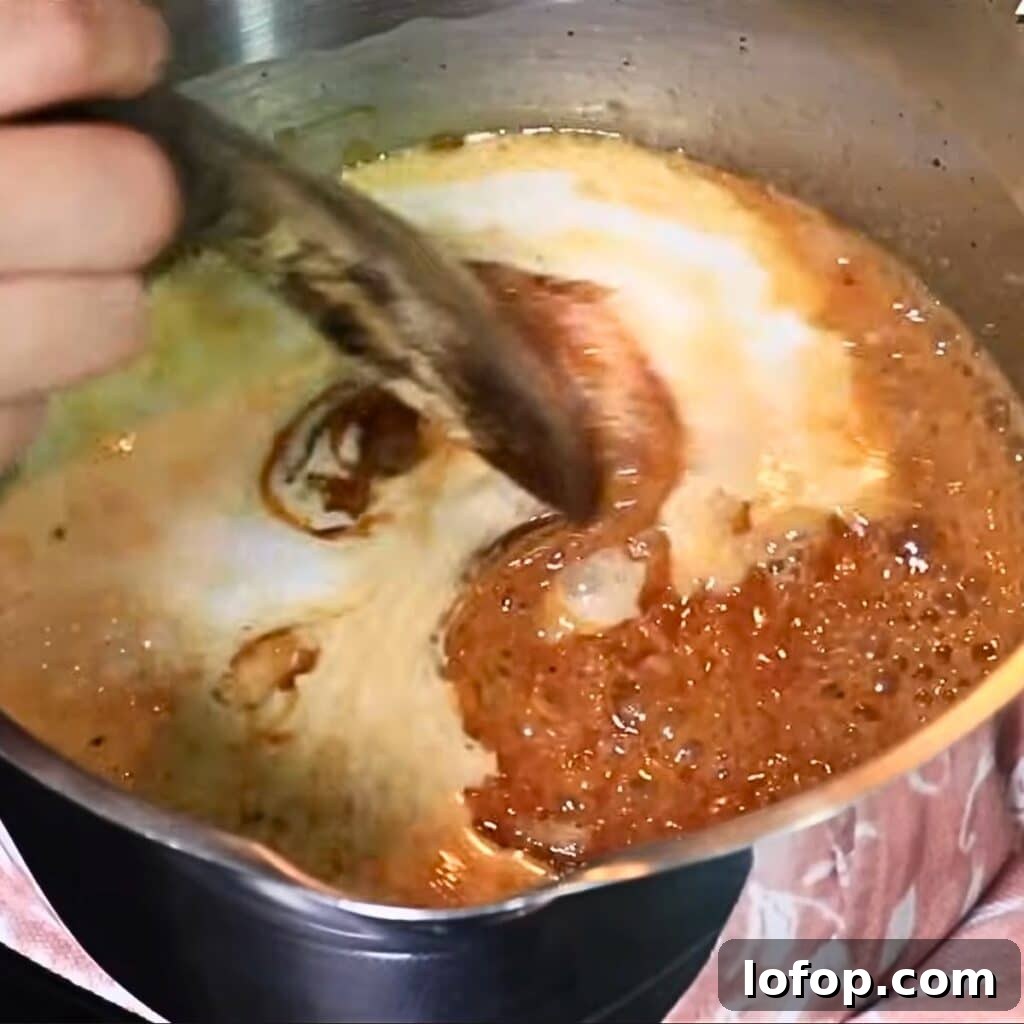
Step 3: Add hot heavy cream and vanilla.
Add scraped vanilla (or extract) and pour in about one-third of the hot heavy cream. The caramel will bubble vigorously—wait a few seconds for the bubbling to subside, then add the remaining cream and stir until combined.
Two cream tips:
- Use hot cream to reduce shock to the hot caramel and limit aggressive bubbling.
- Add cream promptly while the caramel is hot so it blends smoothly before the sugar hardens.
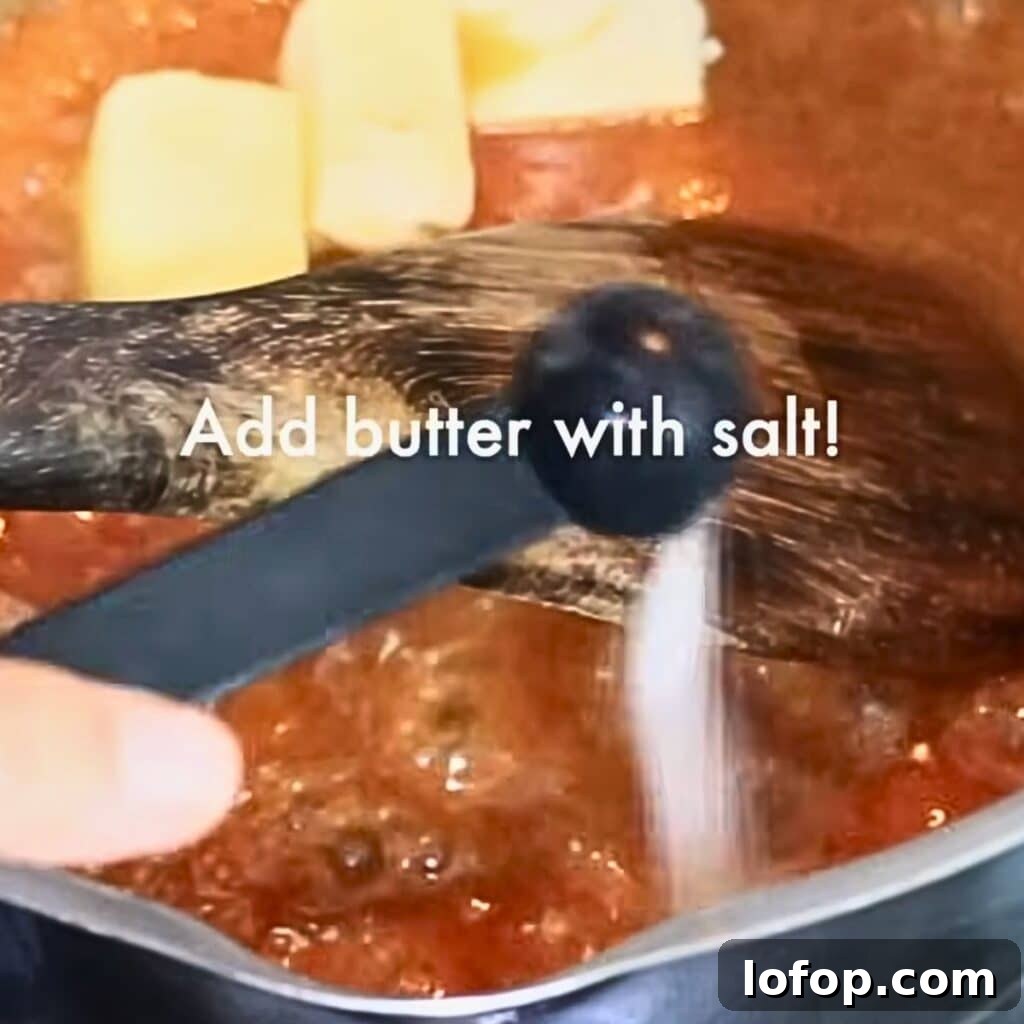
Step 4: Add salt (and butter).
Stir in salt and butter (if using) until smooth and evenly combined.
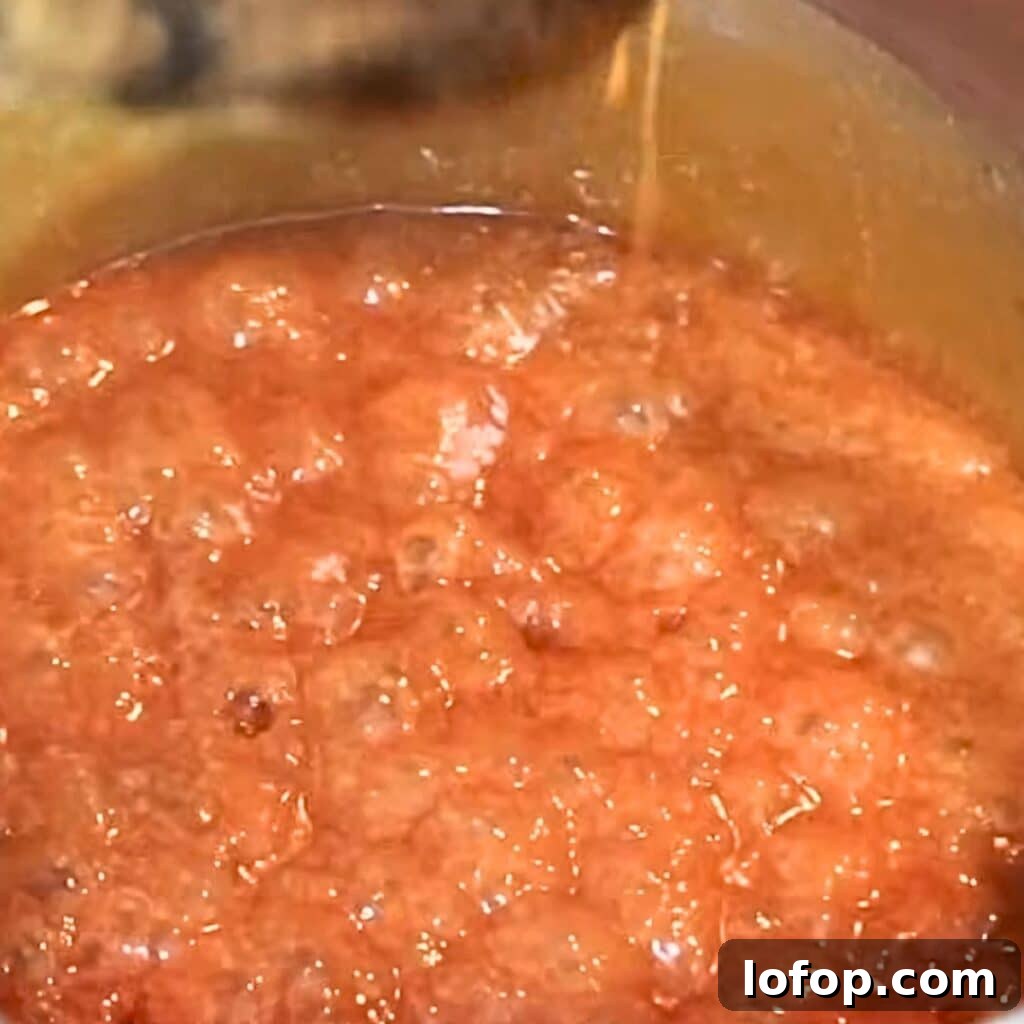
Step 5: Heat the caramel sauce again.
Return the pan to medium-low heat briefly to ensure any remaining sugar dissolves and the sauce is homogeneous. Remove from the heat once it looks smooth and glossy.
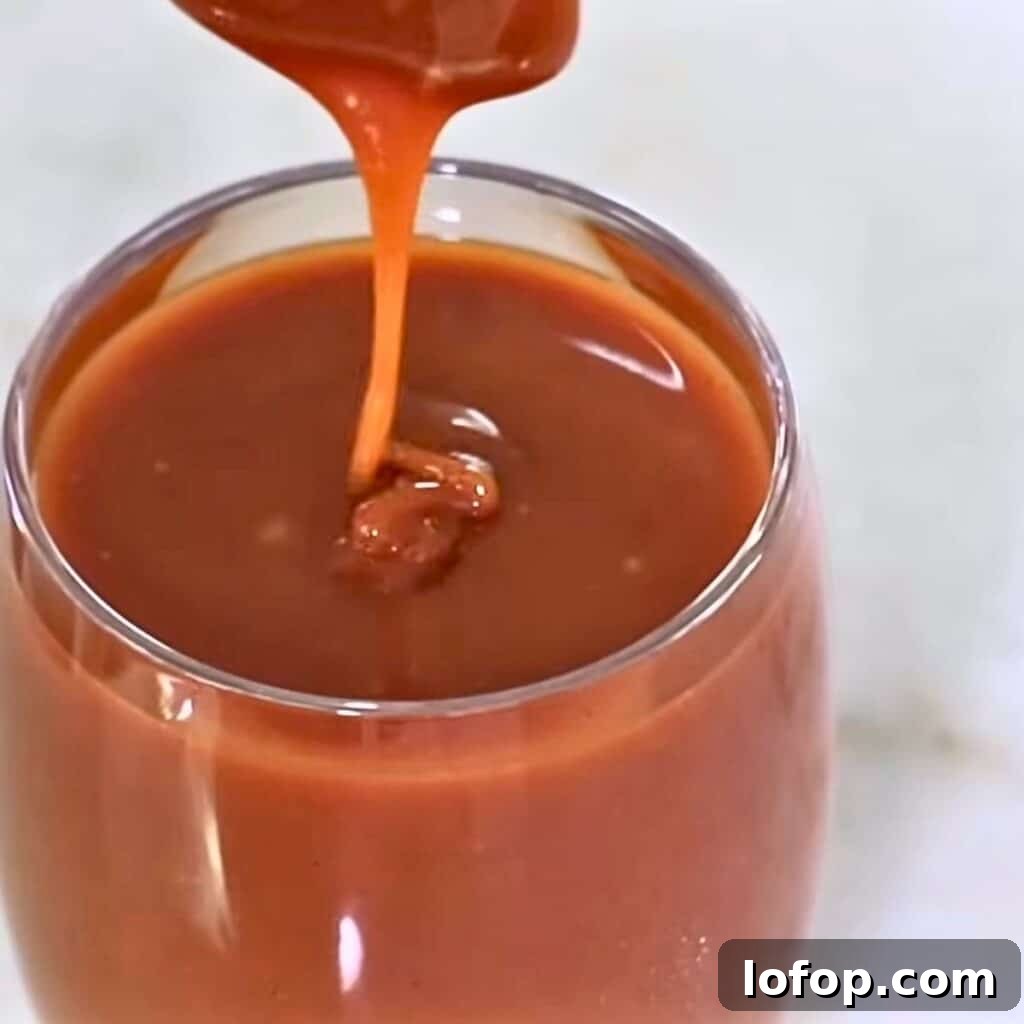
Step 6: Strain it.
Pass the sauce through a fine sieve to remove the vanilla pod and any solids or crystals. Use immediately or store in an airtight jar.
Next, the wet caramel method.
The Wet Caramel Method
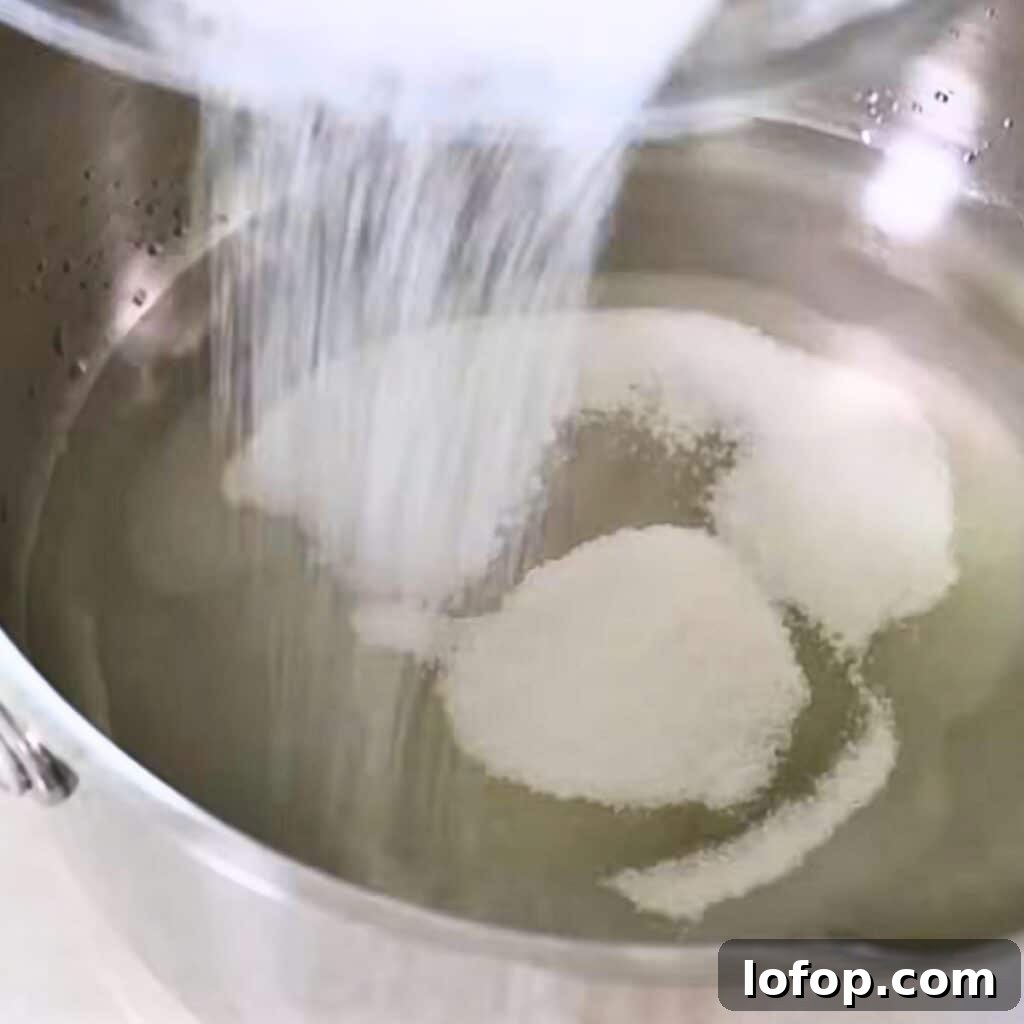
Step 1: Heat water and sugar.
Combine water and sugar in a medium saucepan, making sure all the sugar is moistened. Heat over medium to medium-high. Wet the pan sides with a little water using a pastry brush if crystals form.
Tip: like the dry method, avoid stirring until melting begins. Wet caramel typically takes longer before caramelization appears.
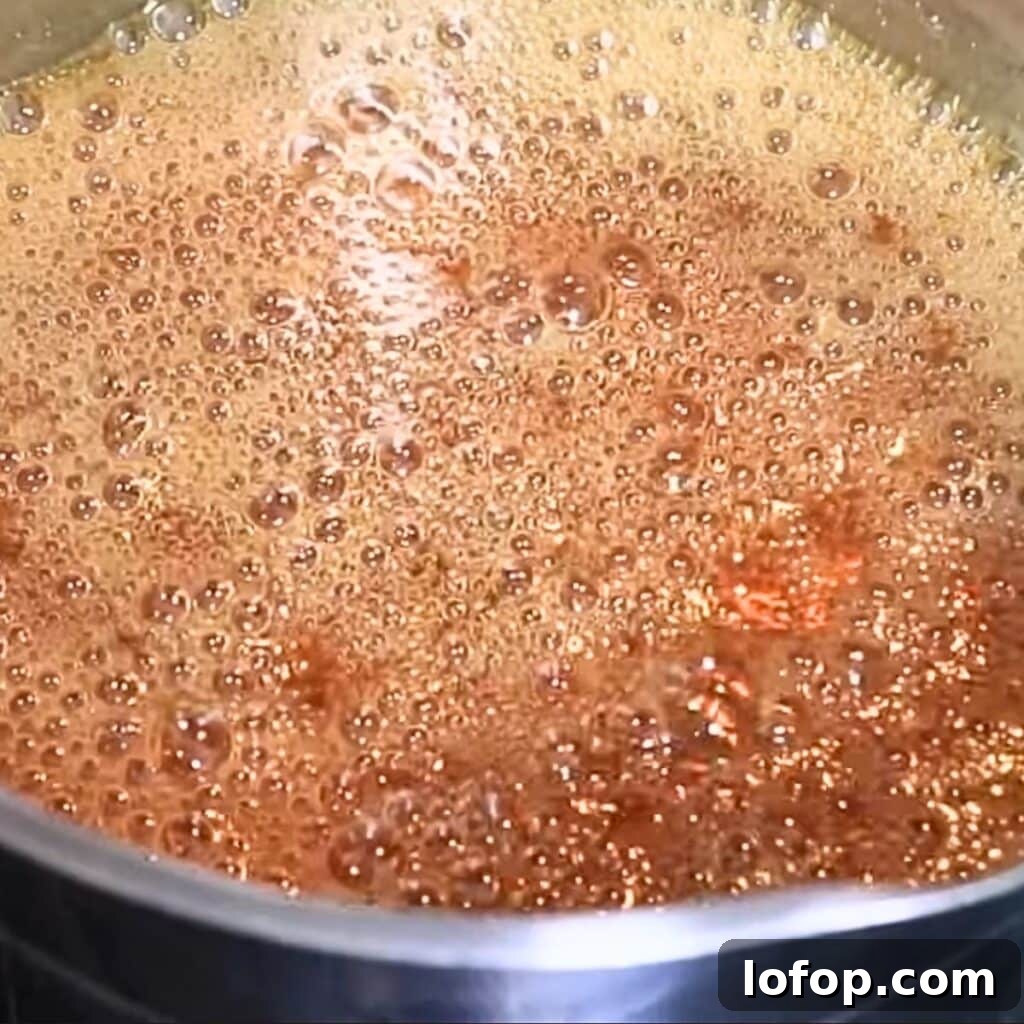
Step 2: Caramelize the sugar.
When you notice light caramelization in one area, lower the heat to avoid burning. As the color spreads across the surface, gently swirl the pan to judge color. Remove from heat at deep amber.
Listen to the bubbles: early bubbling is high and loud—no caramel yet. When bubbling becomes lower and the syrup thickens, caramelization is imminent. Stay attentive at that stage, as color changes happen quickly.
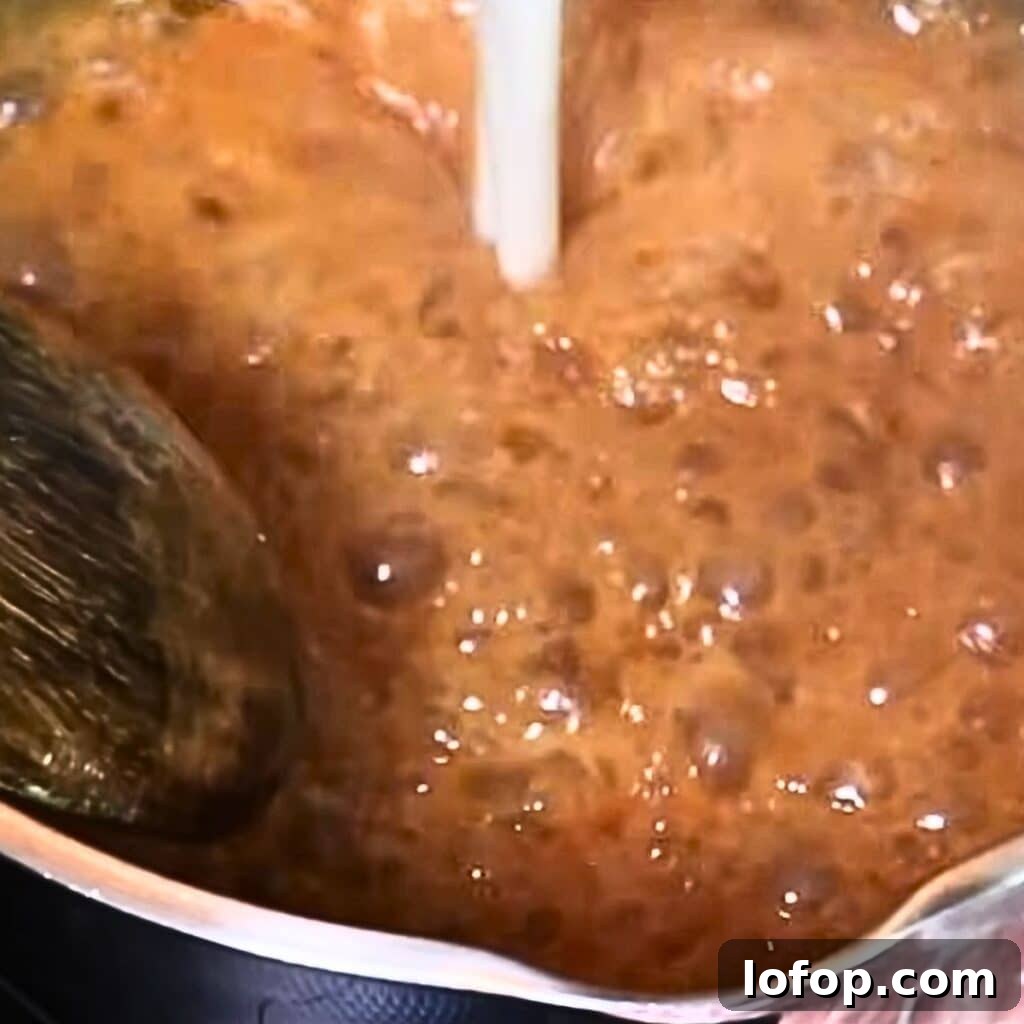
Step 3: Add heavy cream and vanilla.
Add vanilla and about one-third of the hot heavy cream, wait for vigorous bubbling to calm, then add the remaining cream and stir until combined—same as the dry method.
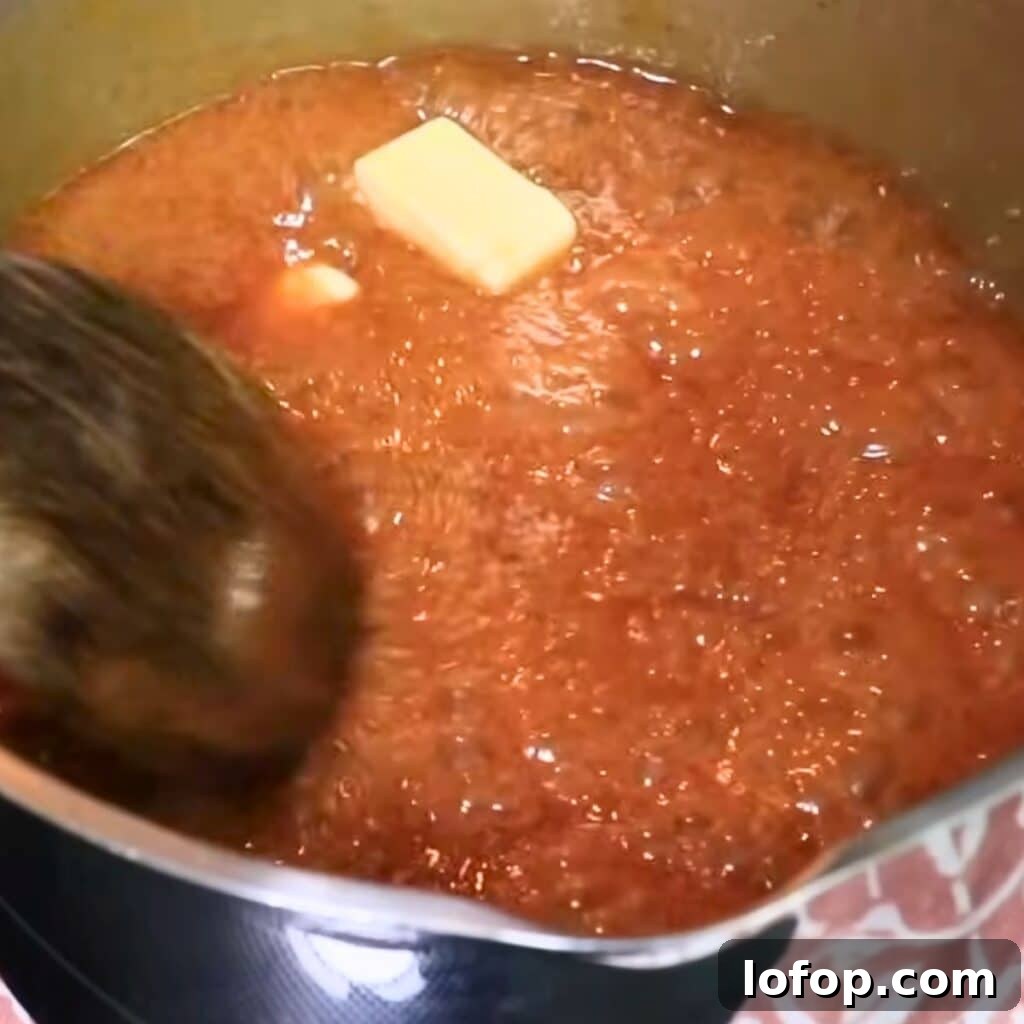
Step 4: Add salt (and butter).
Stir in salt and butter if desired, mixing until smooth.
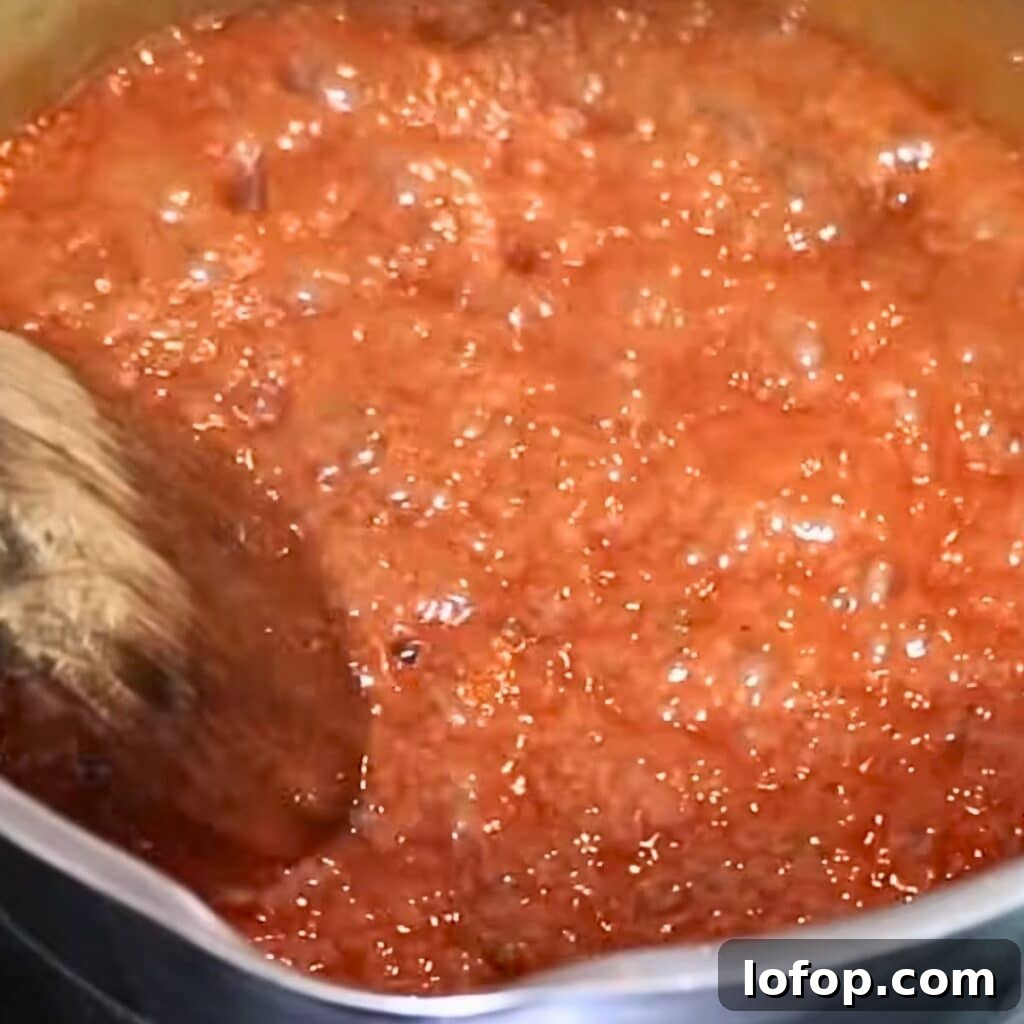
Step 5: Heat it again.
Warm the pan briefly over medium-low to make sure everything is fully dissolved and smooth, then remove from heat.
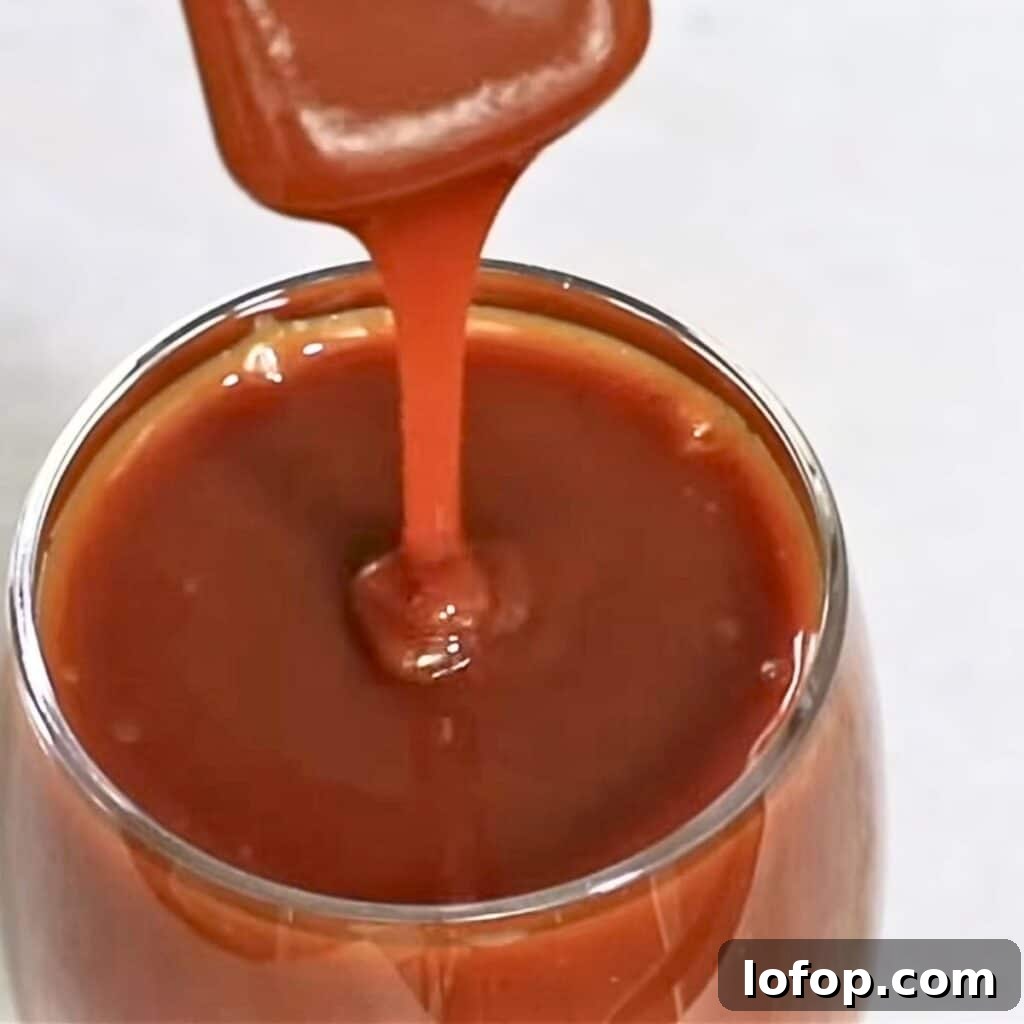
Step 6: Strain it.
Strain the sauce to remove the vanilla pod and any solids or crystals before storing or serving.
How Dark Should The Caramel Be?
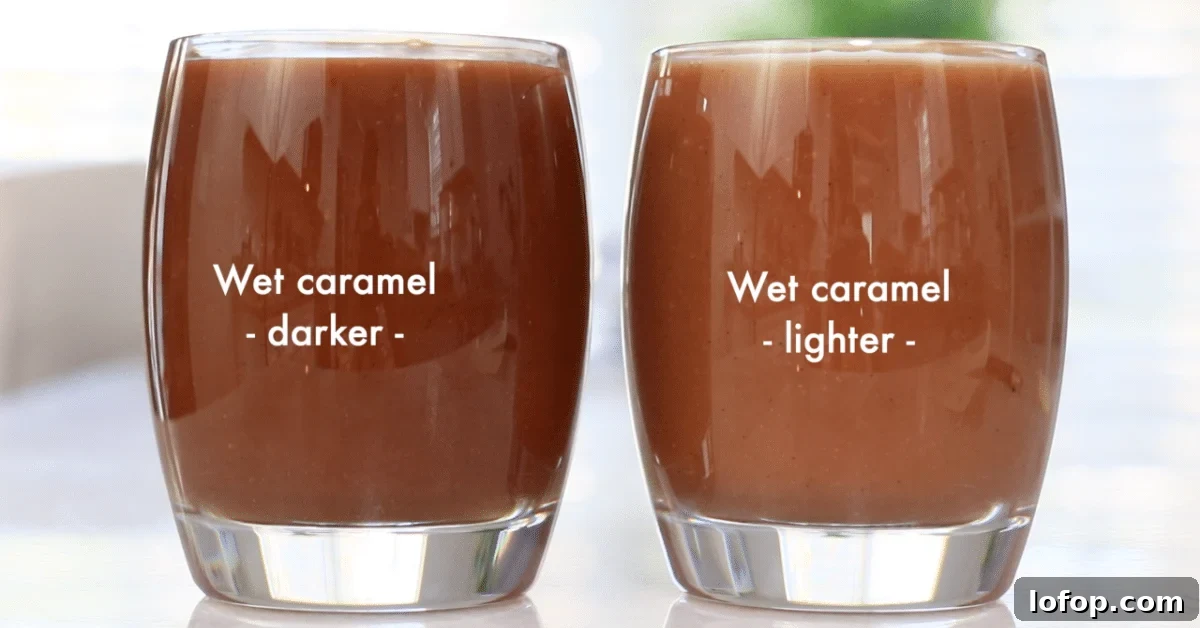
Remove the caramel from heat when it reaches deep amber. Lighter caramel is sweeter and less complex; darker caramel develops deeper, more bitter flavors. Avoid over-darkening, as burnt caramel tastes unpleasant.
Tips for darker caramel
- The darker the caramel, the more intense and slightly bitter the flavor. Be cautious—bitterness rises sharply if you go too far.
- When smaller bubbles appear across the surface, it’s time to remove the pan—caramel darkens quickly at that point.
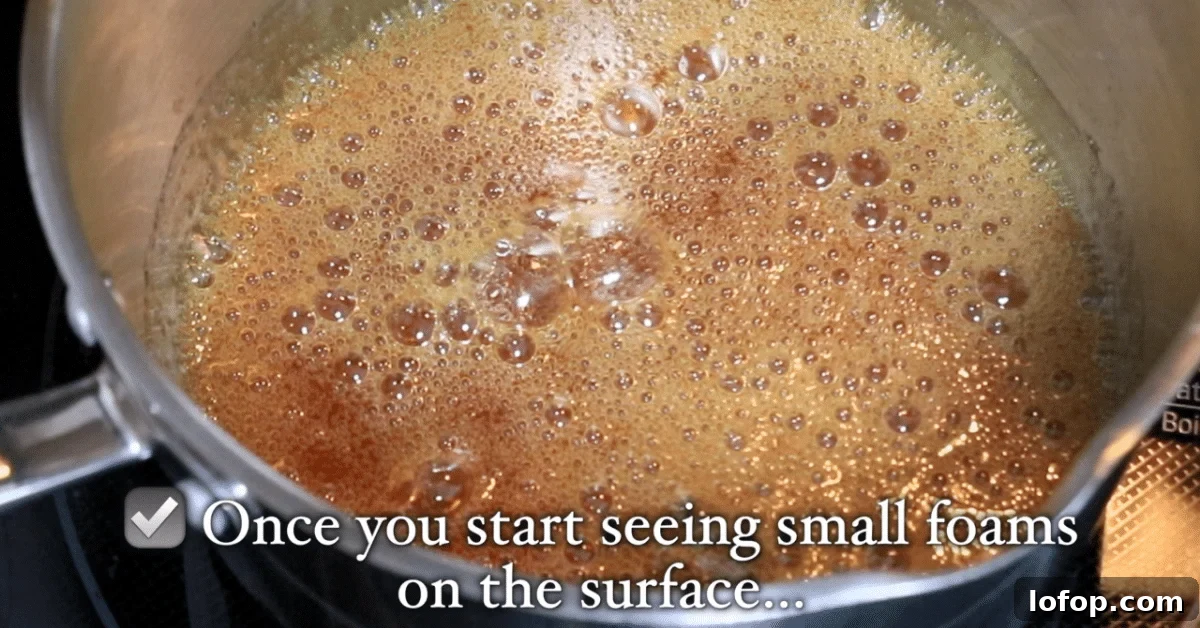
Tips for lighter caramel
- Lighter caramel tastes sweeter and milder but with less depth.
- Light caramel will be slightly thinner than darker caramel.
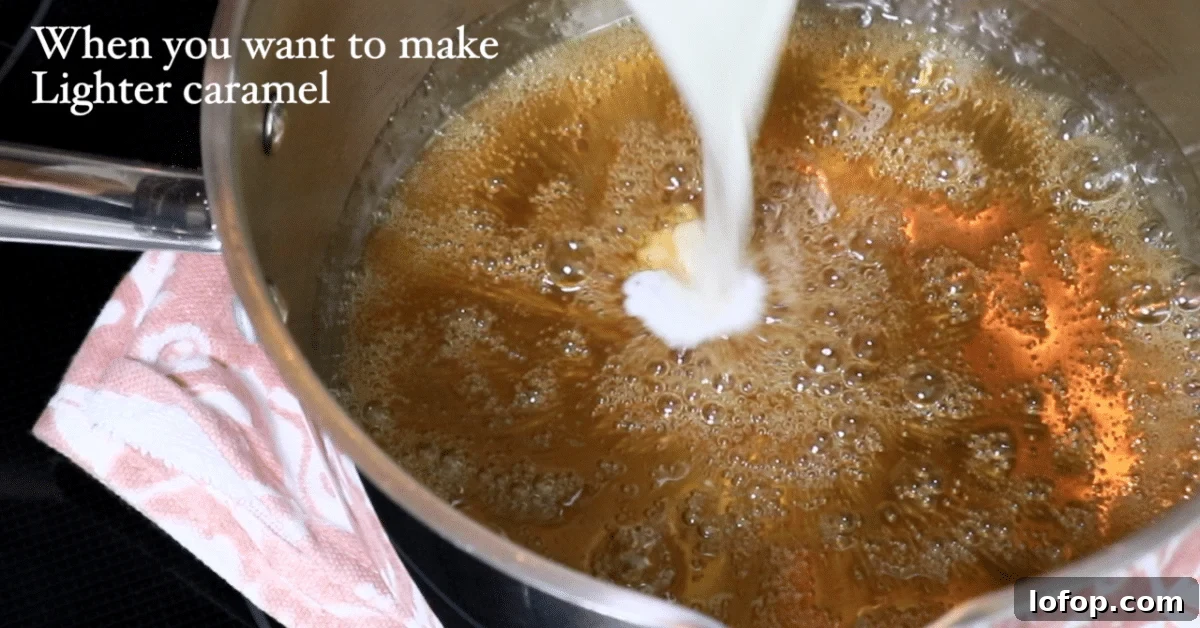
- Adding heavy cream too early can make the sauce grainy; for a lighter sauce, wait until the color reaches a light amber before adding cream.
Comparing the Two Methods
Both methods yield excellent caramel sauces with only subtle differences you can tailor to preference.
Consistency
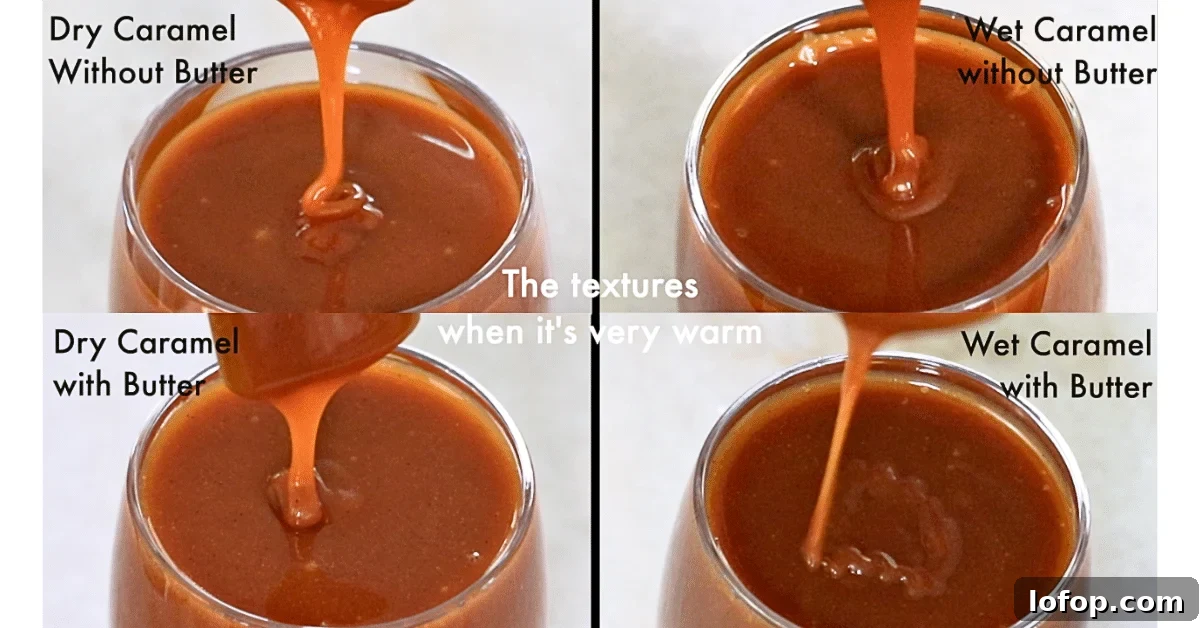
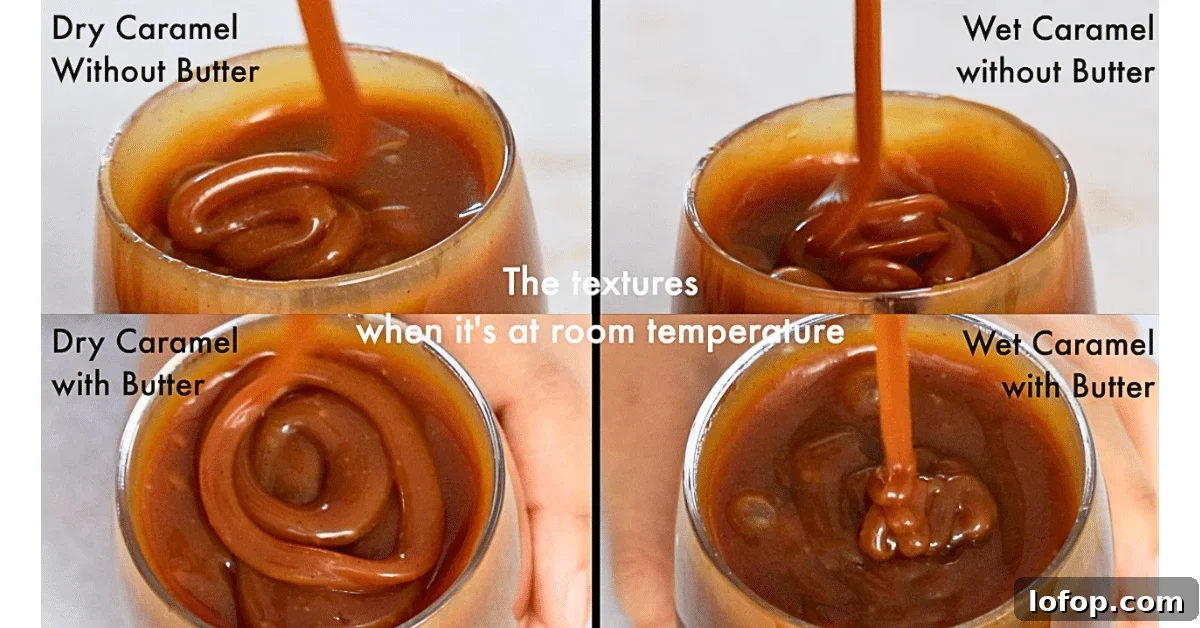
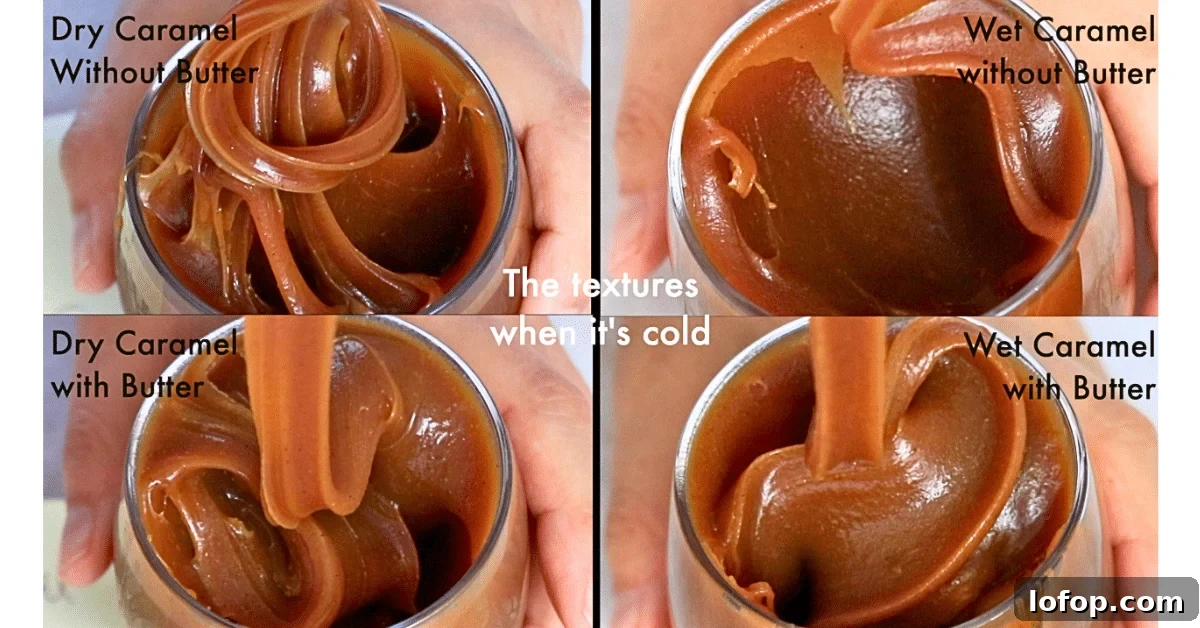
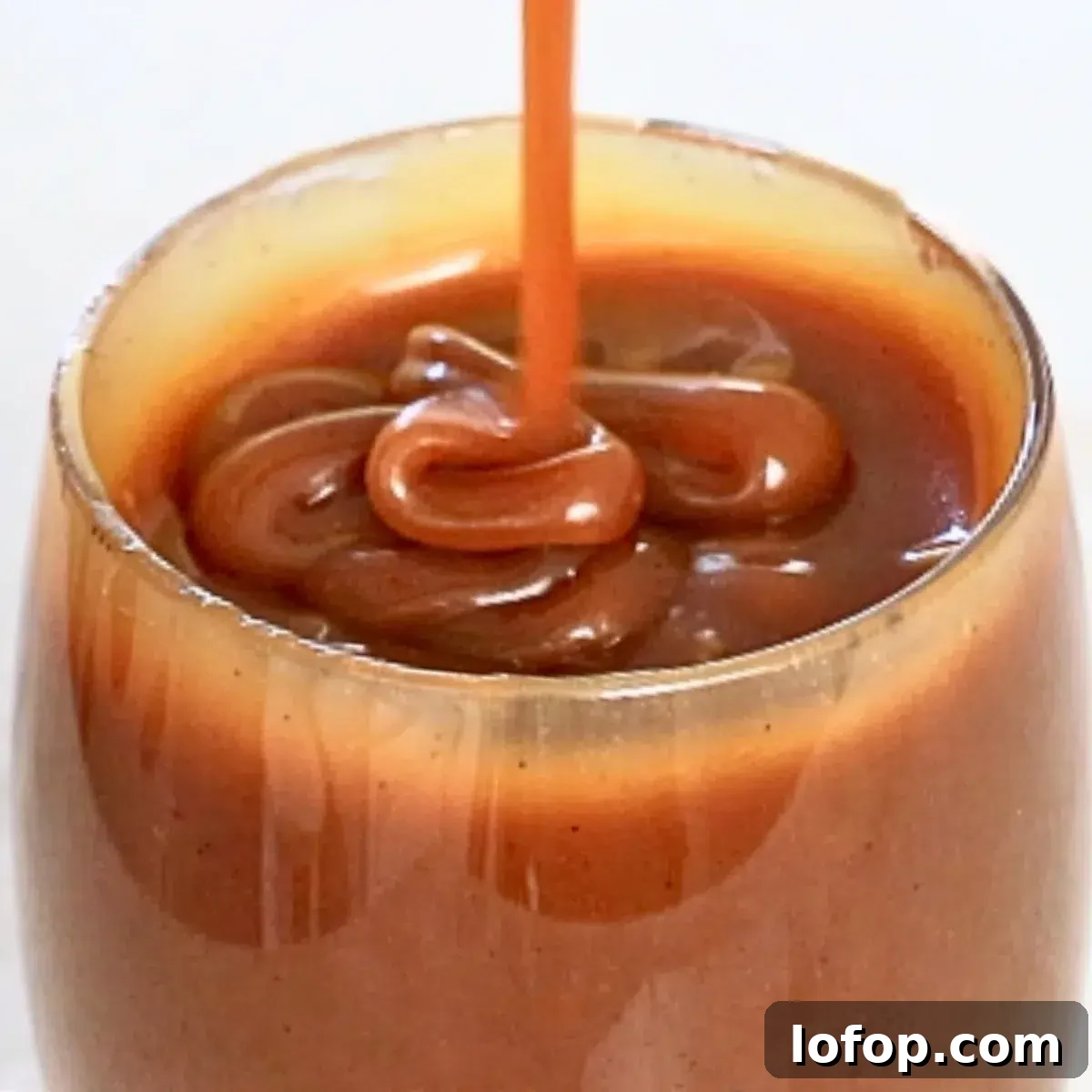
Wet caramel is slightly softer than dry caramel, but the difference is minimal. Adjust the sauce thickness by increasing or reducing heavy cream.
Flavor
I found no major flavor difference between wet and dry methods when finished similarly. Both can produce deep, rich caramel notes depending on the cooking time and final color.
Caramel Sauce With and Without Butter
Consistency
Adding butter makes the sauce a touch thinner while hot and slightly firmer when chilled.
Flavor
Butter rounds and softens the flavor, creating a milder, richer mouthfeel. The effect is subtle if you use a small amount.
Conclusion
Both dry and wet caramel methods are reliable and produce delicious sauce. Differences are subtle and easy to control—choose the method you find most comfortable. If you’re unsure, try both and compare results to find your favorite.
When warm:
At room temperature:
When cold:
How To Store Homemade Caramel Sauce
Transfer the cooled sauce to an airtight glass jar or container and refrigerate.
Refrigerated, it keeps up to two weeks.
Yes. Freeze in an airtight container for a few months. Thaw overnight in the refrigerator and gently reheat before using if needed.
Because it contains heavy cream, it’s safest to refrigerate it rather than leave it at room temperature for more than a few hours. I recommend keeping it chilled and reheating if required.
Uses For Caramel Sauce
This versatile sauce complements many desserts and drinks. Popular uses include:
- As a topping for vanilla ice cream, sundaes, pies, brownies, and caramel apples.
- As a filling for cakes, cream puffs, truffles, macarons, cupcakes, and other pastries.
- Folded into frostings like buttercream or whipped cream for caramel-flavored icings.
- In drinks such as caramel lattes or frappuccinos.
- Finish with flaky sea salt for salted caramel.
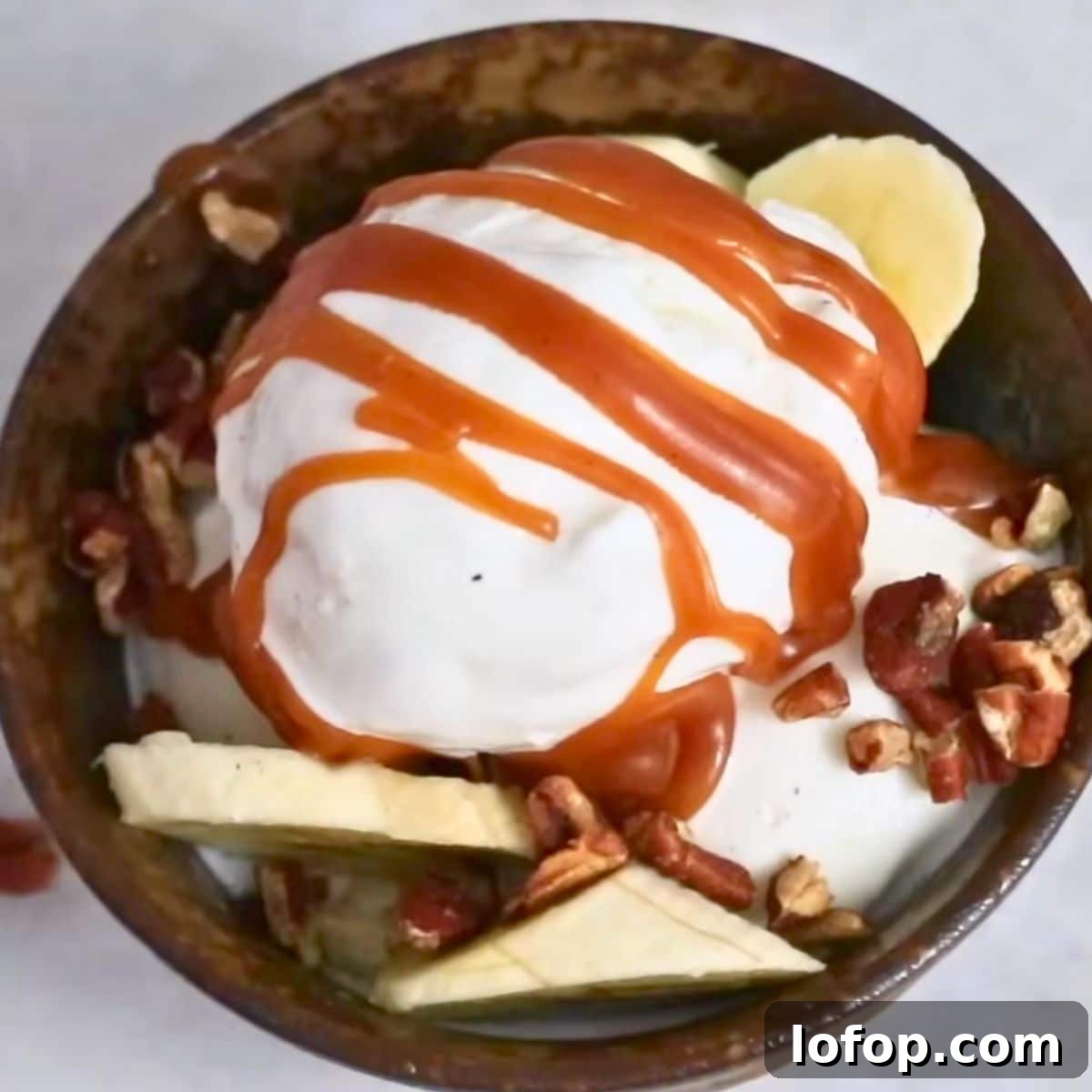
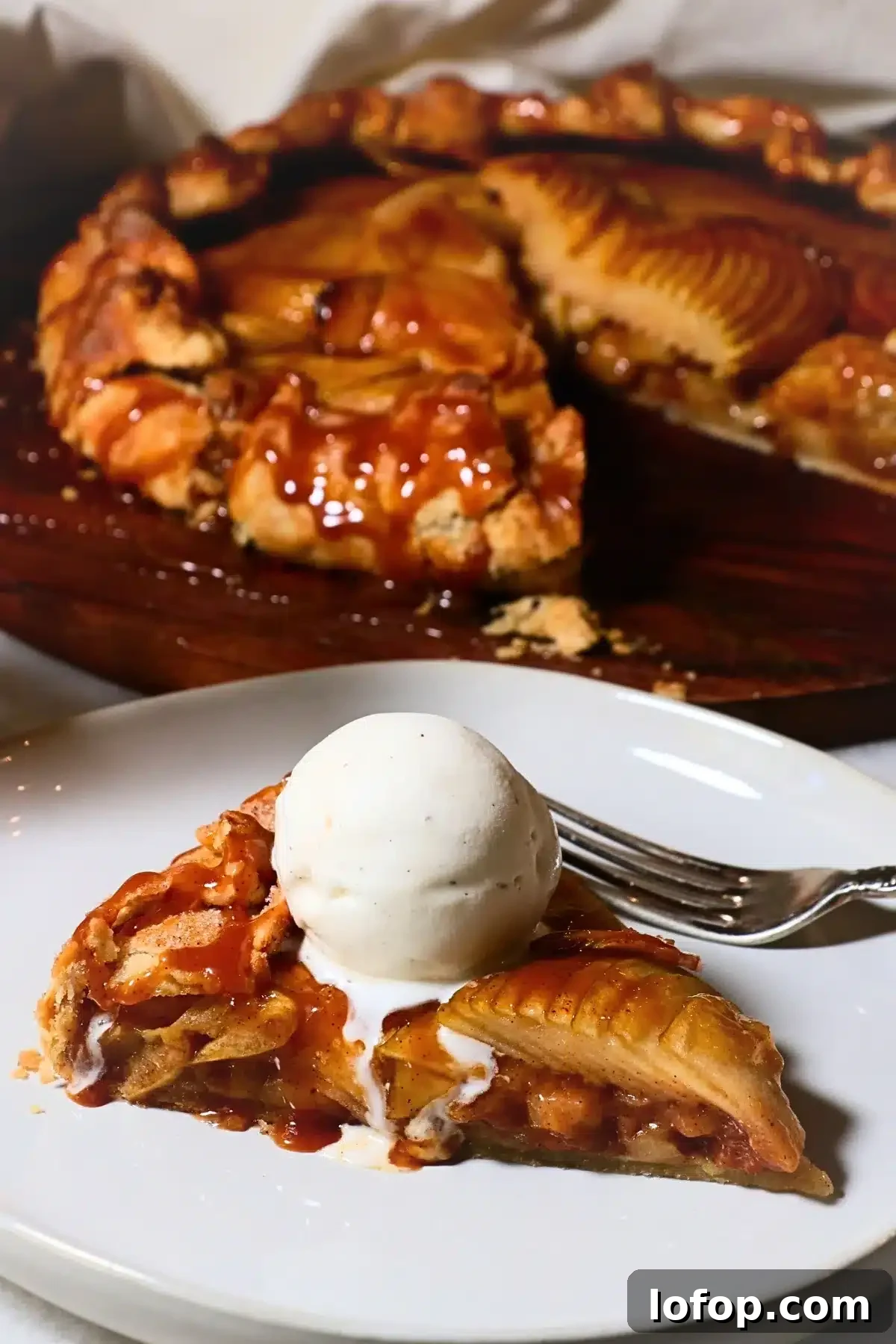
Homemade caramel sauce is rich, flavorful, and quick to make. It elevates simple desserts—like a warm caramel apple galette with vanilla ice cream—into something special.
More Filling Recipes
If you enjoy making fillings, try other recipes such as lemon curd, strawberry jam, pastry cream, or raspberry jam to expand your repertoire.
Did you try the recipe?
Share your feedback in the comment section below—I’d love to hear how you enjoyed it with friends and family.
Thank you! – Aya
Caramel Sauce (Dry Caramel And Wet Caramel)
Pin Recipe