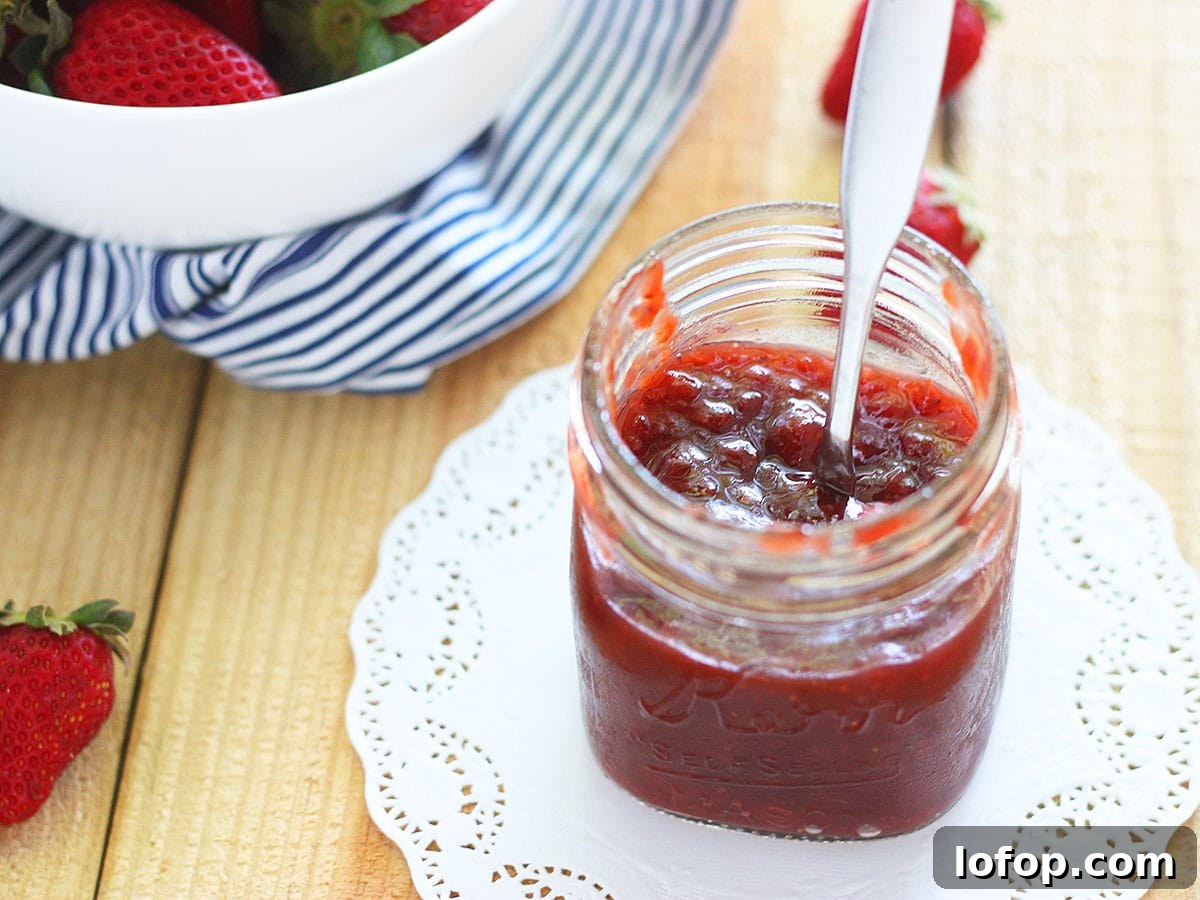
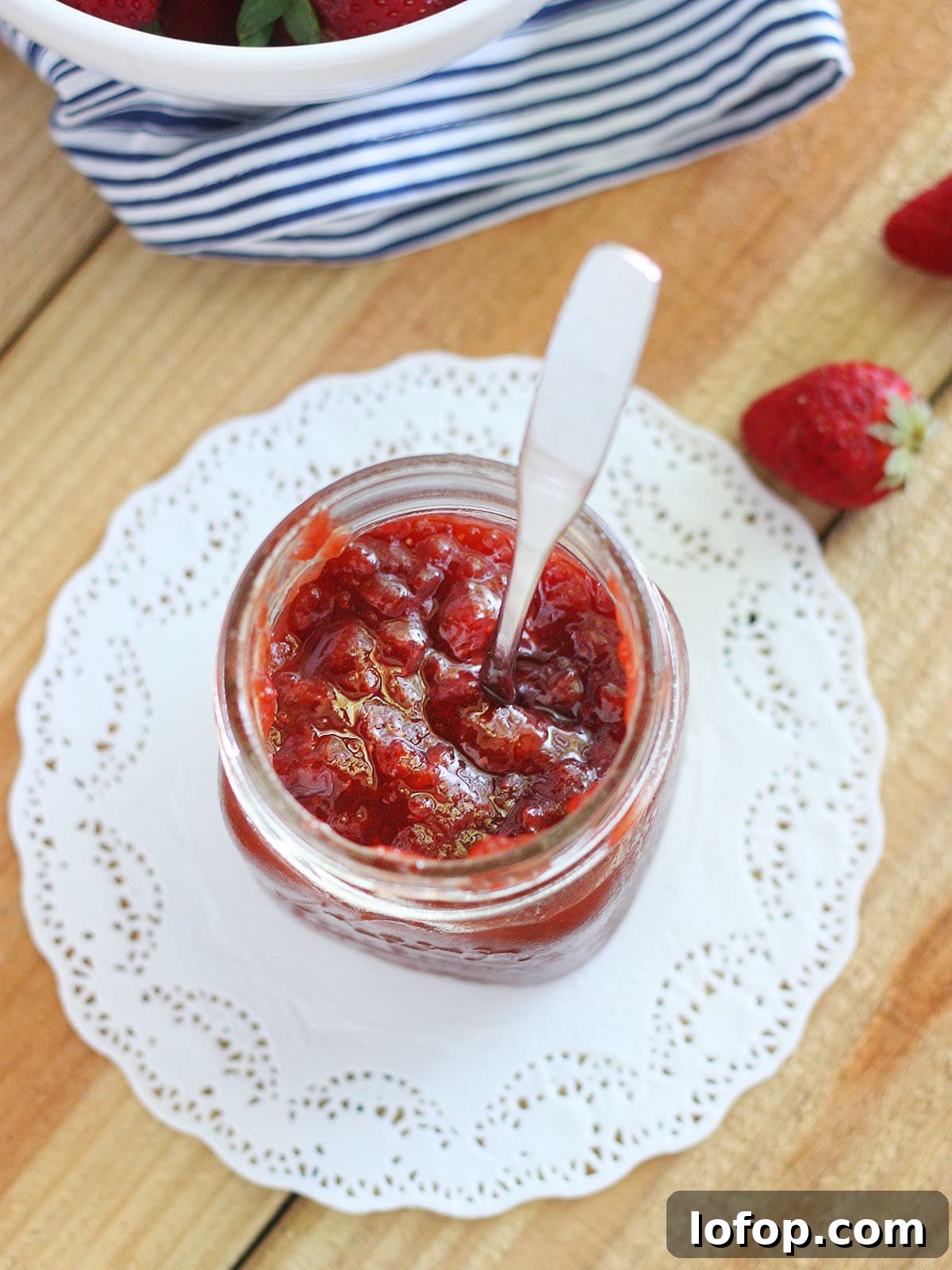
Fresh figs and ripe strawberries really bring out the flavor in this simple homemade strawberry fig preserves recipe.
This post may contain affiliate links.
A few years ago, when I first discovered jam making, I went a little overboard and ended up with a pantry full of jars. By the time we reached the last jar it was deep winter and there were no fresh berries in sight. When local strawberries finally appeared at the farmer’s market in March, I grabbed a flat and drove home with the windows down, the sun on my face, and a box of bright red berries beside me. Fresh fruit like that makes preserves taste truly memorable.
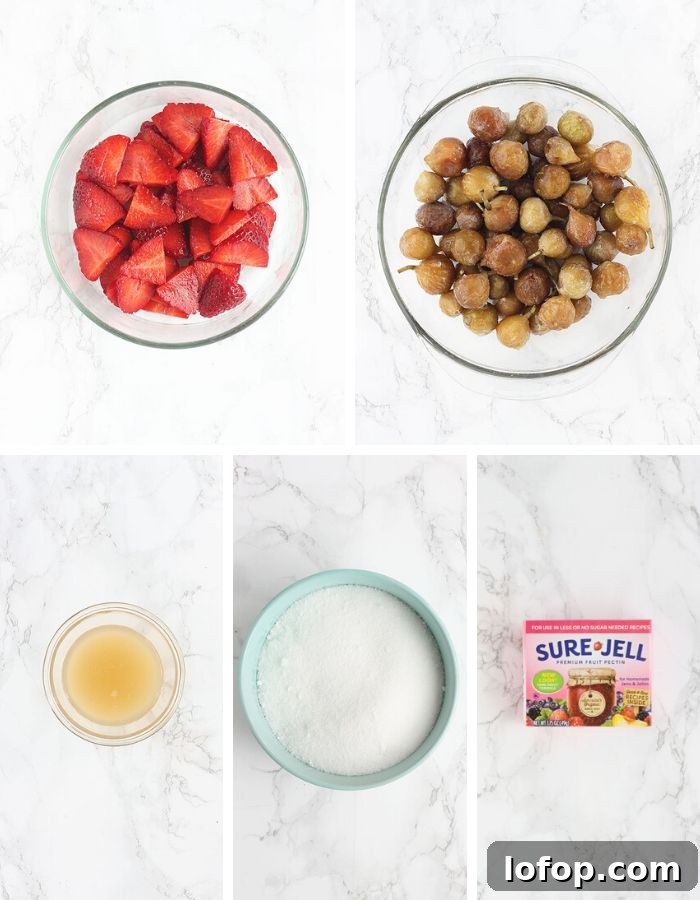
Ingredients you will need
- 3 cups fresh or frozen strawberries, washed, hulled and sliced
- 3 cups fresh or frozen figs, stemmed and chopped
- ¼ cup bottled lemon juice
- 4 cups white granulated sugar (see notes for low-sugar options)
- 3 tablespoons pectin
- 1 tablespoon unsalted butter
Chop and cook down the fruit
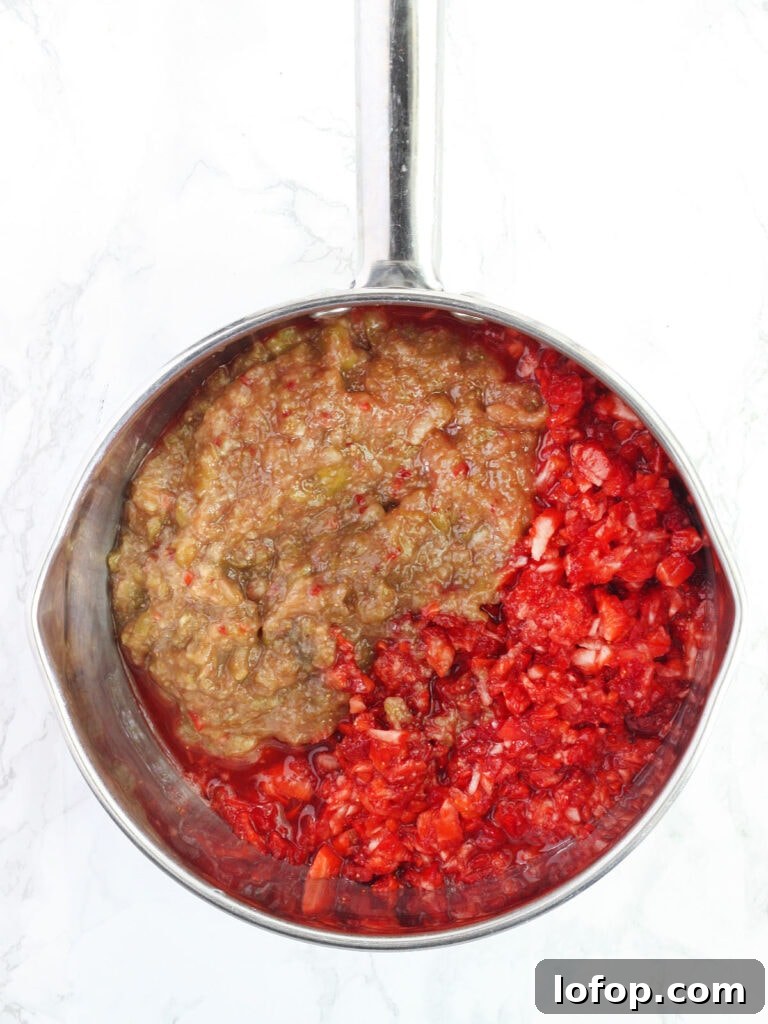
Pulse the strawberries and figs in a food processor or blender until you reach your preferred texture. I like preserves that are slightly chunky, so I leave some bits of fruit. Transfer the pulsed fruit to a large saucepan and stir in the bottled lemon juice.
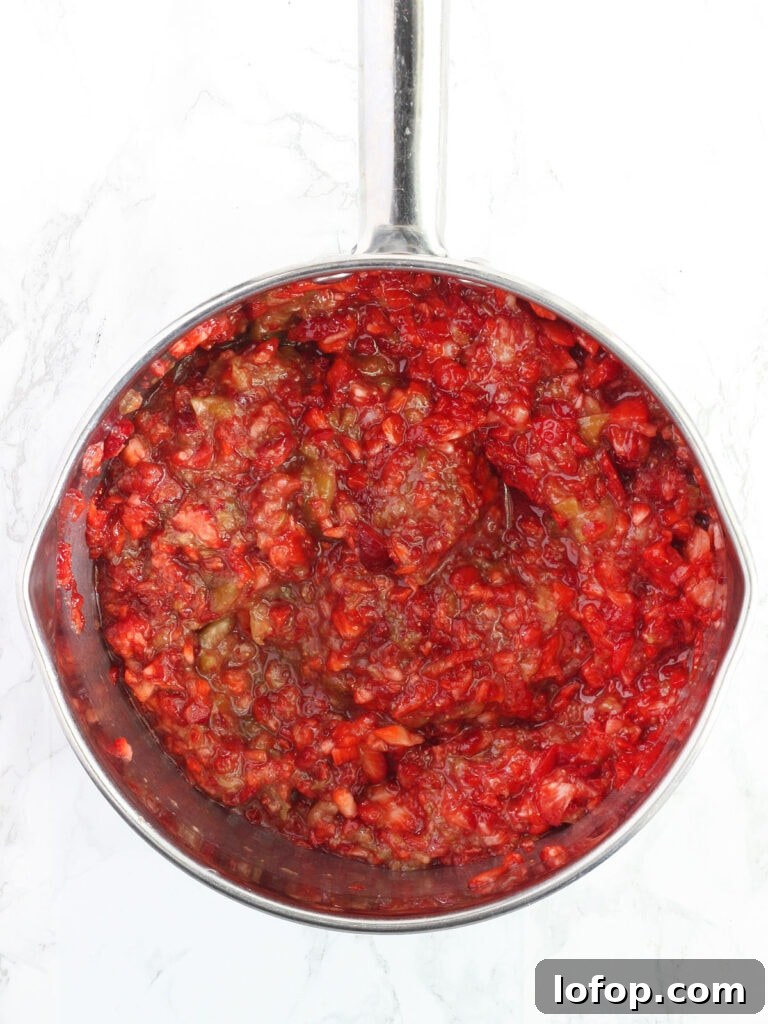
Add the pectin
Stir the pectin into the fruit until dissolved. Pectin is a natural thickening agent; strawberries and figs contain relatively little of it, so adding pectin helps the preserves set. Bring the mixture to a full rolling boil over medium-high heat, stirring constantly so the fruit does not stick. A full rolling boil keeps bubbling even when stirred.
Add the sugar
Gradually stir in the sugar and continue to stir until it dissolves. Sugar works with pectin to thicken the preserves, helps maintain color, and inhibits bacterial growth. For reliable results use the amount called for in the recipe and white granulated sugar unless you’re using a low-sugar pectin and adjusting the sweetener as noted below.
Why add a tablespoon of butter?
After the sugar is added, place a tablespoon of unsalted butter on top and return the mixture to a full boil for one minute, stirring constantly. The butter helps reduce foam by lowering surface tension. The foam is harmless, but removing it will make the preserves clearer. The butter does not change the flavor.
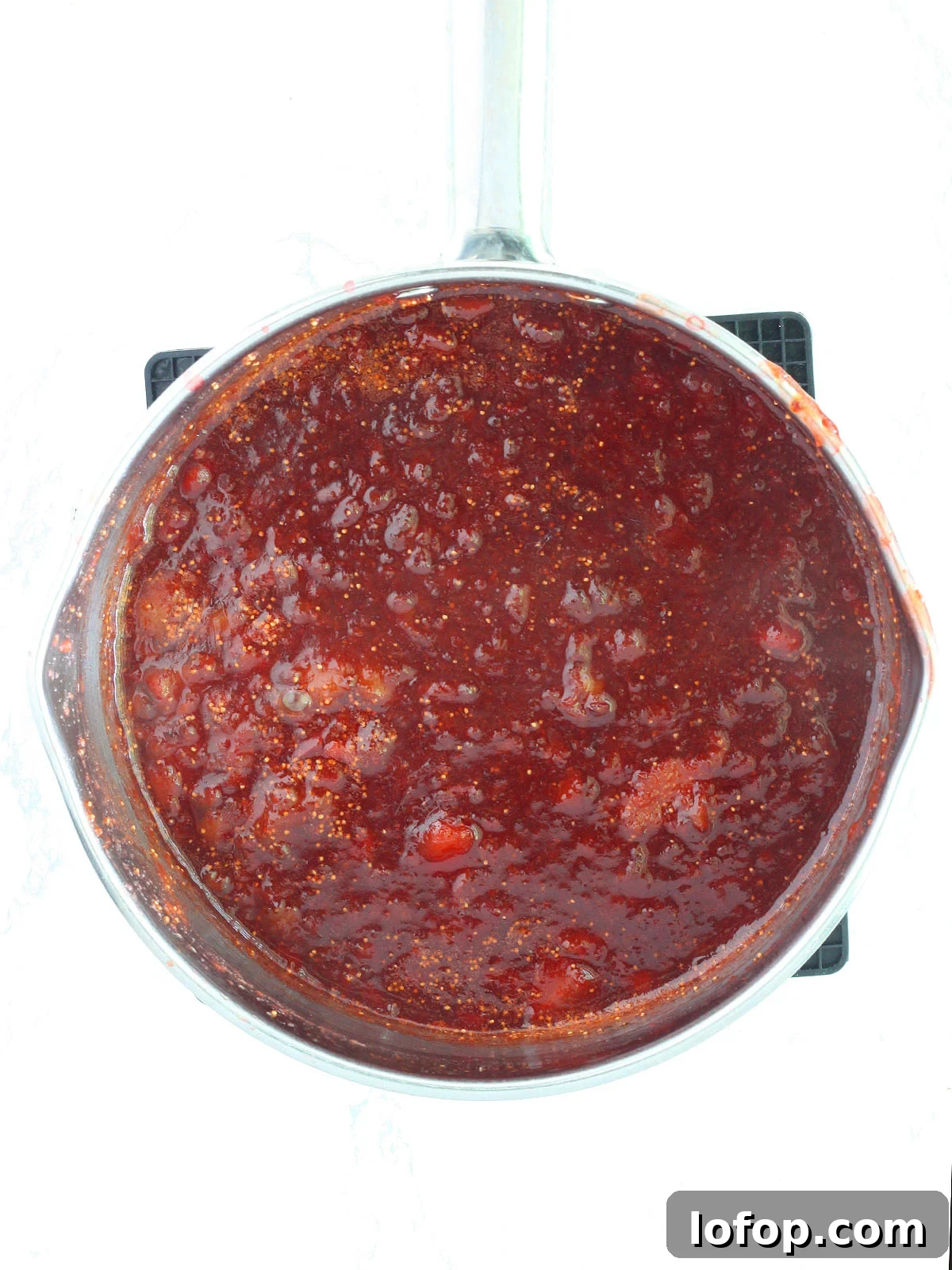
The spoon test
To check whether the preserves have set, use the spoon test. Chill a metal spoon in the freezer for several minutes, then drop a little warm preserve into the spoon. If it thickens almost immediately, the preserves have set. Remember the jam will continue to thicken as it cools.
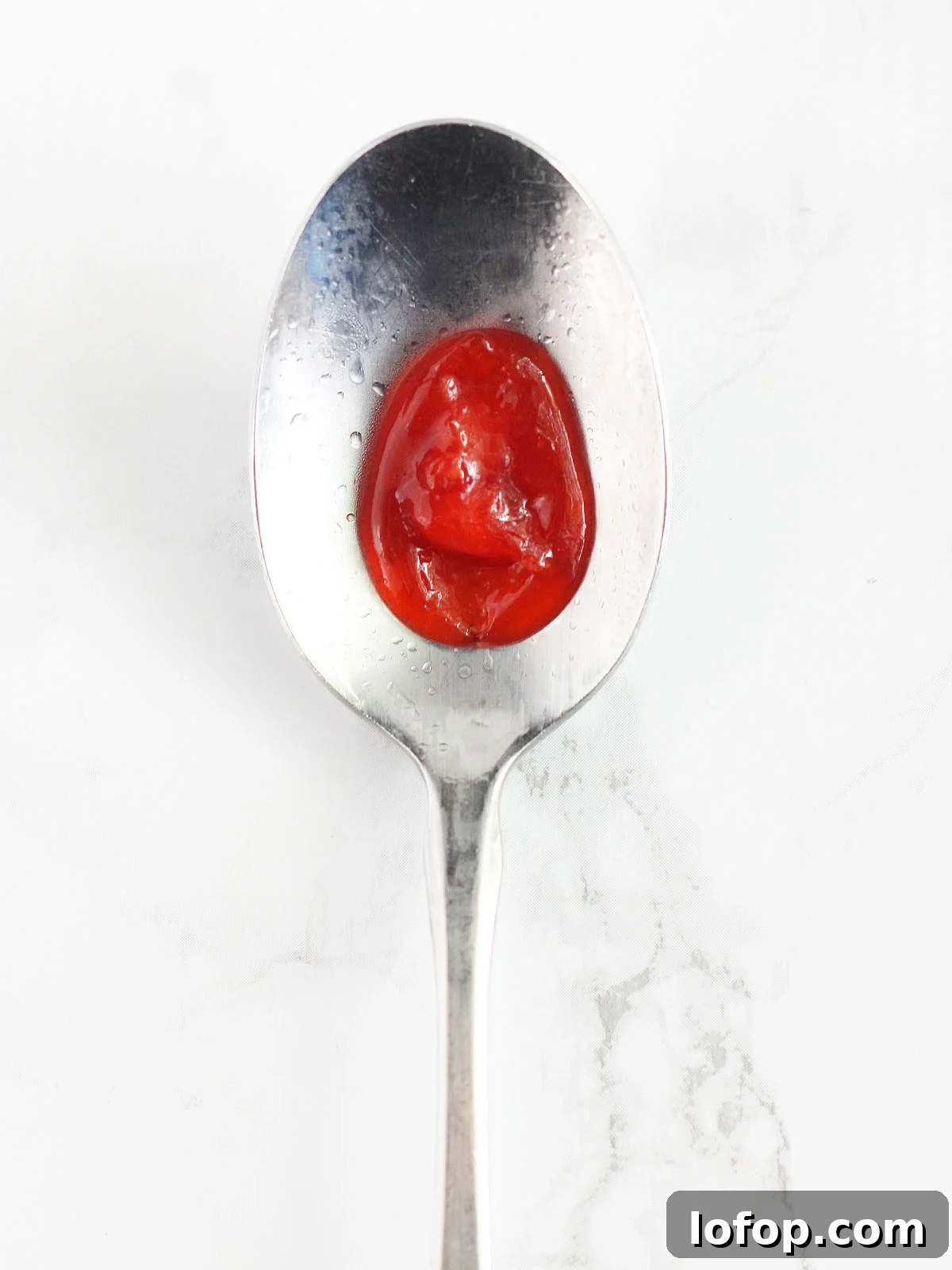
Storing strawberry fig preserves
Preserves that are opened or not canned should be kept in an airtight container in the refrigerator and used within three months.
You can freeze preserves for up to a year. Leave about ½-inch of headspace for expansion and consider plastic freezer containers rather than glass to reduce the risk of breakage. Thaw frozen preserves in the refrigerator; they may be slightly looser in texture than freshly made preserves.
Canning instructions
Water bath canning is a reliable method for preserving high-acid foods like fruit jams. When canning, leave ¼-inch headspace in each jar and process jars for 10 minutes according to standard water bath canning practice.
Frequently asked questions
Yes. Frozen strawberries and figs work fine as long as you let them thaw completely first. I often freeze figs from my parents’ tree until strawberries are in season.
Wait at least 48 hours for the jam to fully gel. If it’s still too runny, remeasure the jam into a saucepan, bring to a boil, and for every 4 cups of jam stir in ¼ cup white sugar and 1 tablespoon powdered pectin. Cook 5–10 minutes, stirring constantly, and retest with the frozen spoon.
Yes. This recipe yields about four 8-ounce jars (or two pints) and can be doubled. Avoid tripling or quadrupling at once, as very large batches can change cooking times and affect setting.
If you use low-sugar pectin, you can reduce the sugar to half the amount. Use the same amount of pectin and reduce the sugar to two cups.
Yes. Swap strawberries for raspberries, blackberries, or blueberries with similar results.
Low-sugar pectin works with some sweeteners like stevia or sucralose, but follow the pectin instructions for low-sugar preserves. Avoid aspartame for canning because heat can make it taste bitter. Use two tablespoons of sweetener for every cup of sugar as a general guideline; texture may differ.
With low-sugar pectin you can substitute honey for sugar at roughly half the sugar amount because honey is sweeter. For example, replace 4 cups of sugar with about 2 cups of honey and cook a bit longer to help it gel; the final texture may be softer.
Yes, but brown sugar will change both flavor and texture of the preserves.
If you use low-sugar pectin, agave can be used at about half the amount (so 2 cups agave for 4 cups sugar). Expect to cook longer and to possibly have a slightly softer set.
Bottled lemon juice is recommended because it has a consistent acidity level, which helps pectin gel and reduces the risk of bacterial growth. Fresh lemon juice can vary in acidity and may affect the final result.
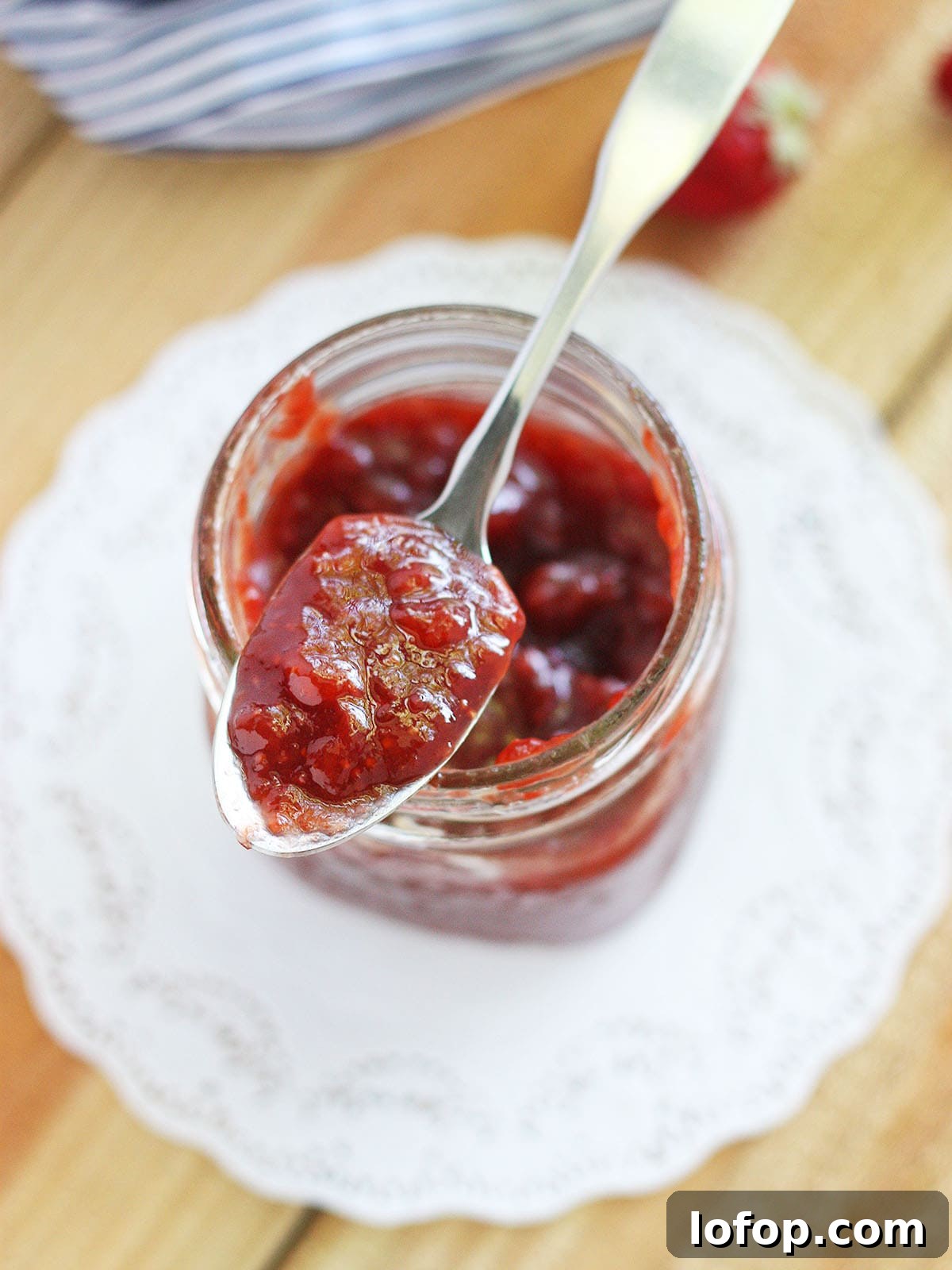
You might also like:
- Three Ingredient Blackberry Jam
- How to Make Homemade Strawberry Jam
- Homemade Peach Preserves
- More canning recipes
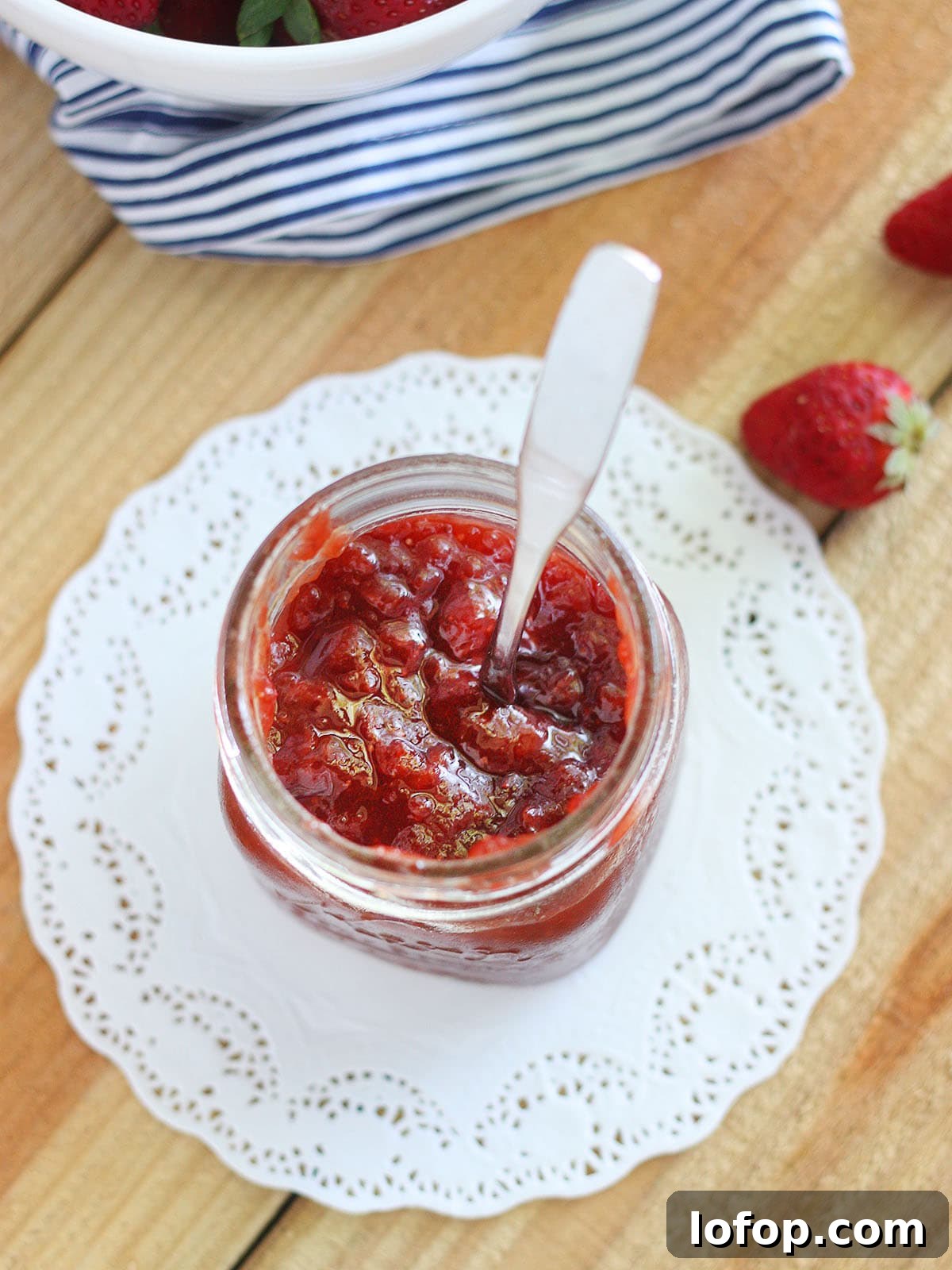
Strawberry Fig Preserves
Print
Pin
Ingredients
- 3 cups strawberries, washed, hulled and sliced
- 3 cups fresh figs, stemmed and chopped
- ¼ cup bottled lemon juice
- 3 tablespoons pectin
- 4 cups white granulated sugar*
- 1 tablespoon unsalted butter
Instructions
- Pulse the strawberries and figs in a food processor until you reach the desired consistency.
- Place the fruit in a 6- or 8-quart saucepan.
- Stir in the bottled lemon juice, then gradually whisk in the pectin until dissolved.
- Bring the mixture to a full rolling boil over high heat, stirring constantly.
- Add the sugar and stir until fully dissolved.
- Place the tablespoon of butter on top of the preserves.
- Return to a boil and continue to boil for one minute, stirring constantly. Remove from heat and skim foam if desired.
Notes
Opened preserves should be stored in an airtight container in the refrigerator and consumed within three months.
Preserves can be frozen for up to one year. Leave ½-inch headspace to allow for expansion and thaw in the refrigerator. Thawed preserves may be slightly looser.
For canning, use water bath canning, leave ¼-inch headspace, and process jars for 10 minutes.