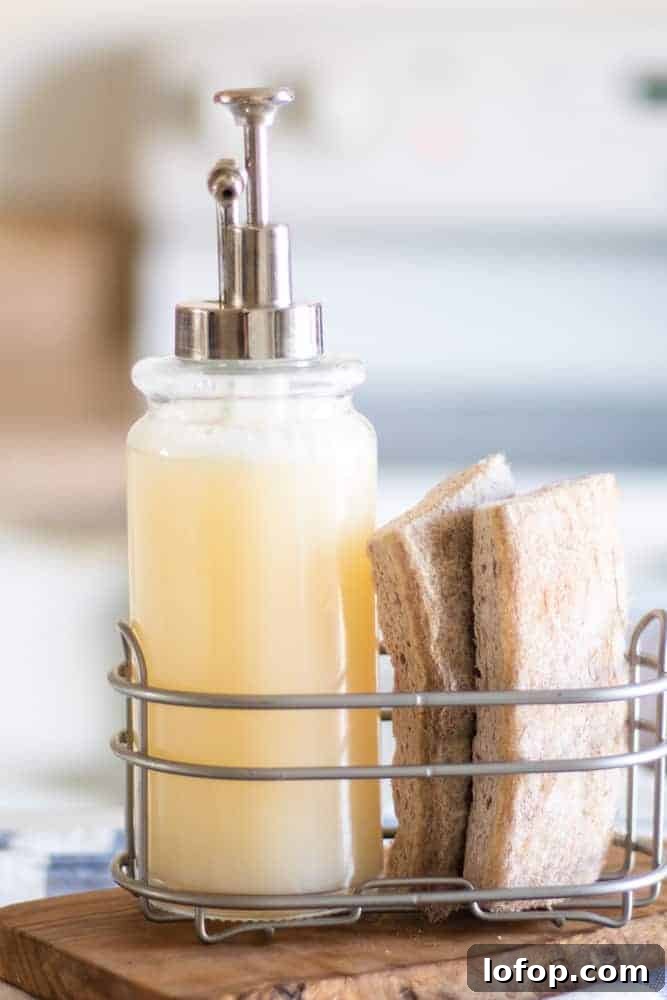
Learn how to make an all‑natural gel dish soap using a simple, few‑ingredient method. This homemade dish soap cuts grease, produces suds, and cleans effectively.
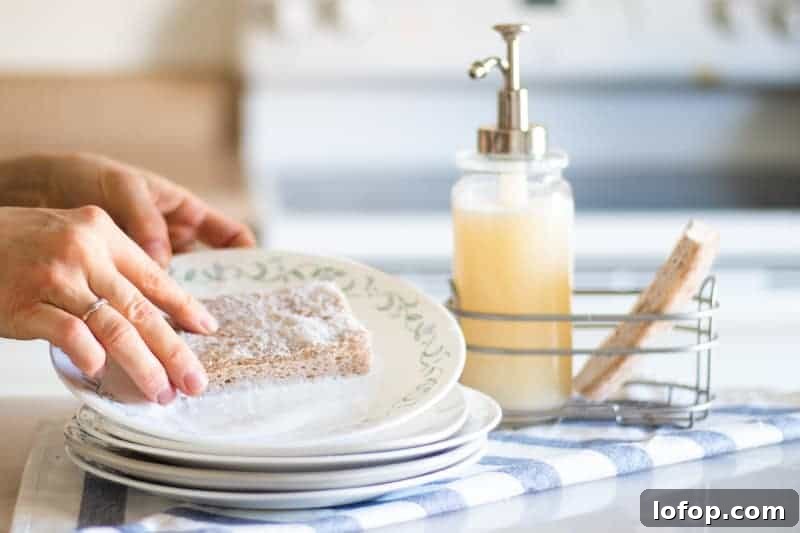
I first improvised this dish soap when I ran out in the middle of a big cleanup. I adapted a foaming hand soap formula, added a little vinegar and citrus essential oil for grease cutting, and turned it into a gel that worked surprisingly well. We used that version for years, and recently I refined the recipe into an improved gel dish soap that still shares lemon essential oil as a key ingredient.
All‑Natural Dish Soap
Making an all‑natural dish soap is quick and inexpensive. The basic process melts a soap bar into hot water and combines that with a concentrated surfactant and glycerin to create a gel that suds and cuts grease. Essential oils are optional but add a pleasant scent and extra grease‑cutting power — citrus oils work especially well.
For the soap bar, I typically use Fels‑Naptha, but a plain castile or another mild soap bar will work. The other core ingredients are Sal Suds (a concentrated, grease‑cutting cleaner), vegetable glycerin to thicken and help lather, and water.
Ingredients for Homemade Dish Soap
- Fels‑Naptha soap bar (or another soap bar)
- Water
- Sal Suds (concentrated cleaner)
- Vegetable glycerin
- Essential oils (optional — lemon, lime, or orange are great for grease)
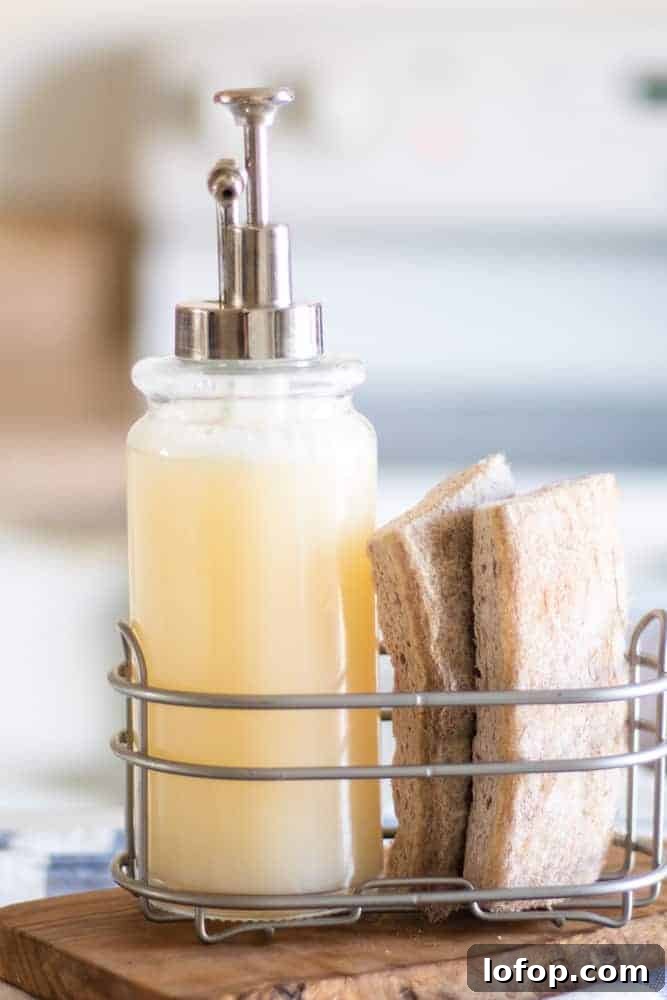
About the Ingredients
Soap Bar
A soap bar such as Fels‑Naptha is an effective base because it melts into the water and forms a cleansing solution. If you prefer, use a castile or other simple soap bar—just avoid heavily scented or moisturized bars that contain ingredients that may change the final texture.
Water
Water is the primary ingredient. Use tap water in most cases; if you have very hard water, filtered or distilled water can improve consistency.
Sal Suds
Sal Suds is a concentrated, grease‑cutting surfactant that boosts cleaning power and suds. A small amount goes a long way.
Vegetable Glycerin
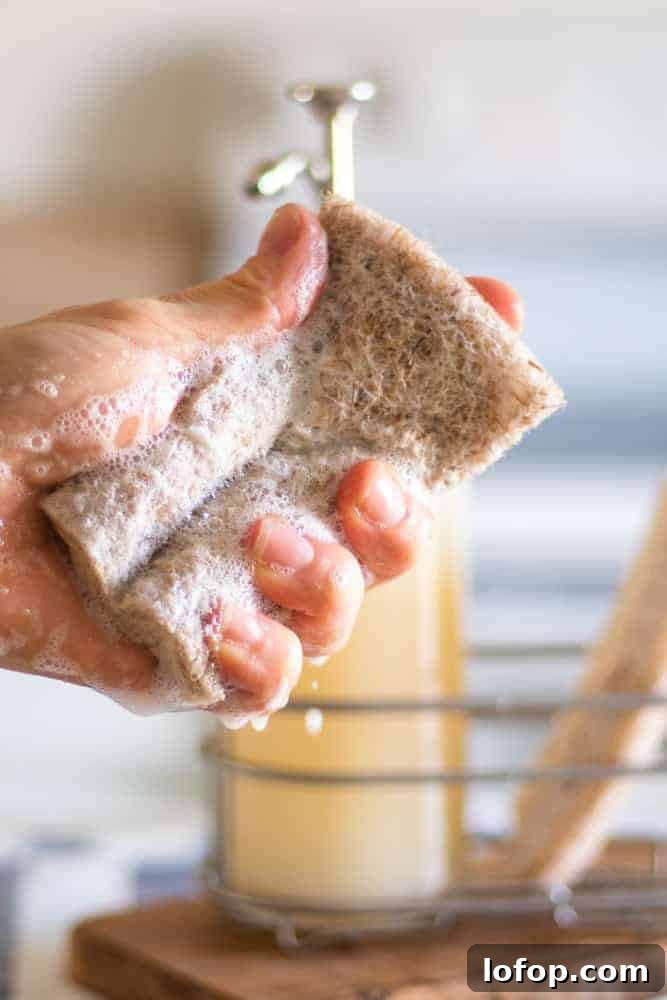
Vegetable glycerin thickens the mixture and helps it foam. It gives the soap a gel‑like texture and adds a mild, skin‑friendly feel.
Essential Oils
Essential oils are optional but useful. Citrus oils (lemon, lime, wild orange) help cut grease and leave a fresh scent. Other good options include lavender, tea tree, lemongrass, or rosemary. Use a few drops total — you can mix oils or use a single oil.
Essential Oil Blends
Citrus
- 5 drops lemon
- 3 drops wild orange
- 2 drops lime
Floral
- 5 drops lavender
- 3 drops chamomile
- 2 drops lemon
Fresh
- 5 drops lemon
- 5 drops rosemary
How to Make All‑Natural Dish Soap
- Pour the water into a small saucepan and set over medium heat.
- Shred the soap bar using a cheese grater.
- Add the soap shreds to the saucepan and stir frequently until they melt into the water.
- Remove from heat and pour the hot soapy water into your dish soap container.
- Stir in Sal Suds, vegetable glycerin, and essential oils if using.
- Secure the lid and shake or stir well until fully combined.
Note: If your hands tend to dry with frequent dishwashing, add 1 teaspoon of a light carrier oil (jojoba, fractionated coconut, or sweet almond oil) to the batch.
How to Use Homemade Dish Soap
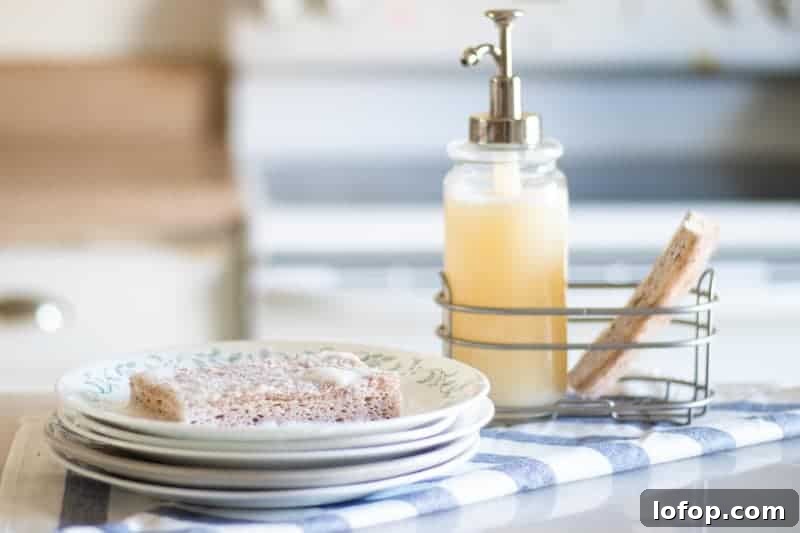
Fill your sink with warm water and add 1–2 tablespoons of the homemade dish soap. Swirl to distribute, then add dishes and let them soak a few minutes for best results. Alternatively, apply a small amount directly to a sponge or washcloth and wash each item, then rinse with warm water.
Shake the container before use if the ingredients have separated slightly, especially when essential oils are included.
Storage and Shelf Life
Store the soap in a mason jar, foaming dispenser, or a recycled dish soap bottle. The mixture is somewhat thick, so avoid thin spray bottles. If you add essential oils, choose glass or high‑quality, thick plastic containers to preserve the scent.
This homemade dish soap keeps about one month. The recipe yields a concentrated product, so a little goes a long way—typically one tablespoon per sink of washing.
Why Make Your Own Dish Soap
Making your own cleaners lets you control the ingredients and avoid greenwashing claims on product labels. Homemade soap is often less expensive, simpler, and cleaner than many commercial alternatives. It’s satisfying to know exactly what’s in your cleaners while still getting excellent grease‑cutting performance.
If you like trying DIY cleaning recipes, this dish soap is an easy, practical place to start.
Homemade Dish Soap
Equipment
- saucepan
- box grater
- dish soap container
Ingredients
- 1/4 cup Fels‑Naptha soap bar, shredded
- 1 1/2 cup water
- 1/4 cup Sal Suds
- 1 tablespoon vegetable glycerin
- 10 drops lemon essential oil (optional)
Instructions
- Pour water into a small saucepan and heat over medium.
- Shred the soap bar with a cheese grater.
- Add the soap shreds to the saucepan and stir until melted.
- Remove from heat and pour the soapy water into your container.
- Stir in Sal Suds, vegetable glycerin, and essential oils if using.
- Secure the lid and shake or stir until combined.
Notes
Visual step‑by‑step guidance can be helpful; follow the instructions carefully and allow the mixture to cool before extended storage.
This recipe is intended for informational purposes only. Perform your own testing and research before using any DIY cleaning product.