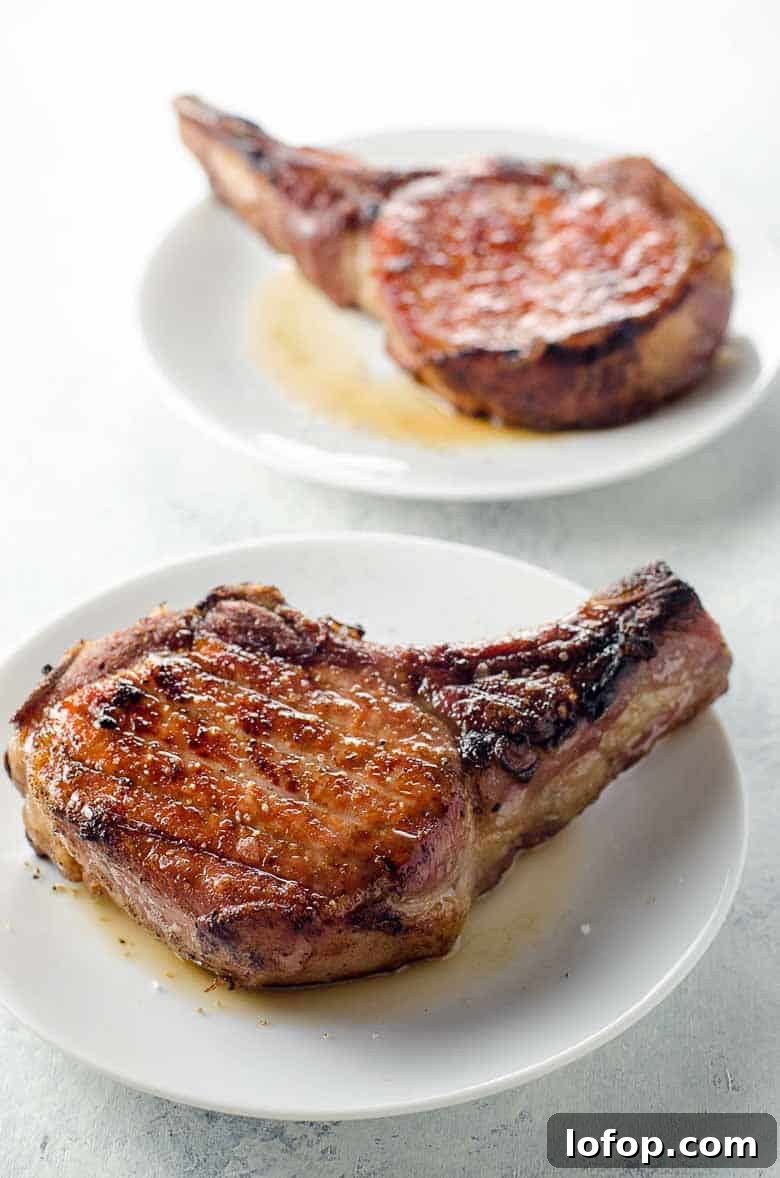
Ready for the best pork chops of your life? These reverse-seared pork chops are tender and juicy inside with a golden, crispy crust on the outside. A quick shallot-and-herb pan sauce ties everything together—simple, flavorful, and reliably delicious.
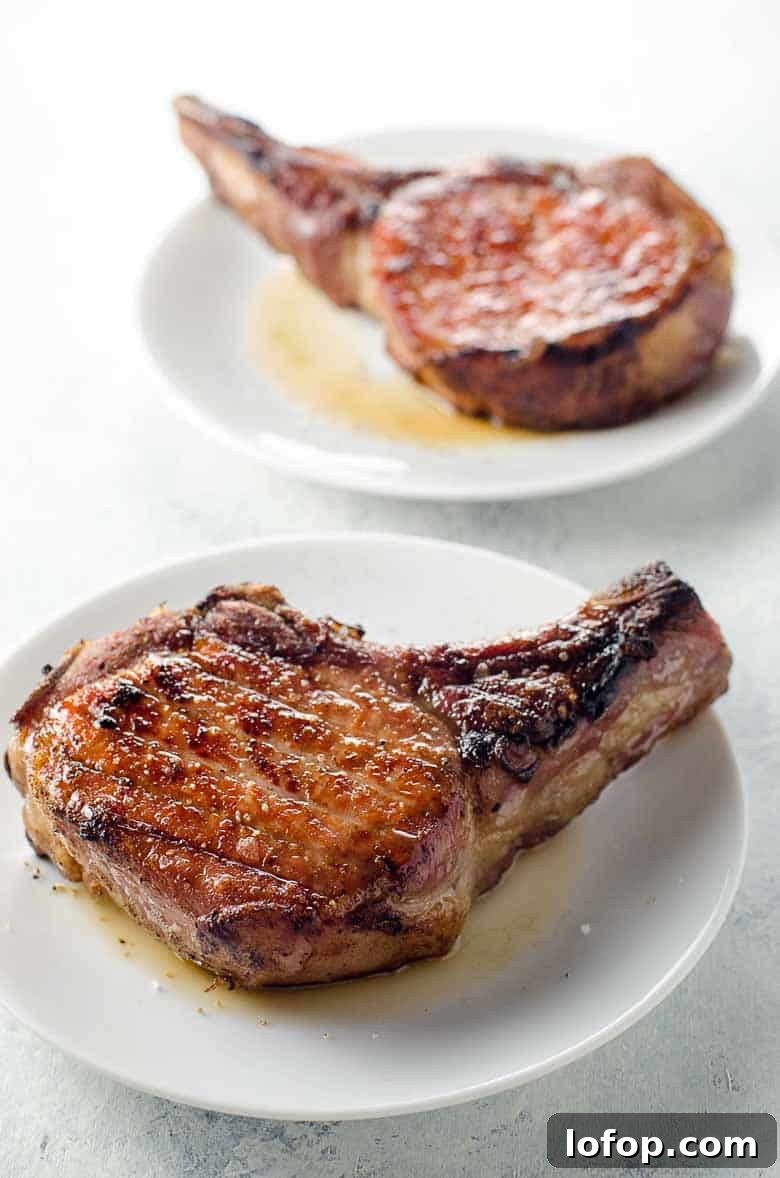
Why we love this recipe
This dish combines three accessible techniques that elevate a humble pork chop into a restaurant-worthy meal:
- Dry-brining — A light rub of salt (and a touch of sugar) and an overnight rest in the fridge seasons the meat and improves texture.
- Reverse-searing — Slow-roasting at a low temperature, then finishing with a fast, high-heat sear gives precise control and a perfect crust without overcooking.
- Shallot-herb pan sauce — A few minutes in the pan after searing yields a savory sauce that amplifies the chops’ flavor.
Ingredients
These are the main components you’ll need.
For the pork chops
Ask your butcher for bone-in rib chops cut about 1½ inches thick. The thickness helps ensure an even cook and a nice sear without drying the meat.
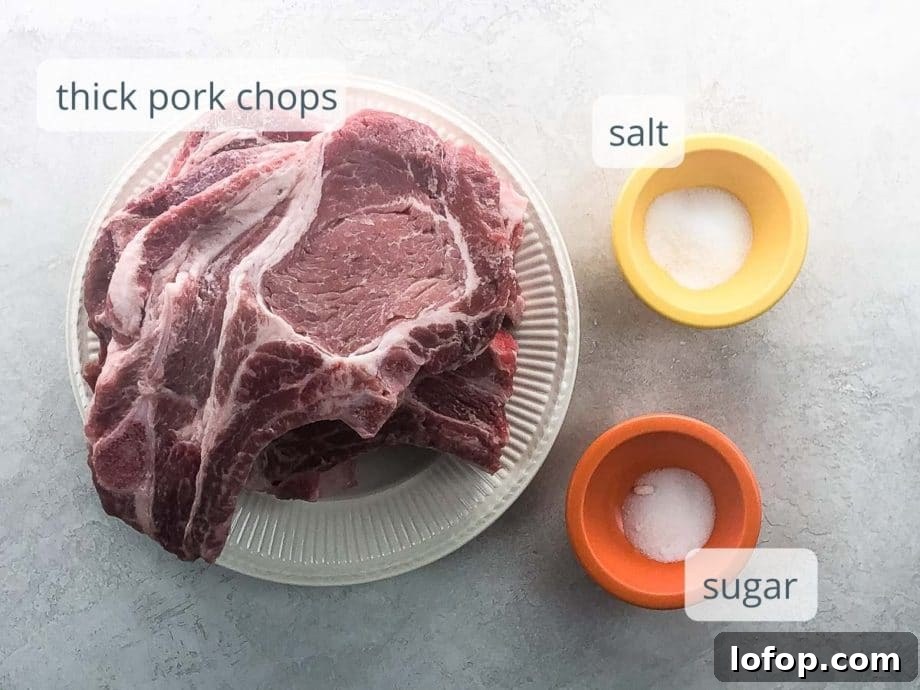
- Bone-in pork rib chops, 1½ inches thick (about 6 chops for this recipe).
For the pan sauce
This versatile pan sauce works with many cuts of meat. It’s especially good with these chops.
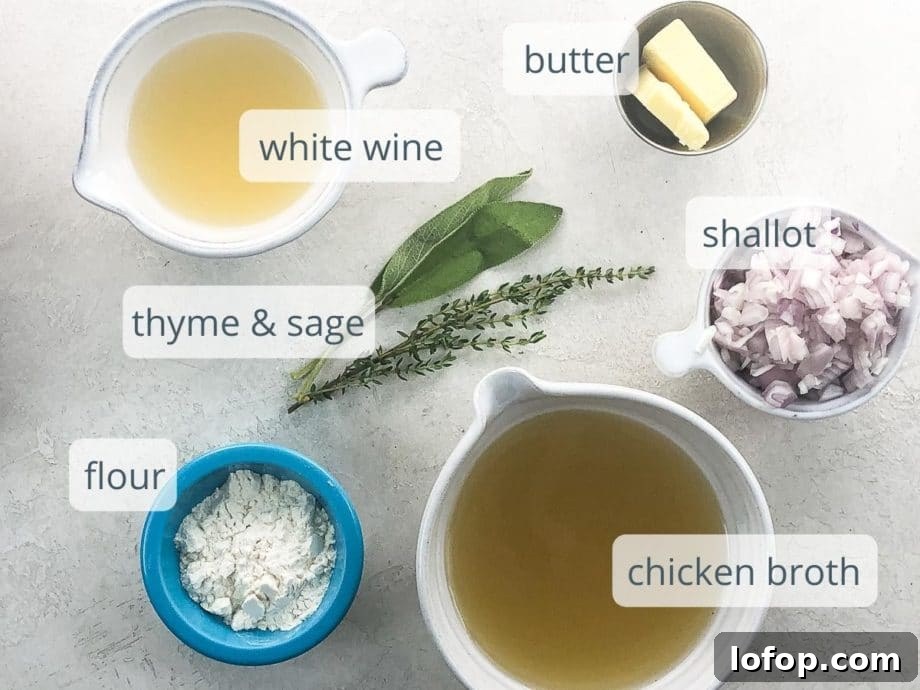
- Butter and flour to form a quick roux.
- Minced shallot, fresh thyme, and sage for aromatic flavor—substitute 1/2 teaspoon dried herbs each if needed.
- Dry white wine and stock to deglaze and build the sauce; use extra stock if you prefer not to cook with wine.
How to make reverse-sear pork chops
Follow these steps for reliably juicy chops with a beautiful crust.
Prep and cook the pork chops
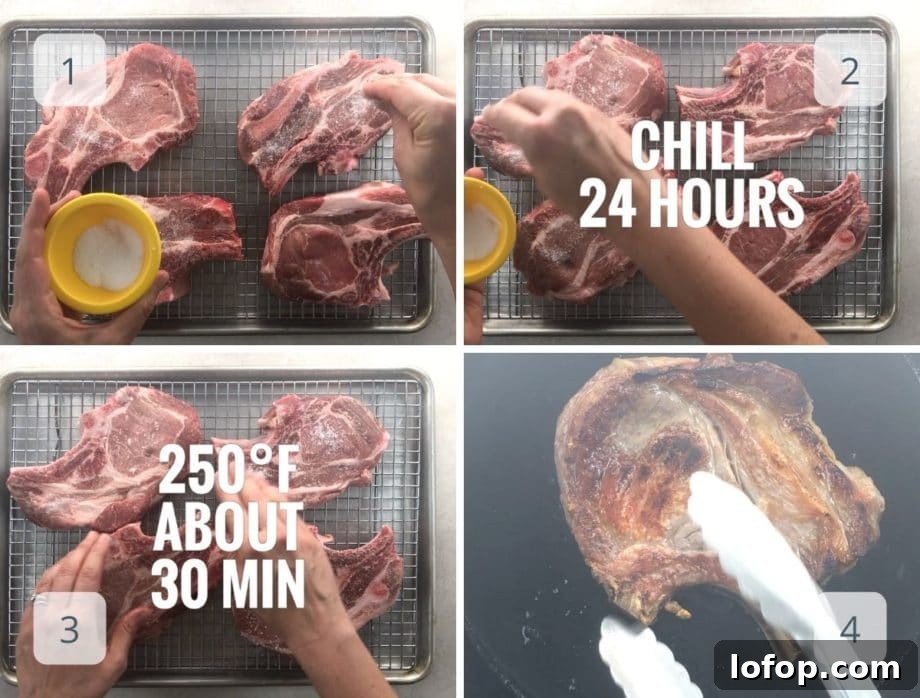
- Rub the chops evenly with salt and a little sugar. Dry-brining overnight in the refrigerator is ideal; if short on time, let them sit at room temperature for 30 minutes after rubbing.
- Preheat the oven to a low temperature (about 250°F). Bake the chops on a wire rack set over a rimmed sheet pan until an instant-read thermometer registers about 110°F—this usually takes around 25–30 minutes. Do not overcook; they’ll finish while you sear.
- Heat a heavy skillet (cast iron is ideal) until very hot. Add a little oil and sear the chops two at a time, about 1–2 minutes per side, until deeply golden. Don’t forget to sear the fat cap by holding the chop on its edge—this adds flavor and texture. Work in batches so the pan isn’t crowded.
Make the sauce
The sauce is made in the same pan to capture all the caramelized bits left from searing.
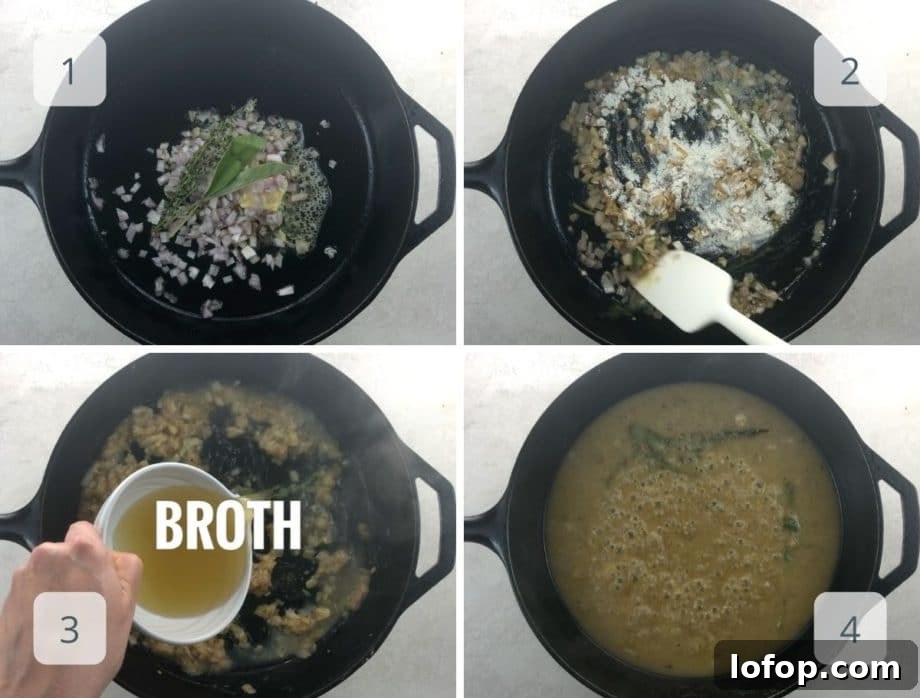
- Pour off excess oil from the pan but leave the browned bits. Melt butter over low heat and sauté the shallot with thyme and sage until soft but not browned.
- Whisk in the flour and cook briefly until frothy. Add the wine and let it reduce a bit, then stir in stock (and any accumulated juices from the resting chops), whisking to prevent lumps.
- Simmer until the sauce thickens to a gravy-like consistency, about 3–5 minutes. Finish with chopped parsley off the heat and spoon over the chops to serve.
My favorite source for meat
I’ve used a curated meat delivery service for high-quality cuts, including heritage pork and grass-finished beef. Choosing well-sourced meat makes a noticeable difference in flavor and texture.
Expert tips and FAQs
Dry brining is simply sprinkling salt (and a touch of sugar if you like) on the meat and letting it rest. The salt draws out some moisture, dissolves, and is then reabsorbed into the surface, seasoning and tenderizing the meat while preserving the ability to form a good sear.
Reverse searing means cooking the meat slowly at low heat until it’s just under the target temperature, then finishing it in a very hot pan to develop a deep, golden crust. It gives even doneness and excellent control.
Rib chops come from the loin and are known for tenderness. They take well to brining and searing, and when cut thick they cook evenly, making them a great choice for this method.
How to serve these chops
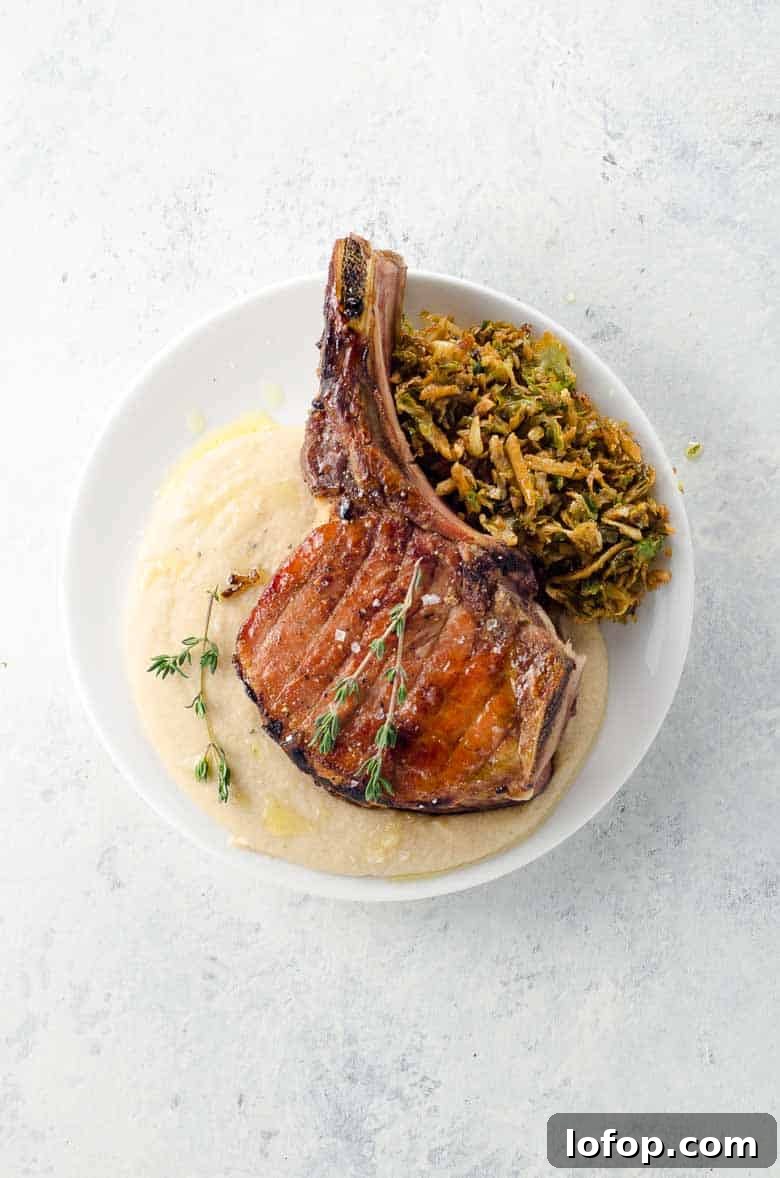
These pork chops pair well with many sides. In the photos they’re served on a brown-butter white bean purée, but they’re equally good with:
- Yukon gold mashed potatoes
- Basmati rice pilaf
- Lemony orzo
- Mixed greens with a balsamic vinaigrette
- Roasted or sautéed broccolini
Reverse searing is an excellent technique for steaks as well.
Reverse Sear Pork Chops with Quick Shallot Herb Pan Sauce
Equipment
- Wire rack and rimmed sheet pan
- 12-inch cast-iron skillet
Ingredients
For the dry-brined pork chops
- 6 bone-in pork rib chops, 1½ inches thick
- 2 teaspoons fine sea salt
- 1 teaspoon sugar
- 6 tablespoons vegetable oil, divided
For the pan sauce
- 2 tablespoons butter
- 1 shallot, minced
- 1 sprig fresh thyme
- 1 sprig fresh sage
- 2 tablespoons flour
- ¼ cup dry white wine (or additional stock)
- 1½ cups stock
- ¼ cup chopped fresh flat-leaf parsley
Instructions
- The night before serving, place a wire rack on a rimmed baking sheet and lay the pork chops on top. Mix the salt and sugar in a small bowl and rub evenly over the chops. Refrigerate uncovered.
- Preheat the oven to 250°F and place the pan in the center rack. Bake the chops until an instant-read thermometer reads 110°F, about 25–30 minutes. Check at 25 minutes to avoid overcooking.
- Heat 2 tablespoons of oil in a 12-inch cast-iron skillet over high heat until smoking. Sear two chops at a time for about 1 minute per side until deep golden-brown. Hold the chops by the fat cap with tongs to sear the edge. Remove to a plate and repeat with remaining chops, adding fresh oil as needed.
- Pour off most of the used oil but keep the browned fond in the pan. Reduce heat to low, melt the butter, and sauté the shallot with thyme and sage for about a minute. Stir in the flour and cook until frothy, then add the wine and stock, scraping up browned bits. Simmer until the sauce thickens, about 3–5 minutes. Remove from heat and stir in parsley. Spoon the sauce over the chops and serve.
Notes
Ask your butcher to cut thicker rib chops if possible—this helps prevent overcooking and produces a better sear. The technique and recipe are adapted from classic reverse-sear guidance.
Nutrition
Calories: 588 kcal; Carbohydrates: 3.4 g; Protein: 67.5 g; Fat: 31.3 g; Fiber: 0.1 g. (Approximate.)
Additional Info
Course: Pork · Cuisine: American