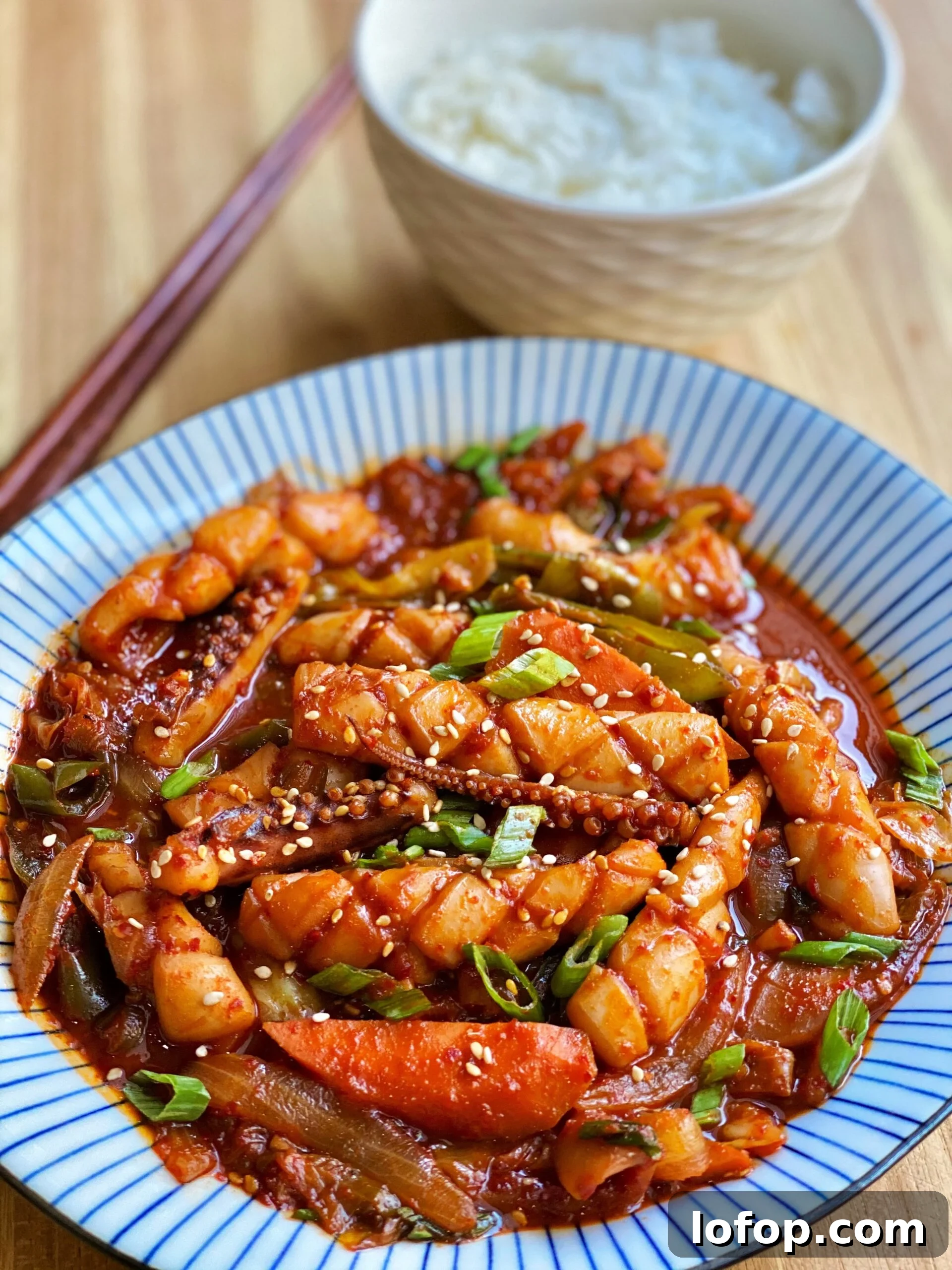
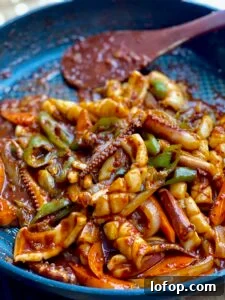
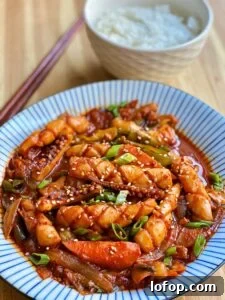
Ojingeo bokkeum is a spicy stir‑fried squid dish that pairs perfectly with a bowl of steamed rice. It delivers a bright balance of sweet, savory, and spicy flavors, and the tender vegetables soak up the sauce for a delicious bite every time.
If you ever visit Korea—Busan in particular—look for restaurants that specialize in ojingeo bokkeum. They prepare it with skill and energy, and the meal is an experience: after you finish the squid, many places fry rice in the remaining sauce and vegetables. I do the same when I have leftovers the next day.
Ingredients
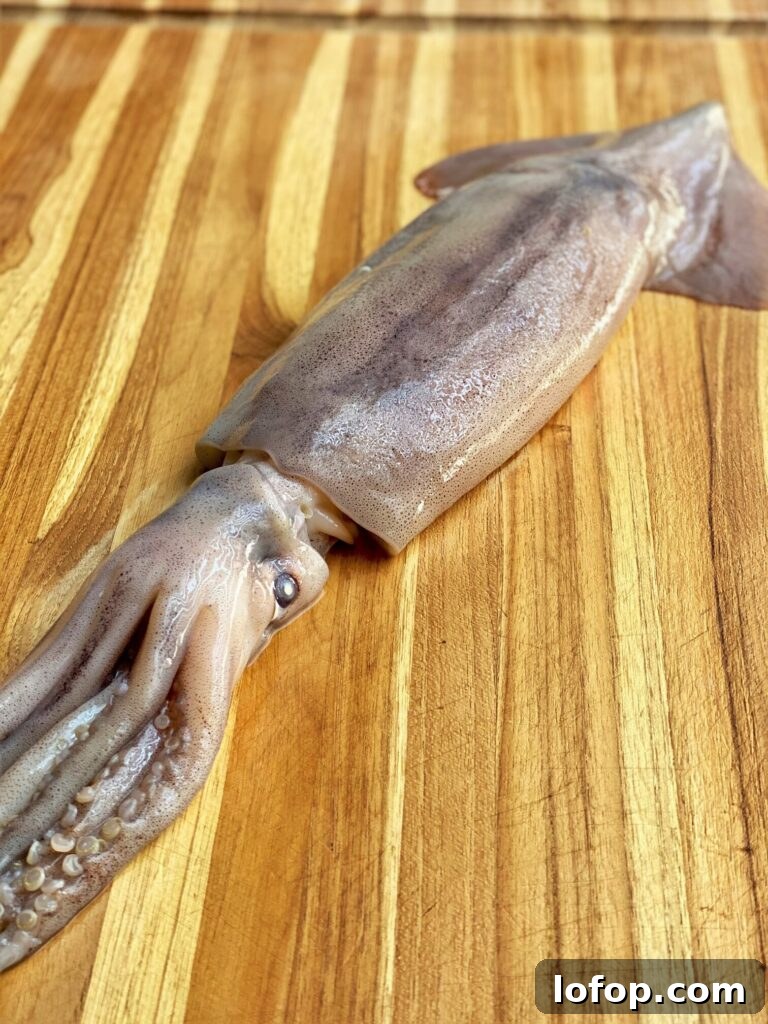
- Squid – Fresh is best, but whole frozen squid works too. Try to avoid pre-cut packaged frozen squid if possible, as it can taste overly fishy.
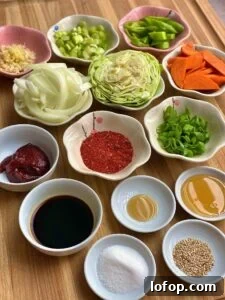
- Vegetables – Garlic, onion, cabbage, carrot, green onion, and Korean chili pepper (or serrano for more heat).
- Sugar – Plain granulated white sugar.
- Seasonings – Black pepper and optionally a little MSG (or dashida).
- Gochujang – Korean red pepper paste.
- Gochugaru – Korean red pepper flakes.
- Soy sauce – Use a Korean-style soy sauce for best flavor.
- Oligodang – A Korean sweetening syrup; rice or corn syrup can be used instead.
- Sesame oil – Adds aroma at the end of cooking.
- Sesame seeds – For garnish and a hint of nuttiness.
Cooking method
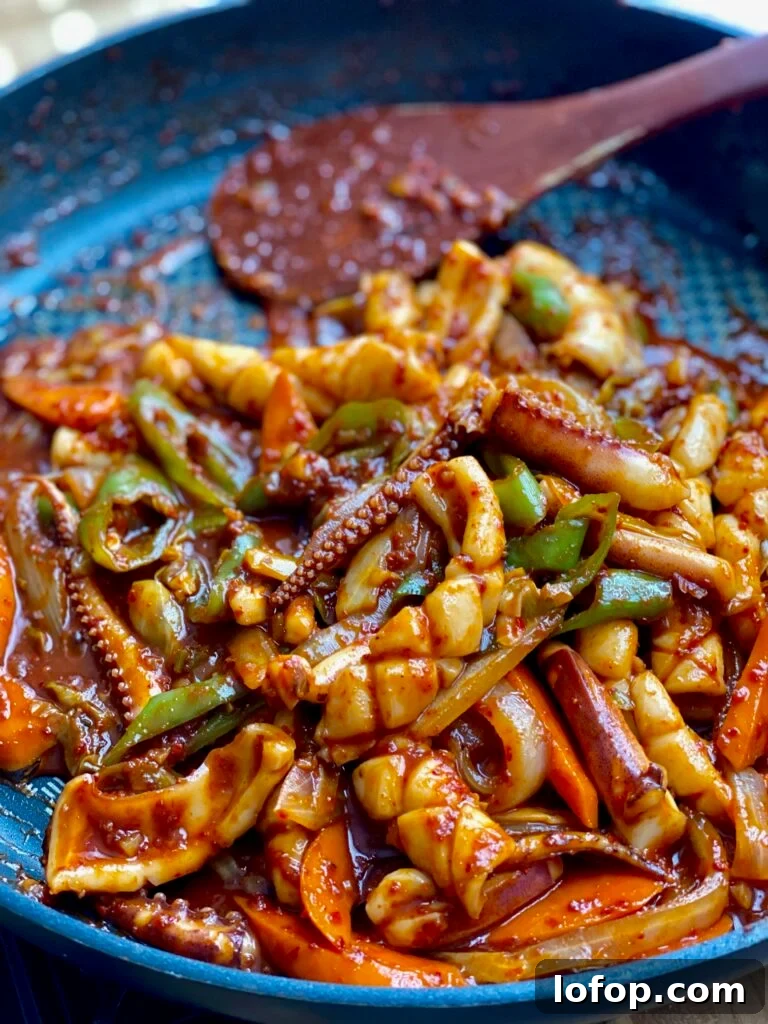
Squid must be cooked very quickly to stay tender. Overcooking makes it tough. You can either cook it high and fast (about 3–4 minutes) or low and slow for a longer time (about 30 minutes), but for this stir‑fry we use a quick, high‑heat method.
Prepare and measure out all ingredients ahead of time (mise en place). The cooking moves fast, so have everything within reach to avoid overcooking the squid.
Add seasonings separately rather than all at once
A traditional tip is to add the seasoning ingredients in sequence rather than mixing them together first. Salt in the sauce draws moisture from the squid, causing it to shrink. If sugar is added after the squid has released water, it won’t stick well and won’t contribute the same caramelized flavor. Add sugar first so the squid can quickly absorb some sweetness and become glossy, then add the remaining savory and spicy seasonings.
More spicy Korean dishes
Many spicy Korean dishes share similar core ingredients—gochujang, gochugaru, soy sauce, garlic—yet they produce very different flavors. If you enjoy ojingeo bokkeum, try these other spicy favorites:
- Dakdoritang – A hearty spicy chicken stew that’s comforting with rice, especially on cold days.
- Tteokbokki – Spicy rice cakes and a classic Korean street food favorite.
- 15-minute Dwaeji Bulgogi – A quick and flavorful pork bulgogi ideal for a home Korean barbecue night.
- Galchi Jorim – A braised belt fish dish with Korean radish; less common but full of bold flavor.
- Yangnyeom Gejang – Spicy marinated raw crab, a distinctive and beloved Korean specialty.
Ojingeo Bokkeum 오징어 볶음 – Spicy Stir Fried Squid
Pin Recipe
Rate Recipe
Print Recipe
Ingredients
- 1 lb whole squid, (about 1 squid)
- 2 tbsp neutral oil
- 2 green onions, chopped, split
- 4 garlic cloves, minced
- 1/2 tsp fresh ginger, minced
- 1/4 onion, sliced
- 1/4 cup cabbage, sliced
- 1/4 cup carrot, sliced
- 1 Korean pepper, or serrano for extra spice
- 1/8 tsp dashida, (beef powder) or msg
- 3 tbsp gochugaru
- 2 tbsp gochujang, spicy or mild
- 2 tbsp soy sauce
- 1 tbsp sugar
- 2 tbsp water
- 1 tbsp oligodang, (or corn/rice syrup)
- 1/2 tsp sesame oil
- 1/4 tsp msg, optional
- 1/8 tsp black pepper
- 1/2 tsp sesame seeds
Instructions
-
Prepare all ingredients before you start—the squid cooks very fast, so have everything ready.

-
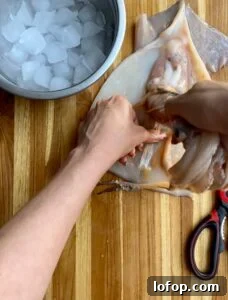
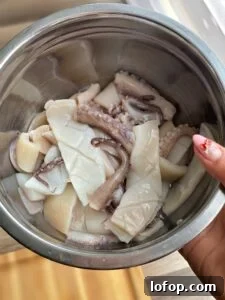
Keep a bowl of ice nearby. Cut the squid body open with scissors to begin cleaning and preparing.
-
Pull out the head and remove the innards and cartilage (a long plastic‑like piece). Separate the legs from the head just below the eyes, place the legs on ice, and discard the innards.
-
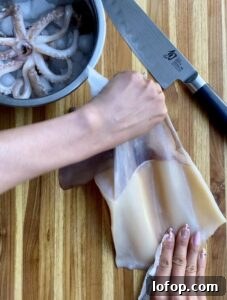
Remove the skin from the body—paper towels can help with grip. Optionally score the outer side in a diagonal crosshatch for a decorative pattern, then cut the body into 3×1 strips and keep on ice.
-
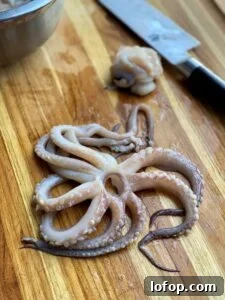
Trim the beak from the legs, separate them, and cut into 3‑inch pieces. Keep them chilled on ice until cooking.
-
Rub the squid with 1 tsp kosher salt for about a minute, rinse under cold water, and drain well.
-
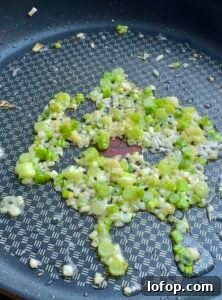
Over low heat, add oil, the white parts of the green onions, garlic, and ginger. Fry 1–2 minutes until fragrant.
-
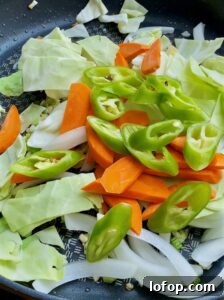
Add onion, cabbage, carrot, and Korean pepper. Season with a small pinch of dashida or msg and stir‑fry over medium heat 1–2 minutes.
-
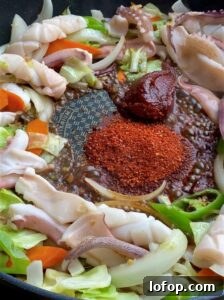
Make a well in the center of the pan, add the squid and sugar, and stir‑fry about 1 minute so the sugar begins to caramelize and coat the squid.
-
Make another well and add soy sauce, gochugaru, and gochujang. Mix everything and stir‑fry 1 minute to combine flavors.
-
Add 2 tbsp water, 1 tbsp oligodang (or other syrup), optional 1/4 tsp msg, and 1/8 tsp black pepper. Stir‑fry 1–2 more minutes until the sauce thickens and glazes the squid and vegetables.
-
Turn off the heat, drizzle sesame oil over the dish, and toss to combine. Remove from the pan.
-
Garnish with the remaining green onions and sesame seeds. Serve immediately with steamed rice.



Nutrition information is automatically calculated and should be used only as an approximation.
Additional Info
Like this recipe? Leave a comment below!