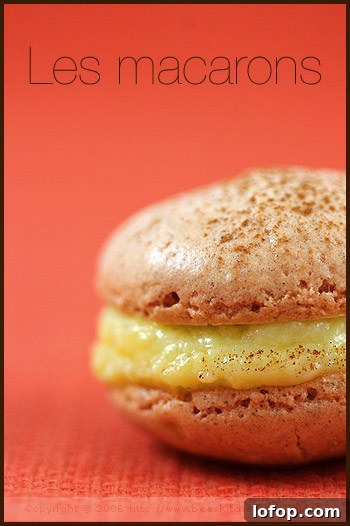
The Macaron Story
I fell for them, too. It was impossible not to. After discovering Parisian-style macarons—from Pierre Hermé or Ladurée to the many recipes and blog posts that celebrate them—I had to try making the delicate sandwich cookies myself. These Parisian macarons, with their smooth domes and crisp edges, look like miniature, elegant hamburgers. I’m not usually a meringue fanatic, but seeing rows of colorful macarons in Paris windows always left me breathless. They were almost too beautiful to eat.
I waited a long time before attempting my first batch of Parisian macarons. The impulse finally hit one Thursday evening when, thanks to my habit of keeping a well-stocked pantry, I discovered I already had everything I needed. I experimented with flavors and colors until I settled on the recipe below. Surprisingly, they were not as difficult as I’d feared. They require attention and a few careful steps, but when they rise and come out smooth and round, the effort pays off.
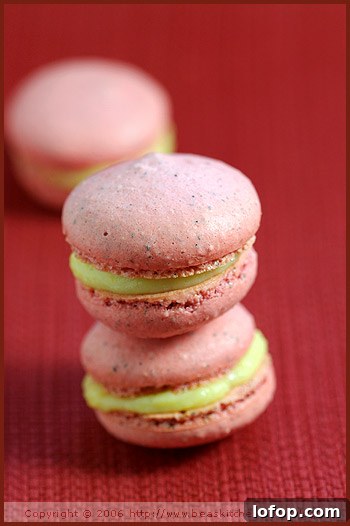
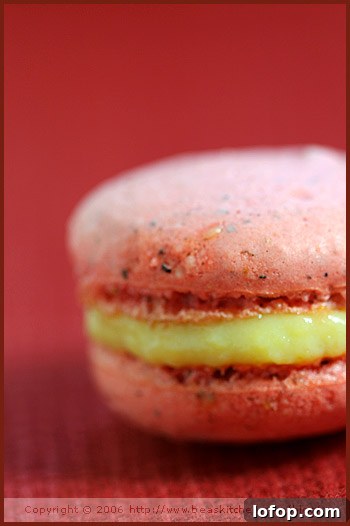
There’s always room for improvement—perhaps I was lucky the first time—but I immediately wanted to try more variations. I loved the orange ganache for cutting the meringue’s sweetness, and the delicate cardamom scent combined with crunchy Wattle seeds was a pleasant surprise. Of course I also made classic chocolate and Matcha tea macarons, a pairing I find irresistible.
Les macarons de Paris
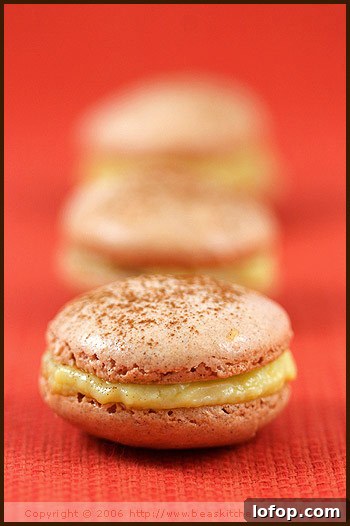
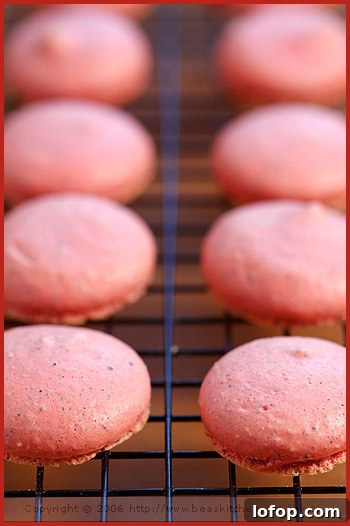
I made three batches, playing with colors like a chemist—more yellow, more red, a touch of orange. The first batch leaned toward soft orange, the second turned pink, and the third explored chocolate and Matcha. I added Wattle seeds for a nutty crunch and visual interest; these Australian seeds add a unique texture and flavor. When the three batches were cooling on my counter, I realized we were only two people at home. Perhaps I’d gone a bit overboard.
Morale 1: make macarons when you have a crowd to share them with, or you might be the victim of a sugar coma.
Morale 2: despite that, I was already planning the next experiments—macarons are addictive.
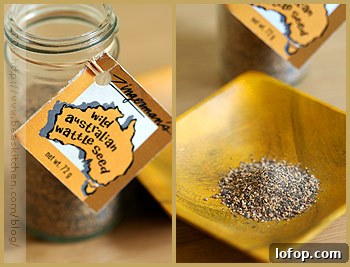
Wattle Seeds
Helpful tips from my experience:
1 – Sift the dry ingredients thoroughly to avoid lumps.
2 – Pipe consistent portions so shells pair neatly.
3 – Let piped shells rest for about 1 hour to form a light crust (some bakers skip this; experiment to find your preference).
4 – Crack the oven door open roughly two-thirds through baking to regulate moisture.
5 – Running a little water under the silicone mat after baking can help release stubborn shells.
6 – Cool fillings until lukewarm or slightly cool—don’t use them straight from the fridge.
7 – Cool shells completely on racks before assembling.
8 – Have friends nearby to help eat them—if not, be prepared to share (or not).
The Step-by-Step Assembly
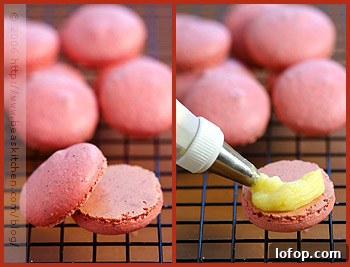
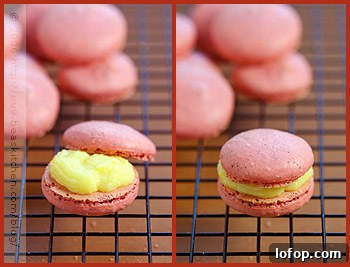
For the Orange Filling, recipe from Gérard Mulot
- 2 eggs
- 1 egg yolk
- 3 oz butter
- 2 1/3 oz fine sugar
- Juice of 3 oranges + zest of 1 orange
- 0.5 oz cornstarch
Steps:
- Combine the orange juice, finely grated zest, butter and half the sugar in a saucepan and bring to a boil.
- Whisk together the eggs, egg yolk, cornstarch and remaining sugar in a bowl.
- Slowly temper the egg mixture with the hot orange mixture, stirring constantly. Return everything to the saucepan, bring to a boil, and cook 2–3 minutes while stirring.
- Transfer the cream to a bowl set in an ice bath, cover with plastic wrap, and chill until cool.
For the Cardamom Meringue (about 15 small macarons), my recipe
- 2 egg whites (about 2 oz), room temperature
- 3.5 oz confectioner’s sugar, sifted
- 2 oz almond flour, sifted
- 1 oz fine sugar
- 1/2 tsp ground cardamom
- 3 tsp Wattle seeds (optional)
- A few drops yellow and red food coloring
- 1/8 tsp cream of tartar
Steps:
- Sift almond flour and confectioner’s sugar with cardamom and Wattle seeds if using; set aside.
- Whip egg whites with cream of tartar and 1/2 tbsp fine sugar on medium speed until foamy. Increase speed and gradually add the rest of the sugar and coloring until stiff peaks form.
- Fold the dry mix into the whites in two or three additions using a rubber spatula with gentle circular motions. Stop once the batter is homogeneous—do not overmix.
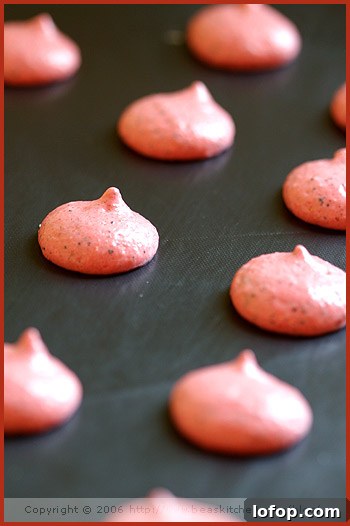
- Prepare baking sheets with silicone mats or parchment. Pipe small rounds about 1 inch (2–3 cm) in diameter, spaced 1 inch apart. Let rest for 1 hour.
- Preheat oven to 320°F (160°C). Bake for 12–13 minutes (adjust time for larger shells). About 7–8 minutes in, crack the oven door and reduce heat to 290°F (145°C).
- Remove shells and test by touching gently. Run a thin stream of water under the silicone mat to loosen any that stick. Let cool on racks before filling.
- When the orange filling is cool but not refrigerator cold, pipe a small amount onto one shell and sandwich with its pair.
Variation: Matcha Tea and Chocolate Ganache
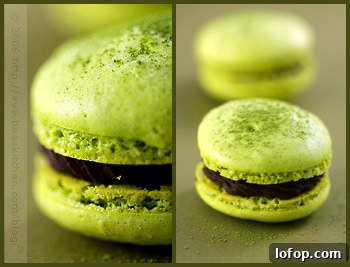
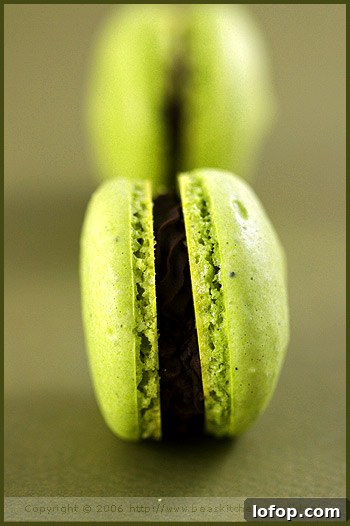
Matcha Tea and Chocolate Macarons
For the Chocolate Ganache
- 1/2 cup heavy cream
- 5 1/3 oz dark chocolate (65% cocoa)
Steps:
- Chop the chocolate and place it in a bowl.
- Heat the cream to a simmer, pour over the chocolate, let sit 1 minute, then stir until smooth. Cool before using.
To make Matcha macarons, replace the cardamom with Matcha tea powder and use green food coloring instead of yellow and red.
Pour la ganache parfumée à l’orange, recette de Gérard Mulot
- 2 oeufs entiers
- 1 jaune d’oeuf
- 85 g de beurre
- 65 g de sucre en poudre
- Jus de 3 oranges + zeste d’une orange
- 15 g de maïzena
Étapes :
- Pressez le jus de 3 oranges et râpez finement le zeste. Mettez-les dans une casserole avec la moitié du sucre et le beurre, et portez à ébullition.
- Dans un saladier, mélangez les oeufs, le jaune, le reste du sucre et la maïzena.
- Versez doucement le jus d’orange chaud sur le mélange en fouettant, puis remettez le tout dans la casserole. Portez à ébullition et faites cuire 2 à 3 minutes en remuant.
- Transférez la crème dans un bol posé dans un bac d’eau glacée. Couvrez et laissez refroidir au réfrigérateur.
Pour la meringue à la cardamome et graines de Wattle (environ 15 petits macarons), ma recette
- 2 blancs d’oeuf (60 g), température ambiante
- 100 g de sucre glace
- 60 g de poudre d’amandes
- 30 g de sucre en poudre
- 1/2 càc de cardamome en poudre
- 3 càc de graines de Wattle (facultatif)
- Quelques gouttes de colorants alimentaires jaune et rouge
- 1/8 càc de crème de tartre
Étapes :
- Tamisez la poudre d’amandes et le sucre glace, ajoutez la cardamome et les graines de Wattle si utilisées.
- Montez les blancs avec la crème de tartre et 1/2 càs de sucre jusqu’à ce qu’ils moussent, augmentez la vitesse et incorporez le reste du sucre en pluie et le colorant jusqu’à obtention de pics fermes.
- Incorporez délicatement les ingrédients secs aux blancs en effectuant des mouvements circulaires. Ne pas trop travailler la pâte.
- Sur une plaque recouverte de silicone ou papier, dressez des tas de 3 cm de diamètre avec une poche à douille. Laissez croûter 1 heure.
- Préchauffez le four à 160 °C. Enfournez 12–13 minutes. Après 7–8 minutes, entrouvrez la porte et baissez la température à 145 °C.
- Sortez les macarons, vérifiez la cuisson en touchant doucement, puis passez un filet d’eau sous la feuille de silicone pour créer de la vapeur et faciliter le démoulage. Laissez refroidir sur grille.
- Une fois la ganache refroidie mais non glacée, dressez-en une petite noisette sur une coque et assemblez.
Variation au thé Matcha et ganache au chocolat :
Pour la ganache au chocolat
- 120 ml de crème liquide
- 150 g de chocolat noir 65%
Étapes :
- Râpez le chocolat et placez-le dans un bol.
- Chauffez la crème jusqu’à frémissement, versez-la sur le chocolat, laissez reposer 1 minute puis mélangez. Laissez refroidir avant utilisation.
Pour les macarons au thé Matcha, remplacez la cardamome par de la poudre de Matcha et utilisez un colorant vert à la place du jaune et du rouge.