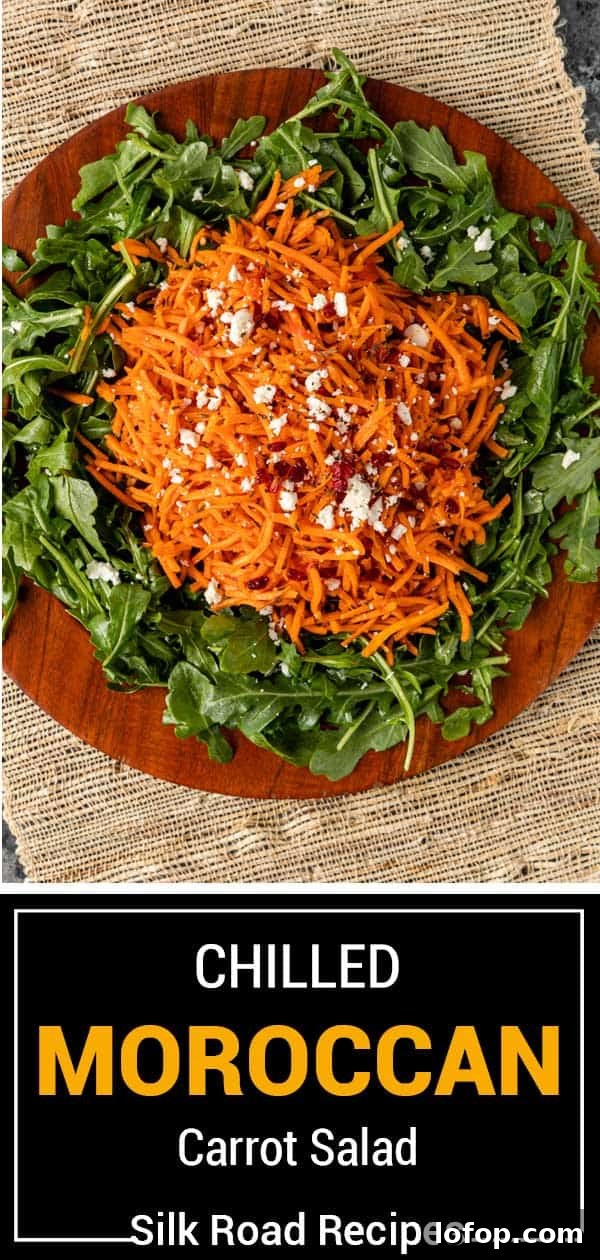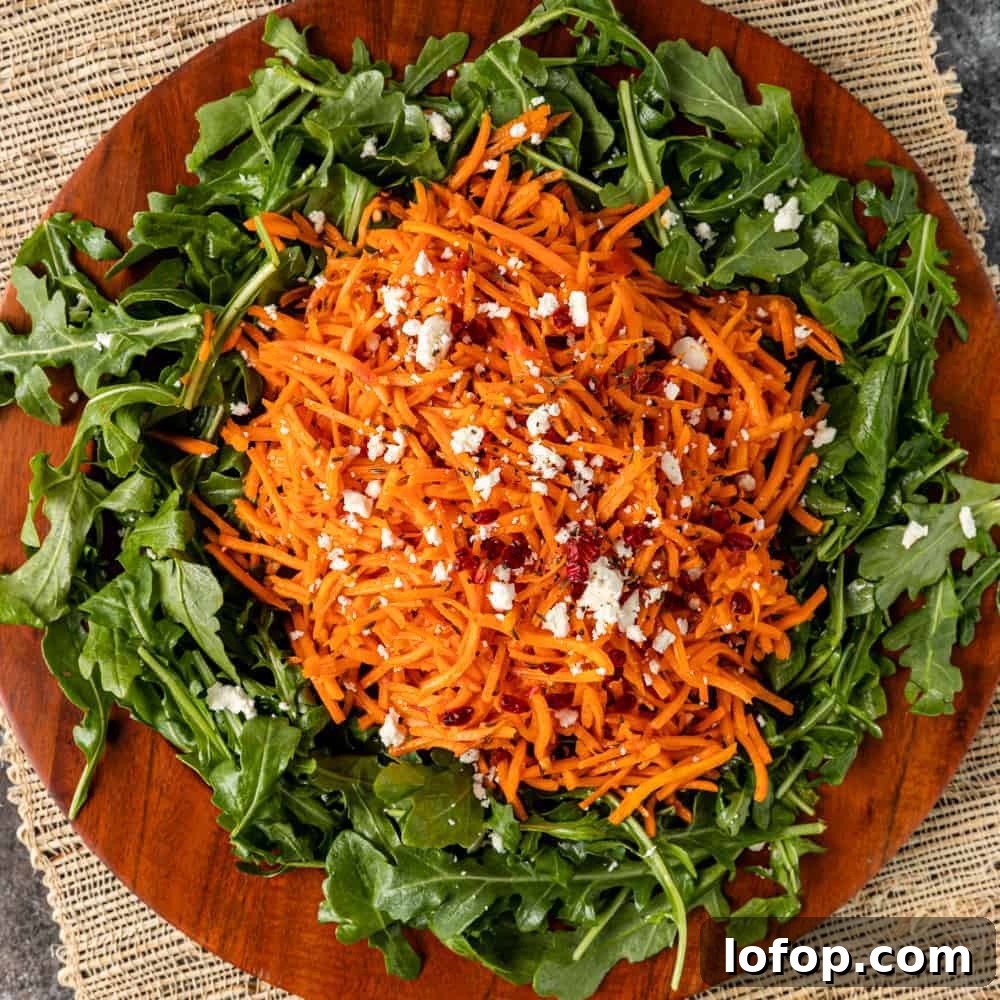
Fresh and zesty Moroccan carrot salad is a bright, easy side dish that comes together in minutes. Tossed with a lemony harissa dressing and served over tender arugula, this chilled carrot salad is sweet, spicy, and perfect as a starter or accompaniment to a heartier main.
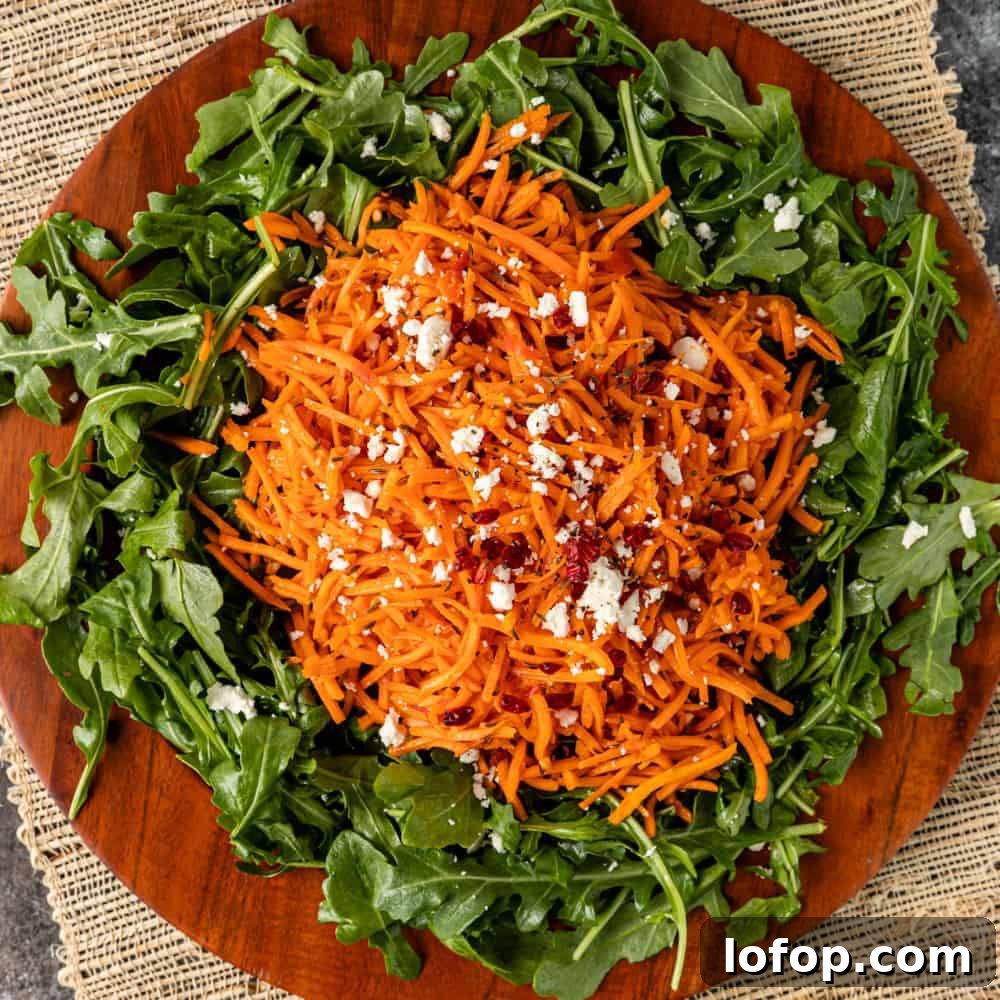
North African and Middle Eastern kitchens often feature warm salads with grains like rice, couscous, or lentils and richer, yogurt-based dressings. This chilled Moroccan carrot salad, however, is light and refreshing. It works equally well as a starter, an appetizer, or a side to protein-forward dishes such as roast chicken, beef tagine, or spicy harissa chicken.

Table of Contents
- Julienne, Mandoline, or Shred?
- Ingredient Notes and Substitutions
- How to Make Moroccan Carrot Salad
- Recommended Tools
- Storing and Serving
- Frequently Asked Questions
- Moroccan Carrot Salad Recipe
This recipe is very simple and low-effort, taking just a few minutes to assemble (plus chilling time). I find the flavors deepen if you make it the night before or a few hours ahead—the dressing softens the carrots and blends the spices for a more flavorful salad.
Tip From Kevin
Julienne, Mandoline or Shred?
I prefer matchstick-style carrot strips for this salad. You can buy pre-shredded carrots at many markets, or prepare them at home. Use a mandoline with a julienne blade to make thin matchsticks, a box grater, a food processor with a shredding disc, or simply julienne with a knife. To julienne by hand, trim and peel the carrots, slice them into thin planks lengthwise, stack the planks, then slice into even matchsticks about 2 inches long.
Ingredient Notes and Substitutions
- Carrots – Use about 1 lb of carrots, which is roughly 5–6 medium carrots or 3–4 large ones. Very small baby carrots are harder to shred evenly.
- Lemon – Fresh lemon juice brightens the dressing; avoid bottled juice if possible.
- Olive oil – Use a good-quality extra-virgin olive oil for the best flavor. Neutral oils like grapeseed or avocado also work.
- Harissa paste – This North African chili paste provides heat and depth. Adjust the amount to suit your spice tolerance; start with less and add to taste.
- Ground coriander – Offers a citrusy, floral note that pairs well with lemon. If you don’t have coriander, try a small pinch of cumin or a sprinkle of chopped parsley.
- Caraway seeds – These add a warm, slightly sweet, licorice-like pop. If unavailable, try fennel seeds or leave them out.
- Arugula – Peppery greens add contrast. Baby arugula, baby spinach, or mixed greens are good alternatives.
- Feta cheese – Crumbled feta adds creaminess and salt. Substitute goat cheese or ricotta salata if preferred.
How to Make Moroccan Carrot Salad
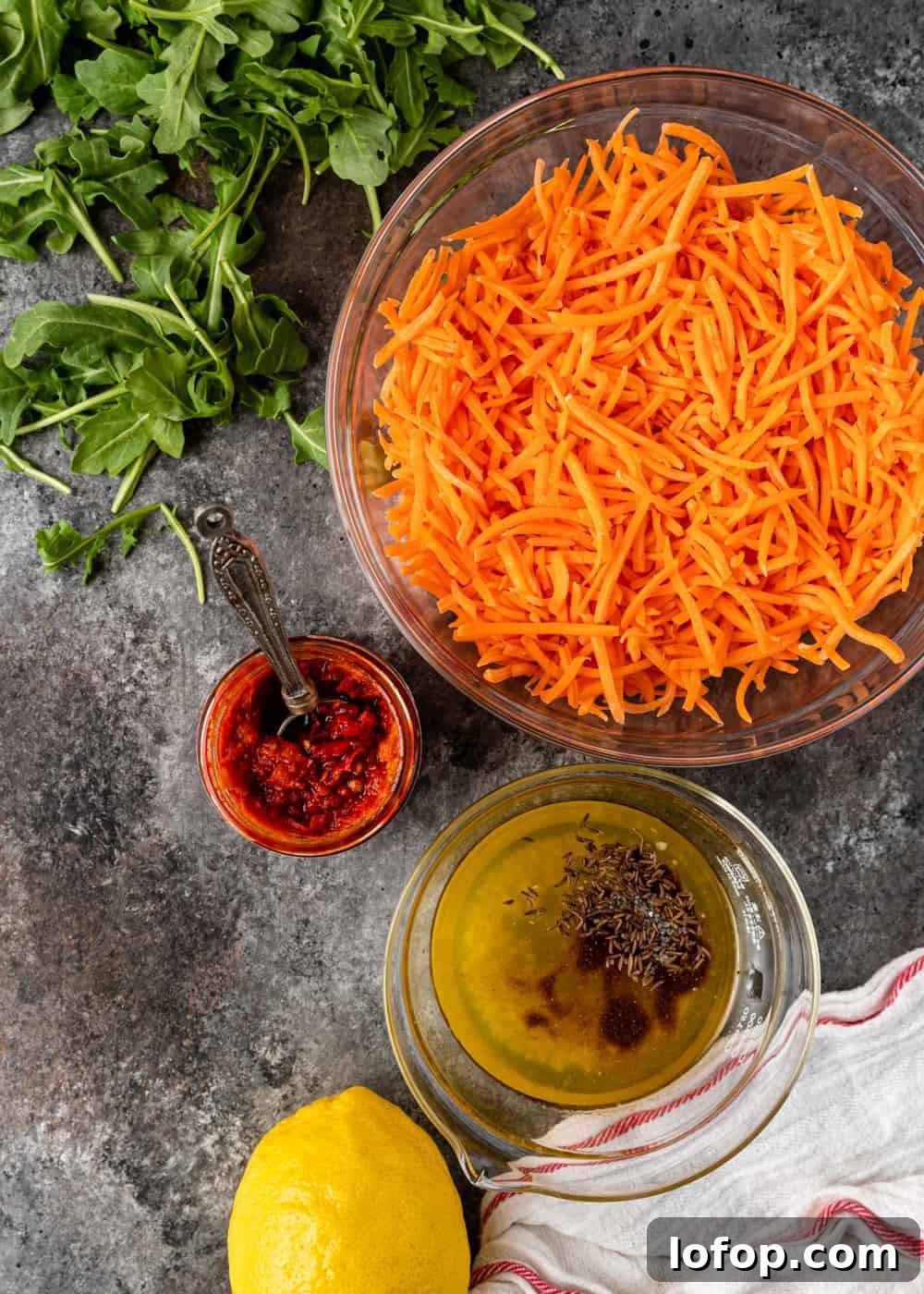
- Prepare the carrots. Rinse, peel, and trim the ends. Shred or julienne the carrots into thin matchsticks using your preferred tool. Place them in a bowl.
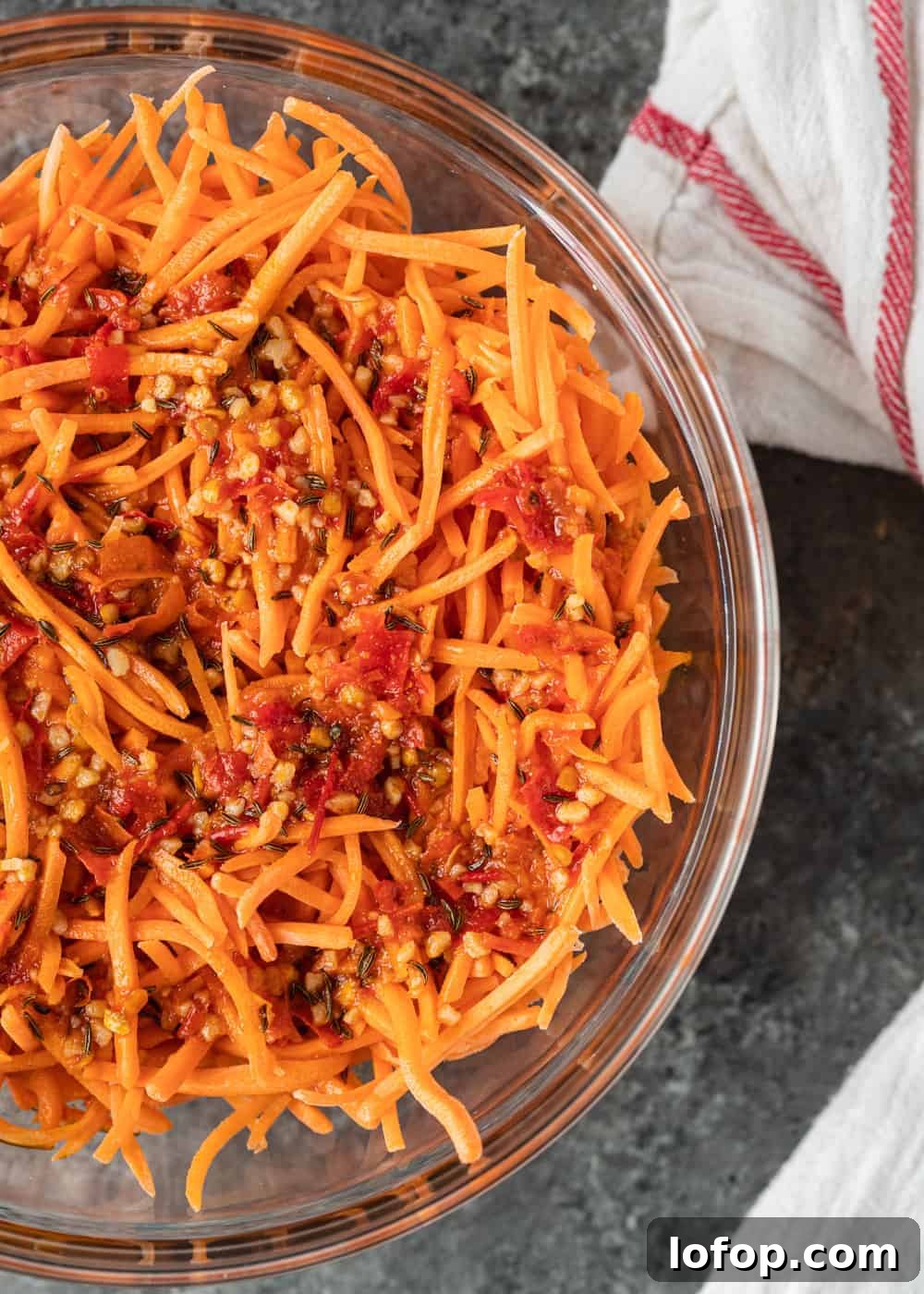
- Whisk the dressing. In a small bowl, combine fresh lemon juice, olive oil, minced garlic, harissa paste, ground coriander, caraway seeds, and a pinch of salt. Taste and adjust seasoning as needed.
- Toss and chill. Pour the dressing over the shredded carrots and toss thoroughly so each piece is coated. Cover and refrigerate for at least 30 minutes to let flavors meld.
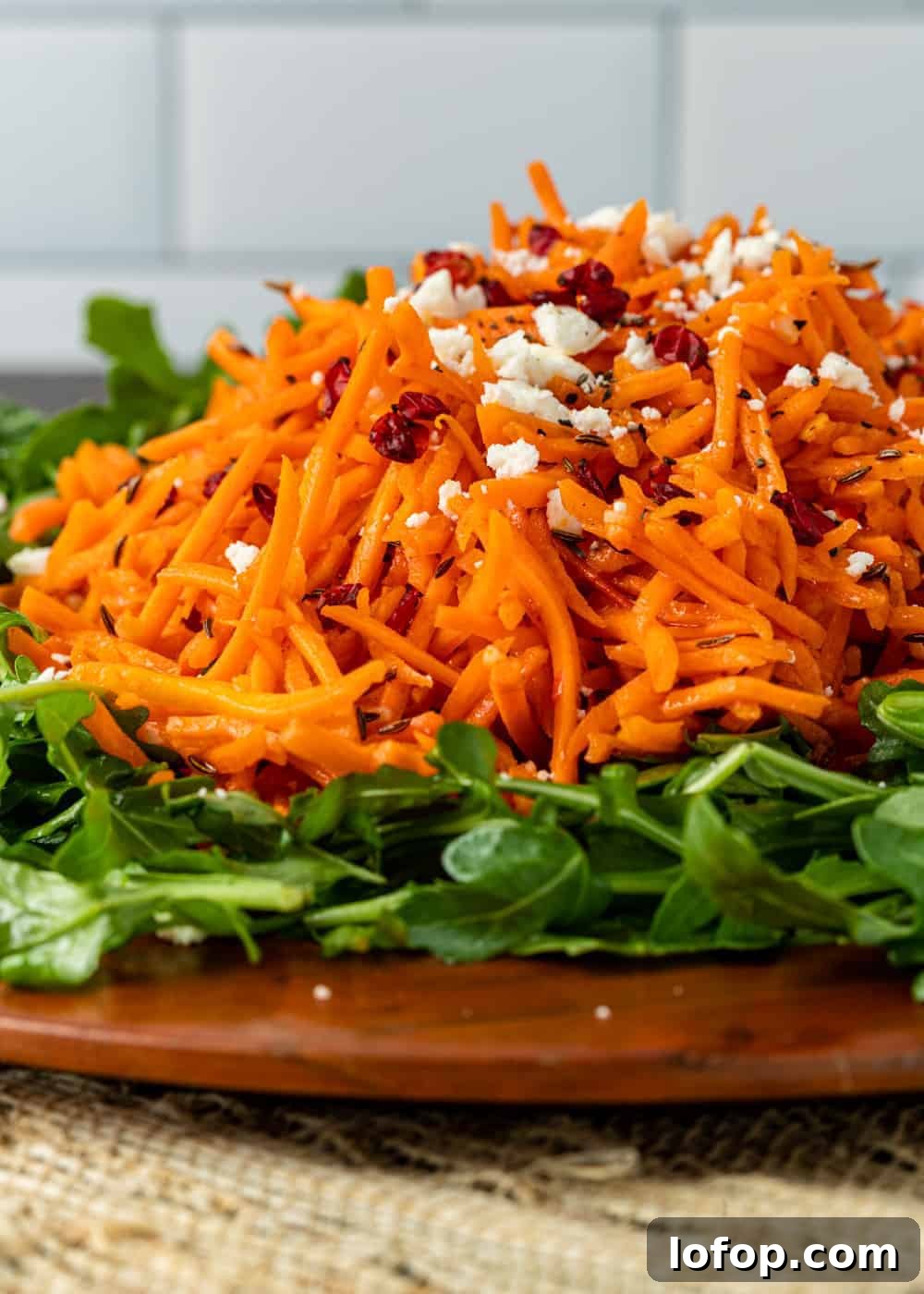
- Plate and serve. Arrange arugula on individual plates, top with chilled carrot salad, and finish with crumbled feta.
Recommended Tools
- Box grater – Reliable and simple for uniform shreds.
- Food processor – Fast if you have a shredding or slicing disc.
- Mandoline – Great for uniform julienne cuts; use the guard for safety.
Storing and Serving
This salad is best served chilled. Keep it refrigerated until ready to plate. Leftovers store well in an airtight container for up to 6 days when kept chilled.
If you prefer to prepare ahead, store the carrots and dressing separately—the carrots will keep raw for about 10 days in the fridge without dressing, while the dressing can last a few weeks refrigerated.
Frequently Asked Questions
You can use a box grater, mandoline, food processor, or a sharp knife. Each method has advantages: a mandoline reduces waste, a knife produces less mess, a box grater gives consistent shreds, and a food processor is the quickest.
Store grated carrots submerged in cold water in the fridge to preserve crispness and color. Replace the water daily for best results.
Raw carrots are high in vitamin A, fiber, and other nutrients. Serving them raw helps retain these vitamins and minerals, which can be reduced by cooking.
Moroccan Carrot Salad
Print Recipe
Ingredients
- 1 lb carrots, peeled
Dressing
- 1 lemon, juiced
- 3 tbsp olive oil
- 2 tsp harissa paste (adjust to taste)
- 2 cloves garlic, minced
- 1/2 tsp ground coriander
- 1/2 tsp caraway seeds
- 1/8 tsp salt
For Plating
- 2 cups arugula leaves
Garnish
- 4 oz feta cheese, crumbled
Instructions
- Trim and discard the ends of the carrots. Shred using a box grater, mandoline, food processor, or cut into matchstick pieces with a knife.
- In a small bowl, whisk together lemon juice, olive oil, harissa paste, garlic, ground coriander, caraway seeds, and salt.
- Add the carrots to the dressing and toss to coat. Chill for at least 30 minutes to allow the flavors to meld.
- Divide arugula among plates, top with the chilled carrot salad, and garnish with crumbled feta.
Nutrition
Carbohydrates: 16 g |
Protein: 6 g |
Fat: 17 g |
Saturated Fat: 6 g |
Cholesterol: 25 mg |
Sodium: 472 mg |
Potassium: 477 mg |
Fiber: 4 g |
Sugar: 8 g |
Vitamin A: 19313 IU |
Vitamin C: 23 mg |
Calcium: 207 mg |
Iron: 1 mg
The nutrition information is an estimate and should not replace professional dietary advice.