We occasionally link to goods offered by vendors to help the reader find relevant products. Some of these may be affiliate based, meaning we earn small commissions (at no additional cost to you) if items are purchased.
How to Select the Best Knife for Your Needs
I didn’t learn much about cooking from my dad—Sunday brunch and the occasional barbecue were about it—but I did learn the value of a good tool. As a mechanic who grew up on a farm, he insisted on investing in quality and maintaining it well. A properly cared for tool performs better and lasts far longer.

Knives in our kitchen weren’t always top tier, but he kept them razor sharp—and that made them a pleasure to use. This guide focuses on a fundamental item in any knife set: the chef’s knife. We’ll cover top picks, budget options, styles, features to look for, maintenance basics, and several detailed reviews to help you choose.
- Present our #1 pick
- Offer a budget recommendation
- Summarize common styles
- Highlight features to consider
- Explain basic maintenance and sharpening
- Provide several reviews for consideration
Bottom Line Up Front
Foodal’s #1 Pick for the Average Home Cook or Pro
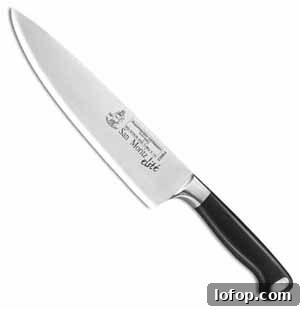
The 8-Inch Messermeister San Moritz Elite Chef’s Knife strikes a balance between performance and longevity. It isn’t the cheapest option, but it offers features and build quality that make it a long-term investment.
Made in Germany from a high-carbon alloy, the blade is easy to sharpen and holds its edge well. It ships extremely sharp and is ground to a steeper angle than many Western knives. The wider blade makes scooping and transferring ingredients easy, and a polished, rounded spine improves comfort for those who use the pinch grip. Because the bolster doesn’t get in the way, sharpening along the full blade length is straightforward.
The handle is a polished, molded polymer that feels solid and durable—resistant to cracking or warping when cared for properly. For cooks willing to pay a bit more up front, this Messermeister model delivers enduring performance.
Read our complete review below or see it on Amazon now!
Best Budget Recommendation
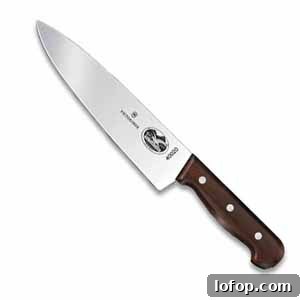
Victorinox 8-Inch Chef’s Knife (Rosewood handle) is an affordable, well-made choice for cooks wanting a dependable blade without a large investment. Its stamped construction keeps cost down while providing respectable edge retention. The stainless steel is easy to sharpen and quick to hone with a steel—making it a great first quality knife for home cooks.
The rosewood handle model adds visual appeal and a comfortable grip; a Fibrox (synthetic) handle version is also available at a lower price. While Victorinox lists this knife as dishwasher-safe, hand washing and immediate drying will preserve finish and fit.
Read our full review below or see it on Amazon now!
All About Chef’s Knives
A dull, poorly balanced knife makes prep slower and less enjoyable. A few good knives—properly chosen and maintained—can transform cooking into a quicker, more pleasurable activity. Price alone doesn’t determine the right tool; fit, balance and purpose matter most.
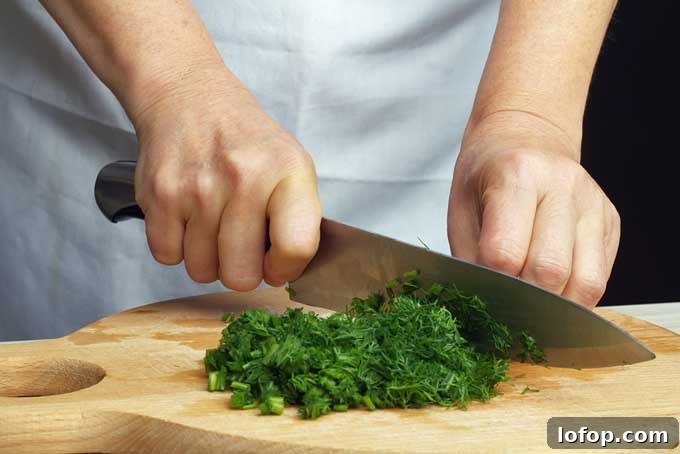
Originally designed for disjointing large cuts, the chef’s knife has evolved into a versatile all-purpose tool. A typical chef’s knife is about 8″ long and 1.5–2″ tall, though lengths range from roughly 6″ to 14″. The blade profile—French, German, or Japanese—affects how the knife handles.
French-style blades tend to have a straighter edge with a defined tip; German-style blades usually feature a more pronounced belly that supports a rocking motion. Japanese-style knives can resemble either profile but are often thinner, lighter, and ground to a sharper angle (typically 15–18° versus 20–22° for many Western knives). Each style has advantages, and the best choice is a matter of personal preference.
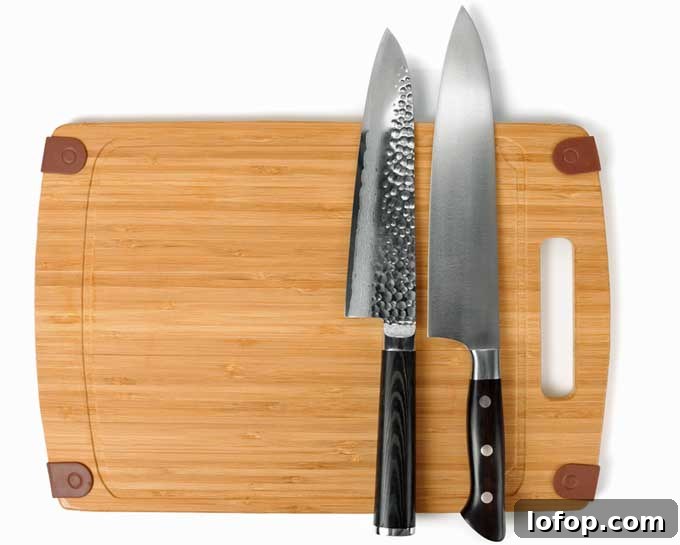
This article focuses primarily on Western-style blades; future guides can cover Japanese knives in more depth. None of the styles is categorically superior—comfort, cutting style and maintenance preferences should drive your choice.
Features to Look For in a Chef’s Knife
Consider the following factors when choosing a chef’s knife so it fits your hands, cooking habits and maintenance preferences.
Weight
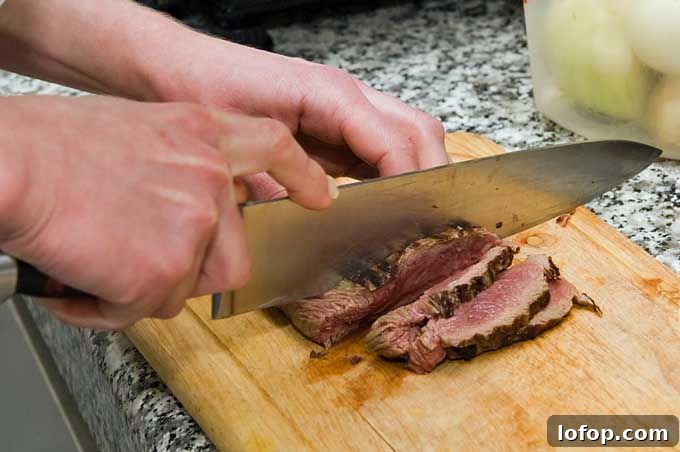
Weight influences cutting power and control. Heavier blades can drive through dense ingredients, while lighter knives offer speed and agility. Choose what feels natural for the tasks you perform most.
Balance
A well-balanced knife reduces fatigue. Hold the knife by the handle and feel whether weight feels evenly distributed between blade and handle. Side-to-side stability is also important—test for any wobble.
Size
Eight-inch chef’s knives are popular for their versatility. Six-inch blades provide extra maneuverability for detail work; 10-inch blades handle larger volumes but can be unwieldy for smaller kitchens.
Style
See “All About Chef’s Knives” for the differences between French, German and Japanese profiles and how they affect cutting motion.
The Edge
A good knife should be sharp from the factory. Edge retention and ease of sharpening depend on steel composition and heat treatment. Harder steels can hold sharper edges but may be more brittle and require care.
The Spine
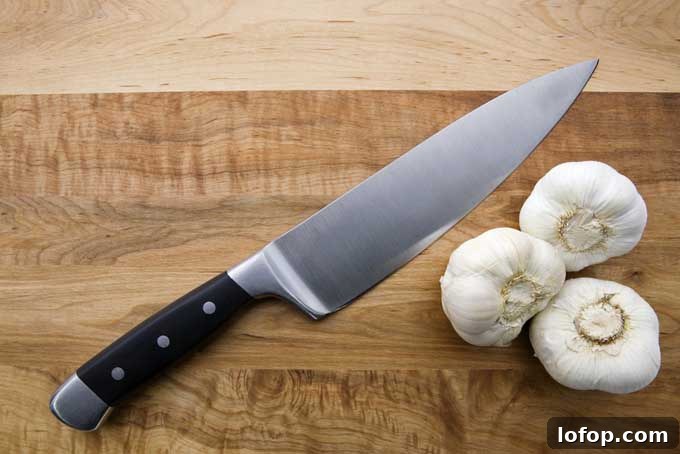
The spine is the thick top edge of the blade. Some cooks rest a finger on the spine for control; if it’s too square it can be uncomfortable, but smoothing with fine sandpaper will round it if desired.
The Heel
The heel is the widest, thickest part near the handle. It provides leverage for cutting tougher or larger items—look for a robust heel if you’ll be working with dense produce or bone-in meat.
The Bolster
The bolster sits between blade and handle to add balance and finger protection. Full bolsters add strength but can complicate sharpening the entire edge; half bolsters or no bolster allow easier edge maintenance.
The Handle
Handles come in many materials and shapes. Choose one that feels secure and comfortable in your hand, and that provides enough clearance so your knuckles don’t strike the cutting board while chopping.
Sharpening and Maintenance
Your knife’s performance depends on maintenance. A high-end blade neglected will not outperform a well-kept mid-range knife. Sharpening, honing and proper storage keep any knife working at its best.
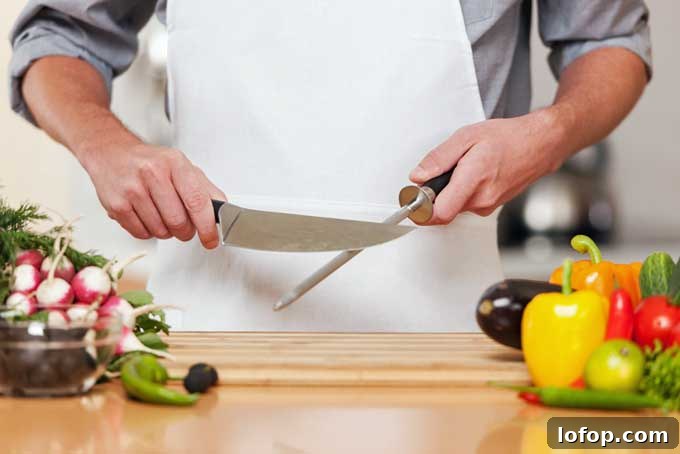
Better-quality blades typically retain an edge longer and are easier to re-sharpen. Regardless of steel claims, all knives need sharpening. Use whetstones, guided systems or pro services as needed, and hone regularly with a steel to maintain geometry between sharpenings.
Also choose a cutting surface that’s knife-friendly—wood or quality plastic boards preserve edges better than glass or ceramic, which dull blades quickly.
Tip: Wash knives by hand with warm soapy water and dry immediately. Avoid prolonged soaking and dishwashers, which can damage handles and edges.
Reviews
The reviews below cover French and German-style chef’s knives made from carbon or high-carbon stainless steel. Each entry summarizes key features, common consumer feedback and a brief verdict.
 Messermeister San Moritz Elite 8” Chef’s Knife
 Messermeister San Moritz Elite 8” Chef’s Knife
The Messermeister San Moritz Elite is forged in Solingen, Germany, from a high-carbon alloy. Its broad blade tapers to a polished Elite cutting edge and is designed to peel, trim, slice, dice, chop and mince with ease. Because the bolster does not extend to the edge, you can sharpen the entire blade length. The molded POM handle is durable and comfortable, and the knife’s balance makes the pinch grip comfortable for extended use.
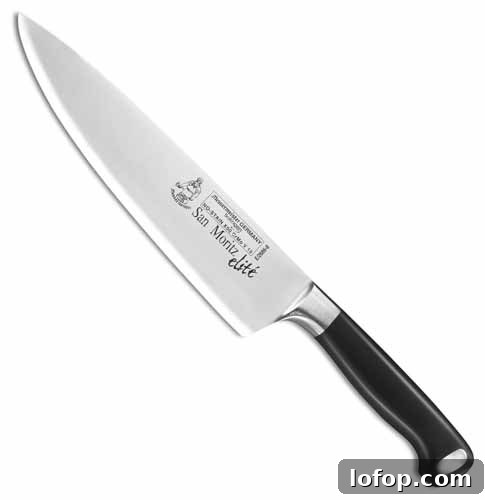
Dimensions: 8″ blade, roughly 16.25″ overall, 10.6 ounces. Hand wash recommended. Limited lifetime warranty.
What Others Are Saying
- Consistently praised for sharpness, balance and comfort.
- Bolster design allows full-edge sharpening.
- Three-inch blade depth is handy for scooping and transferring ingredients.
- Sharp out of the box and very versatile across tasks.
Summary
The San Moritz Elite is a professional-grade tool built to last. It’s an excellent investment for cooks who want a durable, razor-sharp chef’s knife with thoughtful ergonomics.
Zwilling J.A. Henckels Professional S 8”
The Professional S from Zwilling J.A. Henckels is an 8″ forged chef’s knife made from high-carbon, stain-resistant steel processed with the Friodur ice-hardening method. It features a 15° edge, a full bolster tapered for sharpening, and a Novodur handle fully bonded and triple-riveted to the tang for balance and durability.
Dimensions: 8″ blade, approx. 17″ overall, 9.8 ounces. Hand wash recommended. Lifetime warranty.
What Others Are Saying
- Highly regarded for balance, blade quality and edge retention.
- Suitable for heavy-duty tasks as well as fine work.
- Reliable customer service and long-term durability.
Summary
Zwilling’s Professional S is a top-tier French-profile blade offering professional feel and long-term performance—an excellent alternative to the Messermeister choice.
Wusthof Classic Ikon 8” Cook’s Knife
The Wusthof Classic Ikon is a forged German-style 8″ cook’s knife with precise tempering and a contoured POM handle riveted to a full tang. Known for arriving sharp and holding an edge well, it offers comfortable handling and a smooth cutting motion. A hollow-ground (granton) version reduces sticking on certain tasks.
Dimensions: 8″ blade, weighs about 11.2 ounces. Hand wash recommended. Limited lifetime warranty.
What Others Are Saying
- Praise for ergonomics, balance and edge retention.
- Half-bolster design allows full-length sharpening.
- Few complaints, mostly about individual handle preference.
Summary
The Classic Ikon is a dependable, attractive German-profile knife that delivers excellent value for those who prefer this style.
Victorinox 8” Chef’s Knife with Rosewood Handle
 Victorinox 8” Chef’s Knife with Rosewood Handle
Victorinox’s 8″ chef’s knife is a stamped blade with a rosewood handle option that combines affordability and solid performance. Without a bolster, the entire edge can be sharpened. The high-carbon stainless steel is ice-tempered and conically ground for a sharp, durable edge. The rosewood handle offers a comfortable, balanced feel; a Fibrox alternative is available for a lower price.
Lightweight yet sturdy, this knife is a practical all-purpose option backed by the brand’s lifetime warranty.
What Others Are Saying
- High marks for value, balance and sharpness.
- Some users noted occasional fit issues at the handle junction or a factory-applied oil odor that can be cleaned away.
Summary
A reliable, budget-friendly choice that performs well for everyday home cooking and offers excellent value.
Sabatier Forged Carbon Steel 6” Vintage Chef Knife
Sabatier’s 6″ forged carbon steel chef’s knife offers superb sharpness and edge retention from traditional carbon steel. It develops a patina over time and requires regular hand washing, drying and occasional oiling to prevent rust. With a French-style profile and POM handle riveted to a full tang, it’s well balanced and ideal for cooks who prefer carbon steel and don’t mind the maintenance.
What Others Are Saying
- Highly praised for sharpness, ease of sharpening and traditional finish.
- Users note it’s well-suited for smaller prep workloads and appreciates its vintage character.
Summary
A rewarding choice for cooks who will care for carbon steel—great performance at a fair price if you’re willing to maintain it.
Mercer Culinary Genesis 8” Forged Chef’s Knife
Mercer’s Genesis line is popular in culinary education. The 8″ forged knife uses high-carbon, non-staining German steel, a full tang and an ergonomic santoprene handle for a secure, non-slip grip. It’s well balanced and durable, though some users report the factory edge requires more frequent honing and that the full bolster limits access to the heel for sharpening.
Summary
Mercer Genesis is a solid economy choice that offers professional-style features at a reasonable price—especially suited for cooks who want reliable, school-grade performance.
Conclusion
A good chef’s knife is the most important tool in both professional and home kitchens. Choose a knife that fits your hands and cooking style, invest in one quality blade if you can, and maintain it with regular honing and periodic sharpening. Consider storage options that protect the edge and keep the knife secure.
We recommended the Messermeister San Moritz Elite as the best overall and the Victorinox rosewood model as the best value, but any of the knives covered above can be an excellent pick depending on your preferences and budget. Keep your knife sharp, wash and dry it by hand, and it will serve you well for years.
Happy food prepping! If you have questions, leave a comment or explore additional kitchen knife guides and reviews.
First published December 25th, 2015. Last updated March 17th, 2017.